
Why Does Worn Elevator Traction Sheave Grooves Cause Steel Wire Rope Slippage?
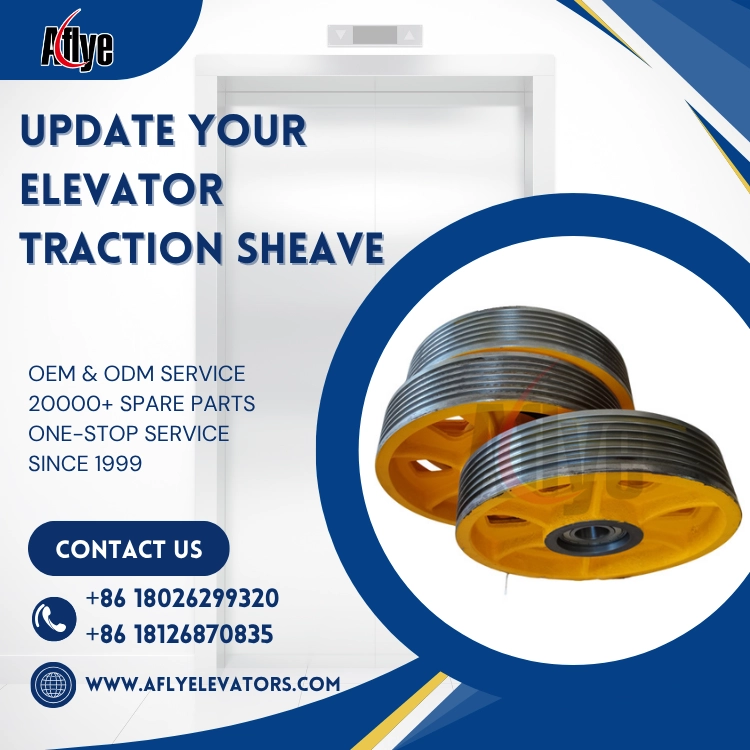
In an elevator traction system, the elevator traction sheave transmits power through the friction between its rope grooves and the elevator steel wire ropes, allowing the car and counterweight to move smoothly. The traction sheave does not simply support the ropes—it relies on the correct groove profile, wrap angle, contact pressure, and friction coefficient to generate sufficient traction force.
Once the rope grooves become worn, the contact between the steel wire ropes and the sheave changes, which may result in rope slippage, vibration, and poor leveling performance.
1. Worn Rope Grooves Change the Contact Area
Under normal conditions, the steel wire ropes should maintain proper contact with the traction sheave grooves. When the grooves become deeper, wider, or lose their original profile due to wear, the contact position changes.
Common results include:
Steel wire ropes sitting too deep in the grooves
Uneven contact pressure
Reduced friction coefficient
Uneven load distribution among multiple ropes
When the available friction is no longer sufficient to transmit driving force, rope slippage occurs.
2. Uneven Groove Wear Causes Uneven Traction Force
If the elevator operates under uneven loads for a long time, the steel wire rope tension is inconsistent, or the traction sheave material wears unevenly, the rope grooves may develop uneven wear.
As a result, different steel wire ropes carry different loads, causing some ropes to slip earlier than others. Typical symptoms include:
Elevator vibration during operation
Rope slipping during startup
Abnormal braking distance
Increased leveling errors
Abnormal steel wire rope wear
During elevator maintenance, replacing only the steel wire ropes without inspecting the traction sheave often results in the same problem recurring.
3. Steel Wire Rope Wear Further Increases Slippage
Traction sheave groove wear and steel wire rope wear usually influence each other.
If the steel wire ropes become polished, reduced in diameter, broken, or contaminated with excessive oil, the friction performance decreases significantly.
In particular, when the rope diameter becomes smaller, the original matching relationship between the rope and the groove changes, allowing the rope to slip inside the groove and reducing the stability of the traction system.
4. How to Determine Whether the Traction Sheave Should Be Replaced?
Maintenance personnel should focus on the following inspections:
Whether the rope groove depth exceeds the allowable limit
Whether the groove profile is deformed or unevenly worn
Whether all grooves wear evenly
Whether the steel wire ropes show abnormal polishing or broken wires
Whether slippage occurs during startup or braking
Whether leveling errors occur repeatedly
If the rope grooves are seriously worn, simply adjusting parameters or replacing the steel wire ropes is usually not enough. The matching elevator traction sheave should also be replaced.
5. Elevator Traction Sheave Purchasing Recommendations
When purchasing an elevator traction sheave, it is recommended to first provide the traction machine nameplate and photos of the traction sheave. In most cases, these two pieces of information are sufficient for an initial quotation.
Before placing an order, the following parameters should be confirmed:
Traction sheave outer diameter
Traction sheave inner diameter (such as TKM or TKL)
Number of rope grooves
Rope groove profile
Compatible steel wire rope diameter
Mounting hole dimensions
Material and hardness (required only for certain special applications; standard applications usually do not require this information)
It is also recommended to provide photos, dimensions, rope diameter, groove quantity, or technical drawings as early as possible so that a professional supplier can verify compatibility and prevent new slippage problems caused by an incorrect groove profile.
A-FLY Elevator & Escalator Parts Supply Capability
As a professional elevator and escalator spare parts supplier, A-FLY has been serving global maintenance companies, engineering contractors, and spare parts distributors by providing:
Compensation chains
A full range of elevator and escalator spare parts
A-FLY supports:
Sample matching
Drawing verification
OEM/ODM customization
Fast delivery
Based on different elevator brands and models, A-FLY provides professional matching solutions to help customers reduce purchasing risks and improve elevator maintenance efficiency.
Conclusion
Worn elevator traction sheave grooves reduce the friction between the traction sheave and the steel wire ropes, making rope slippage one of the most common consequences.
Maintenance personnel should evaluate the traction sheave, steel wire rope tension, groove wear, and operating conditions as a complete system. Replacing worn components with high-quality elevator and escalator spare parts in a timely manner is essential for ensuring the long-term safety and reliability of the elevator traction system.