
Why Can’t the Elevator ARD Start Normally?
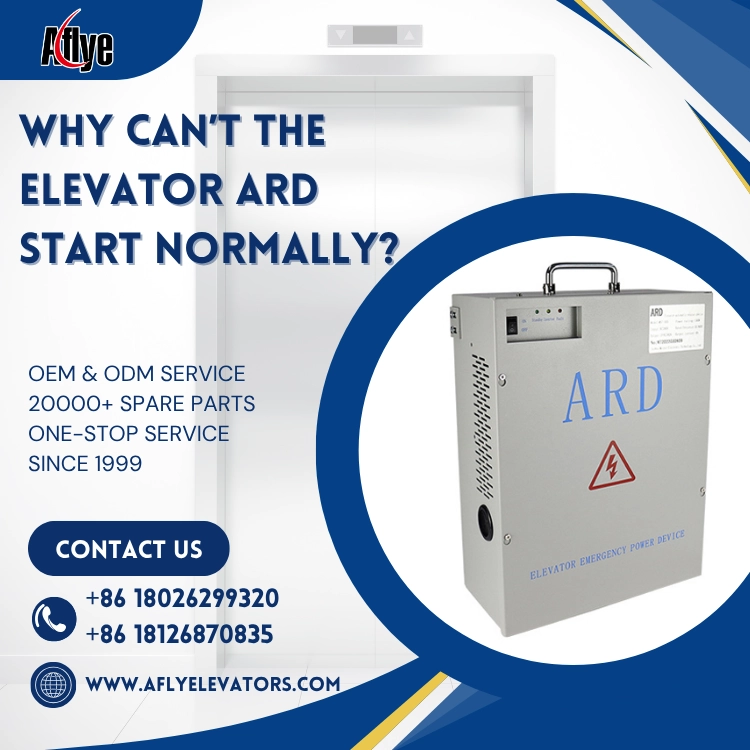
The elevator ARD (Automatic Rescue Device) is an important safety system in modern elevators. When the main power supply suddenly fails, the ARD uses the elevator emergency power supply to drive the traction machine, move the elevator car to the nearest floor, and automatically open the doors to prevent passengers from being trapped. Therefore, the ARD is also one of the most widely used elevator safety components in elevator modernization projects.
However, during actual elevator maintenance, ARD systems may occasionally experience problems such as failure to start, unsuccessful rescue operation, or interrupted emergency operation. If these issues are not diagnosed and resolved in time, they may affect elevator safety and extend passenger waiting time during entrapment situations.
1. Battery Aging Causes Insufficient Power Storage
The battery is the core energy storage component of the ARD and one of the most common failure points. After long-term operation, battery capacity decreases and internal resistance increases. Even if the battery appears normal during routine checks, it may fail to provide sufficient current during a sudden power outage.
Common symptoms include:
ARD does not operate after power failure;
ARD starts but stops after a few seconds;
Voltage drops rapidly during rescue operation;
Frequent battery alarms.
Solution:Regularly test battery capacity and charging/discharging performance. Replace the battery promptly when it reaches the end of its service life.
2. Control Signal Abnormality
The ARD requires a correct start command from the elevator control system. If any of the following problems occur:
Control board failure;
Safety circuit not closed;
Abnormal input signals;
Communication line failure;
the ARD may not receive the start command, even if the device itself is functioning properly.
Maintenance Recommendation:
Check the ARD input terminals, control cabinet I/O signals, and communication status to confirm whether all startup conditions are satisfied.
3. Inverter Module or Emergency Power Supply Failure
The ARD system usually contains an inverter, charging module, and power management unit. When the inverter module fails, the following problems may occur:
Abnormal output voltage;
Traction machine unable to start;
Emergency power interruption;
Shutdown during rescue operation.
Maintenance personnel should focus on checking inverter output voltage, power module temperature rise, and fuse protection status.
4. Excessive Resistance in the Traction System
The ARD power capacity is generally designed only for emergency operation requirements. If there are problems in the elevator traction system, such as:
Worn traction sheave;
Uneven steel rope tension;
Excessive guide shoe resistance;
Brake failure to release properly;
the ARD may start but still fail to complete the rescue operation due to excessive mechanical load.
Therefore, ARD troubleshooting should not only focus on electrical components but also include a comprehensive inspection of the entire mechanical system.
5. Daily Maintenance Recommendations
The ARD should be included in the elevator preventive maintenance plan. Key inspection items include:
Battery capacity;
Automatic charging status;
Emergency start testing;
Control signal input;
Inverter output voltage;
Terminal connections and protection devices;
Emergency operation records.
Regular simulated power failure tests can help identify potential problems in advance and improve rescue reliability.
Elevator ARD Purchasing Recommendations
When purchasing an elevator ARD, confirm the following parameters:
Elevator rated load;
Motor power;
Output voltage;
Battery type and capacity;
Control system compatibility;
Installation space;
Compatible elevator brand and model.
It is recommended to match the ARD according to the control cabinet model, traction machine parameters, and actual site configuration to avoid reduced rescue performance caused by insufficient power capacity or incompatible interfaces.
A-FLY Elevator & Escalator Parts Supply Capability
As a professional elevator and escalator parts supplier, A-FLY has been providing global maintenance companies, engineering contractors, and parts distributors with elevator ARD systems, automatic rescue devices, elevator emergency power supplies, control boards, inverters, door operator systems, and a full range of elevator safety components and elevator & escalator spare parts.
A-FLY supports OEM/ODM customization, model matching, drawing confirmation, and fast delivery. We provide complete solutions based on different elevator brands and control systems, supporting elevator modernization projects and maintenance requirements worldwide.
Conclusion
An elevator ARD failure is not always caused by the ARD device itself. Battery aging, abnormal control signals, inverter module failures, and excessive traction system resistance can all be the root causes.
Maintenance technicians should perform a comprehensive inspection of both electrical and mechanical systems and select high-quality elevator safety components to ensure that the automatic rescue device can start reliably during power failures, providing the final safety protection for passengers.