
What Applications Are Explosion-Proof Elevator Push Buttons Suitable For?
In certain industrial environments, standard elevator equipment cannot meet safety requirements. Especially in locations where flammable gases, vapors, or dust are present, any electrical spark may pose a serious hazard.
Therefore, elevators used in such environments must adopt specially designed safety components—among which explosion-proof elevator push buttons are particularly important.
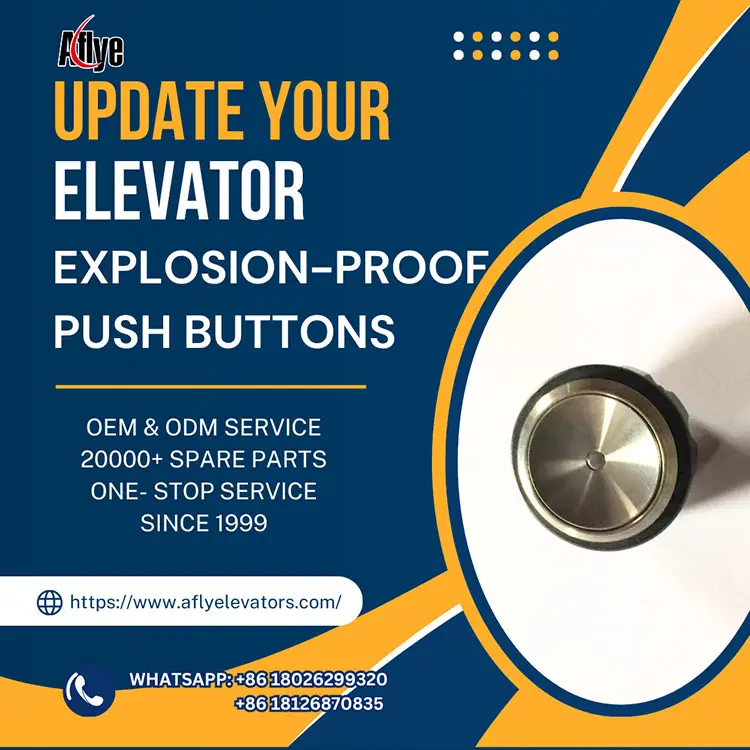
These buttons feature reinforced structural designs and safe electrical control systems that effectively reduce the risk of spark exposure, ensuring safer operation. As a professional elevator and escalator parts supplier, A-FLY has found that explosion-proof buttons are widely used across various industries.
1. Oil and Gas Industry
In oil extraction, refineries, and natural gas processing facilities, the air may contain flammable gases. Any spark from electrical equipment could trigger an explosion.
Explosion-proof elevator buttons are typically designed with sealed metal housings and explosion-proof structures, isolating internal electrical components from the external environment.
For the oil and gas industry, using explosion-proof elevator and escalator components is essential for ensuring operational safety.
2. Chemical Manufacturing Plants
In chemical factories, many materials and gases are volatile and combustible. Elevators are often used to transport personnel and materials within production areas, storage zones, and logistics areas.
Standard buttons may present safety risks in such environments. In contrast, explosion-proof buttons provide higher levels of electrical protection by preventing sparks from escaping into the surrounding atmosphere.
As a result, chemical plants often prioritize explosion-proof components when selecting elevator parts.
3. Mining and Coal Industry
In mines and coal production environments, the air often contains combustible dust or methane gas. Electrical sparks can easily lead to serious accidents.
To enhance safety, mining elevators commonly use multiple explosion-proof components, including:
Explosion-proof buttons
Explosion-proof control panels
Explosion-proof electrical systems
Explosion-proof elevator buttons play a key role in improving the safety of the elevator control system and reducing potential risks.
4. Grain Processing and Dust Environments
Beyond chemical and energy industries, facilities such as grain processing plants, flour mills, and woodworking factories also face dust explosion risks.
When dust concentration reaches a certain level, even a small spark can cause an explosion.
In these environments, explosion-proof elevator buttons—with sealed designs—prevent sparks from contacting dust, significantly improving overall equipment safety.
5. Key Features of Explosion-Proof Elevator Buttons
Explosion-proof elevator buttons are suitable for hazardous environments due to their specialized design:
High-strength stainless steel or metal housings for impact resistance
Specially designed internal electrical structures to minimize spark generation
Waterproof, dustproof, and sealed construction for harsh environments
These features make them an essential category of elevator and escalator components.
6. Importance of Choosing a Reliable Supplier
Elevator components used in hazardous environments must meet strict safety and quality standards. Choosing a reliable supplier is therefore critical.
As a professional supplier, A-FLY provides a wide range of:
Other elevator and escalator components
With strict quality control and stable performance, A-FLY products are widely used in maintenance and modernization projects across multiple countries and regions.
Conclusion
Explosion-proof elevator push buttons play a vital role in industries such as oil & gas, chemical processing, mining, and dust-prone environments.
By using safety-compliant elevator and escalator components and partnering with a trusted supplier like A-FLY, operators can significantly improve the safety and reliability of elevator systems in hazardous conditions.
For elevators operating in high-risk environments, selecting the right explosion-proof buttons is not only a technical requirement—it is a crucial step in protecting both personnel and equipment.