
Problems Caused by Improper Elevator HOP Panel Installation
In modern elevator systems, the HOP (Hall Operating Panel) is the key interface passengers use to call the elevator from each floor. It typically integrates push buttons, display boards, indicator lights, and communication modules, making it an essential part of the control system. However, improper installation or incorrect wiring can lead to multiple operational issues.
In maintenance practice, such problems are quite common. As a professional supplier serving the global market, A-FLY has found that many elevator call failures are not caused by the control system itself, but by improper HOP panel installation or connection issues with related components.
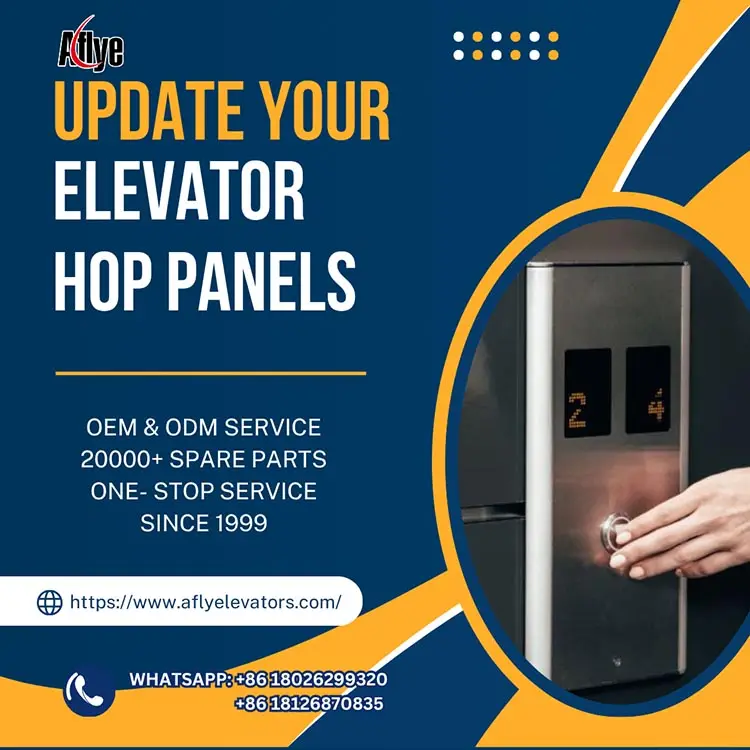
1. Hall Call Buttons Not Responding
The most common issue caused by improper installation is unresponsive hall call buttons. This is usually related to internal wiring, button module positioning, or poor connections.
If the button module is not securely installed or terminals are loose, signals cannot be reliably transmitted to the control system. As a result, passengers may press the button without any response.
In most cases, this issue can be resolved by checking the button module and wiring connections.
2. Abnormal Display on the HOP Panel
Modern HOP panels are often equipped with LCD or LED displays to show floor numbers and travel direction. Improper installation may lead to:
Display not lighting up
Flickering screen
Incorrect floor information
These issues are not always caused by a faulty display board, but often by unstable power or communication connections. Proper wiring is essential during installation.
3. Abnormal Call Signal Transmission
The HOP panel communicates with the elevator control system through signal lines. Incorrect wiring or poor cable routing can result in signal transmission problems.
Typical symptoms include:
No response after pressing the button
Incorrect floor calls recorded
Delayed response to hall calls
This issue is particularly common in modernization projects involving older elevators.
4. Loose Panel Causing Internal Damage
If the HOP panel is not firmly fixed, it may loosen over time due to frequent button usage. Continuous vibration can affect internal components, leading to:
Damaged button modules
Poor electrical contact
Loose display connections
Therefore, ensuring a stable mounting structure is critical.
5. Poor Panel Positioning Affecting Usability
In addition to installation quality, the positioning of the HOP panel also affects user experience. Improper placement may cause inconvenience, such as:
Buttons installed too high or too low
Panel too close to the door frame
Poor viewing angle for the display
Ergonomic considerations should be included during installation.
6. How to Avoid HOP Panel Installation Issues
To minimize failures in the hall call system, maintenance engineers should:
Ensure button modules and displays are securely installed
Verify power and communication wiring connections
Confirm installation height meets standards
Test call signals after installation
Standardized installation can significantly reduce future maintenance problems.
7. Importance of High-Quality Elevator Components
The HOP panel is a critical part of the elevator control system, and its quality directly impacts system stability. High-quality panels offer:
More stable circuitry
Durable button components
Better long-term reliability
Choosing reliable components is essential for maintenance and upgrades.
8. A-FLY Provides Professional HOP Panel Solutions
As a professional elevator and escalator parts supplier, A-FLY offers a wide range of:
Display boards
Related spare parts
These products are compatible with various elevator brands and control systems, helping maintenance teams efficiently complete installation and replacement.
A-FLY is committed to providing stable and reliable elevator parts solutions worldwide.
Conclusion
Although the elevator HOP panel is just a control interface, its installation quality directly affects the stability of the call system.
By ensuring proper installation, regularly inspecting key components, and working with a reliable supplier like A-FLY, maintenance teams can effectively reduce failures, improve operational efficiency, and enhance passenger experience.