
What Is the Function of a Transformer in an Elevator Control System?
In an elevator control system, the transformer may not be the most visible component, but it plays a critical role in ensuring stable power supply. Its main function is to convert the input voltage into the required working voltage for the control system, push buttons, lighting, relays, and certain electronic modules. At the same time, it also provides electrical isolation and stable power output. The stability of the transformer directly affects the normal operation of many elevator spare parts throughout the system.
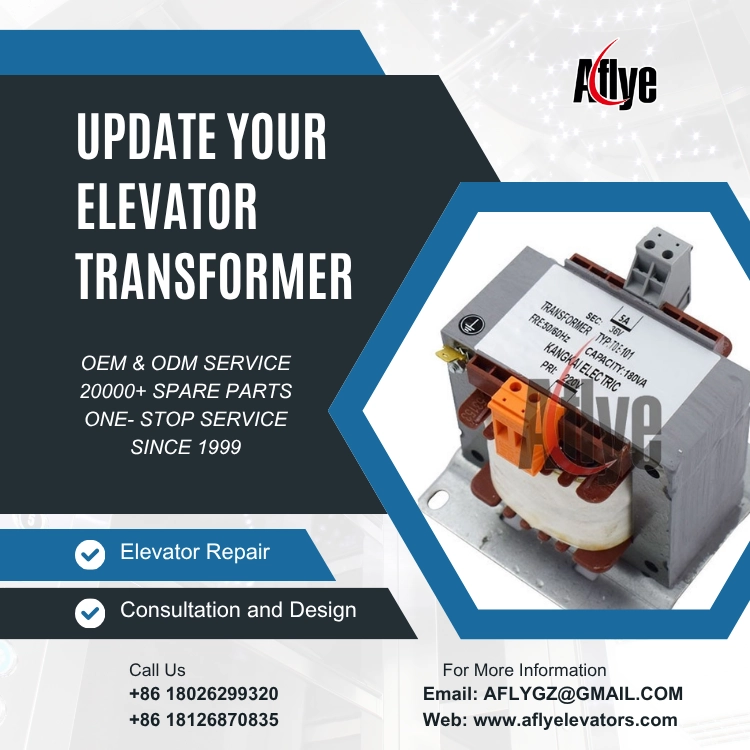
1. Providing Stable Power for the Control System
Components such as the elevator main control board, door operator system, and display devices all require stable voltage during operation. If the transformer output becomes unstable, it may lead to:
Control signal disorder
System fault codes
Abnormal display operation
Inaccurate leveling or startup issues
Therefore, the transformer is one of the essential components for maintaining normal elevator operation and is considered a key elevator & escalator spare part.
2. Voltage Conversion and Electrical Protection
Different elevator components require different operating voltages. The transformer converts voltage according to system requirements, ensuring that related components operate within the correct voltage range.
In addition, proper isolation design helps reduce electrical interference affecting the control system, improving overall operational stability and safety.
3. Problems Caused by Transformer Failure
When the transformer experiences aging, overheating, winding damage, or loose wiring connections, the following issues may occur:
Elevator fails to start normally
Push buttons stop responding
Unstable floor display
Abnormal noise inside the control cabinet
Frequent elevator shutdowns
In many cases, problems that appear to be related to the main board or buttons are actually caused by unstable transformer power supply.
Daily Maintenance Tips for Elevator Transformers
During maintenance work, technicians should regularly inspect the transformer for:
Excessive temperature rise
Burning smell or unusual odor
Insulation aging
Loose wiring terminals
Unstable output voltage
Excessive dust inside the control cabinet and poor ventilation can also accelerate transformer overheating and aging.
For elevators that have been in service for many years, preventive inspection and replacement planning are highly recommended based on the overall operating condition of the system.
Conclusion
Understanding the function and maintenance requirements of elevator control system transformers helps maintenance teams diagnose power-related faults more accurately and reduce elevator downtime risks.
Choosing high-quality and compatible elevator spare parts and elevator & escalator spare parts is essential for improving system reliability.
As a professional elevator & escalator parts supplier, A-FLY provides various elevator transformers and related components to help customers achieve more efficient maintenance and reliable system operation.