
Complex Wiring and Frequent Button Faults in Old Elevators? How to Rematch the Button System During Modernization
After many years of operation, problems in older elevators are often not limited to worn elevator push buttons. Complex wiring modifications, inconsistent interface standards, and outdated communication methods can also create multiple potential fault points.
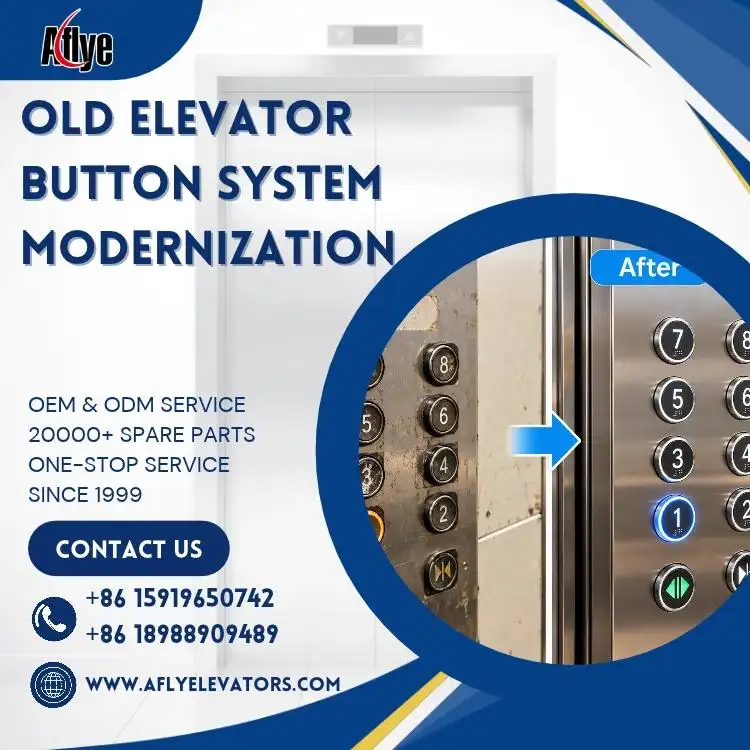
During an old elevator button modernization, simply replacing the buttons without rematching the control logic may still result in button failures, abnormal floor signals, or display synchronization problems.
1. Why Do Old Elevator Button Systems Have So Many Fault Points?
1. Aging Wiring and Multiple Modifications
Many older elevators use numerous individual wires to transmit button signals. After years of maintenance and modification, the wiring system may develop problems such as excessive connections, loose terminals, and unclear wire identification.
These conditions can make troubleshooting more difficult and increase the risk of intermittent signal faults.
2. Inconsistent Button Interfaces
Elevator button systems from different generations may use different operating voltages, contact configurations, pin definitions, and LED illumination methods.
Directly replacing an old button with a new one without confirming these specifications can easily result in compatibility problems.
3. Changes in Communication Methods
Some modern elevator control systems use serial communication, while older elevators may still rely on parallel signal wiring.
When upgrading an elevator button system, it may therefore be necessary to redesign or replace the button boards, communication boards, and related wiring to match the new control system.
2. How to Rematch the Elevator Button System During Modernization
1. Confirm the Original Control System First
Before selecting new buttons, confirm the:
Control cabinet model;
Button supply voltage;
Input and output method;
Elevator button communication protocol.
Based on this information, determine whether the original control system can be retained or whether a complete system upgrade is required.
2. Check the COP and HOP Together
An elevator COP modernization involves more than just the car buttons. The display, intercom, door open/close buttons, and other operating components should also be considered.
For an elevator HOP modernization, the hall call buttons, direction indicators, displays, and communication interfaces must be checked for compatibility with the control system.
3. Reorganize the Wiring
For severely aged wiring or circuits with too many connection points, it is recommended to renumber and reorganize the wiring.
If necessary, the elevator traveling cable and communication cables can also be replaced at the same time to reduce hidden electrical fault points.
4. Match the Button Boards and Communication Boards
For an elevator modernization project, compatible components should be selected according to the new control system, including:
Elevator push buttons;
Button boards;
COP communication boards;
HOP communication boards;
Elevator display modules.
Matching these components as a complete system can help reduce communication and signal compatibility problems after modernization.
3. What Information Should Be Confirmed Before Purchasing?
Before purchasing elevator modernization parts, it is recommended to provide:
Control system model;
Photos of the original elevator buttons;
Panel cutout dimensions;
Operating voltage;
Photos of connectors and interfaces;
Number of floors;
COP and HOP panel dimensions.
For discontinued or unidentified older elevator models, compatible solutions can be customized according to dimensions, wiring definitions, electrical specifications, and communication methods, rather than selecting replacement buttons based only on appearance.
4. A-FLY Elevator & Escalator Parts Supply Capability
A-FLY supplies a wide range of elevator button and modernization components, including:
Elevator push buttons;
COPs (Car Operating Panels);
HOPs (Hall Operating Panels);
Communication boards;
Hall call boxes;
Other elevator modernization parts.
These products are suitable for old elevator repair, button system upgrades, and elevator modernization projects.
A-FLY supports OEM/ODM customization for button dimensions, characters, Braille, illumination colors, operating voltages, interfaces, and panel designs.
We can also supply other elevator and escalator spare parts, providing engineering contractors and maintenance companies with one-stop elevator and escalator parts purchasing support.
Conclusion
The key to modernizing an old elevator button system is not simply replacing old buttons with new ones. The control system, communication method, wiring, and COP/HOP configuration must also be properly matched.
By systematically reorganizing and upgrading the complete button system, it is possible to reduce recurring signal, wiring, and communication faults after elevator modernization.