
Why Does Wear of Elevator Rope Gripper Friction Pads Reduce Braking Performance?
An elevator rope gripper is an important elevator safety protection device. Under specific abnormal operating conditions, the rope gripper generates braking force by clamping the elevator wire ropes, helping restrict unintended car movement. If the elevator rope gripper friction pads become excessively worn, their effective contact area and friction performance may decrease, potentially affecting clamping effectiveness and braking stability.
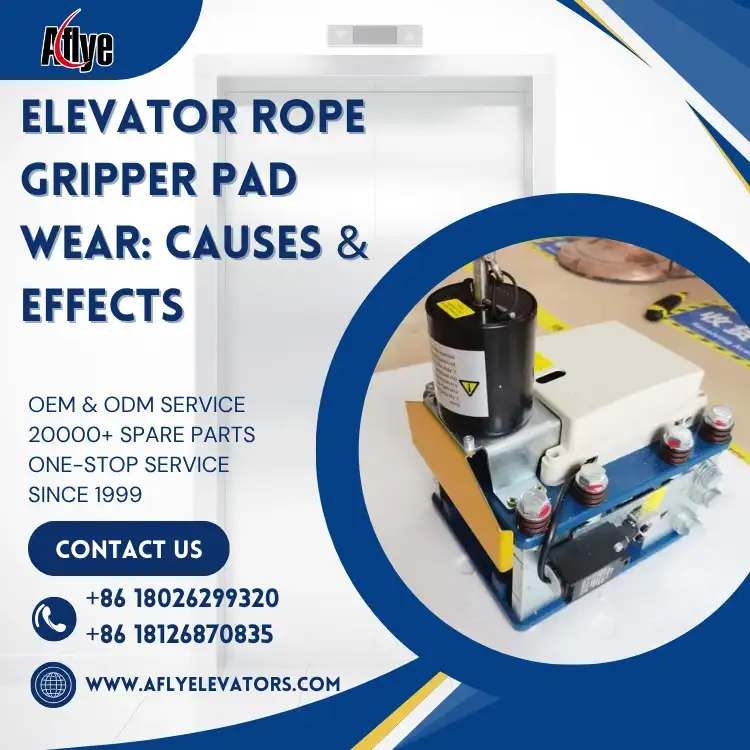
1. Why Do Elevator Rope Gripper Friction Pads Wear Out?
Common causes include material fatigue after long-term use, friction during rope-gripping operations, improper installation clearance, and poor wire rope surface conditions.
If the wire rope surface is contaminated with oil, rust, or abnormal wear, or if the left and right sides of the rope gripper apply uneven pressure, localized friction pad wear may occur. This gradually reduces the effective working surface of the rope friction pads.
2. Why Does Friction Pad Wear Affect Braking Performance?
The braking force of an elevator rope gripper is closely related to clamping force, friction coefficient, and effective contact conditions.
As friction pads wear, their surfaces may become thinner, hardened, grooved, or uneven. This can cause uneven force distribution when clamping the wire rope and reduce the effectiveness of clamping force transmission.
In severe cases, uneven contact between the left and right friction pads, localized wire rope slippage, or changes in stopping distance may occur, potentially affecting the protective performance of the entire elevator safety system.
3. What Should Be Done When Wear Is Detected?
During inspection and maintenance, check:
Friction pad thickness and surface wear
Mounting structure and fixing components
Clamping mechanism condition
Wire rope surface condition
Rope gripping clearance
Synchronization of the left and right mechanisms
If the friction pads exceed the manufacturer's allowable wear limits or show cracks, deep grooves, or significant uneven wear, they should be replaced according to the manufacturer's requirements. Simply grinding the worn surface and continuing to use it is not recommended.
As a safety-critical component, the rope gripper must be adjusted and functionally tested by qualified professionals after replacement, in accordance with equipment requirements and applicable safety standards.
4. What Specifications Should Be Confirmed When Purchasing Elevator Rope Gripper Friction Pads?
When purchasing rope gripper friction pads, confirm the following specifications:
Rope gripper model
Compatible wire rope diameter
Friction pad dimensions and thickness
Mounting hole positions
Material specifications
Fixing method
When purchasing a complete elevator rope gripper, also confirm the elevator rated load, speed, wire rope specifications, mounting structure, and compatibility with the original safety system. Selection should never be based on appearance alone.
5. A-FLY Elevator Safety Components Supply
A-FLY supplies elevator rope grippers, rope gripper friction pads, overspeed governors, safety gears, tension devices, buffers, and other elevator safety components.
We also supply elevator wire ropes, traction sheaves, deflector sheaves, and other elevator and escalator spare parts.
Model verification, dimensional matching, bulk purchasing, and OEM/ODM services are available for elevator maintenance, component replacement, and modernization projects.
Conclusion
Elevator rope gripper friction pads are typical safety-critical wear components. Their deterioration involves more than simply reduced thickness; it can also change the contact conditions and friction performance during rope clamping.
Regular inspection of friction pads, wire ropes, and the clamping mechanism is essential for maintaining reliable rope gripper braking performance.