
What Are the Signs of Escalator Step Roller Bearing Failure?
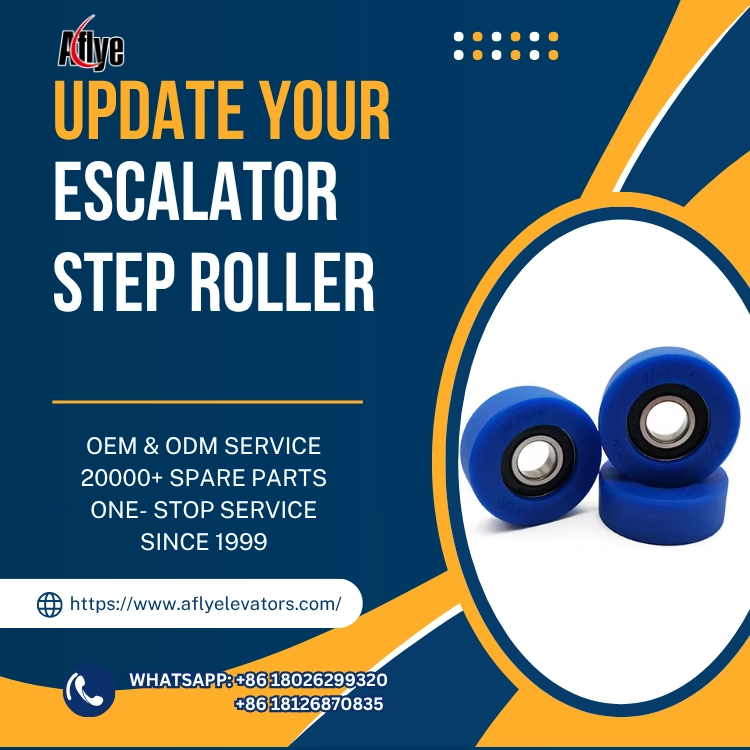
In an escalator system, step rollers are responsible for supporting, guiding, and stabilizing the movement of steps, while the bearings directly affect how smoothly the rollers rotate. Once the bearings are damaged, the overall performance of the escalator will decline significantly, and in severe cases, it may even lead to shutdowns. For maintenance companies, identifying early warning signs and replacing related elevator & escalator spare parts in time is essential to prevent fault escalation and downtime.
1. Noticeable Increase in Abnormal Noise
One of the most common signs of bearing failure in step rollers is increased abnormal noise. During operation, you may hear:
Continuous friction noise
Rolling or grinding sounds
Metallic rubbing noise
These sounds tend to become more pronounced in high-traffic environments. If noise increases during upward or downward operation, maintenance personnel should prioritize checking the step rollers and bearings, as this often indicates wear, insufficient lubrication, or internal ball damage.
2. Unstable Step Operation
When bearings are worn or internal clearance increases, the rotation of the step rollers becomes unstable. Passengers may experience:
Slight vibration
Jerking or sticking
Uneven movement
Although this may not immediately cause a shutdown, it will gradually affect the overall performance of the escalator. If left unresolved, abnormal vibration can also impact other escalator components and increase maintenance costs.
3. Localized Overheating of Step Rollers
Under normal conditions, step rollers generate slight heat. However, if a specific area shows abnormal temperature rise—especially accompanied by a burnt smell or lubrication failure—it may indicate bearing damage.
Increased internal friction within the bearing leads to heat accumulation, which can affect the roller body and surrounding components. In public escalators, ignoring this issue may accelerate the aging of multiple elevator & escalator spare parts.
4. Accelerated and Irregular Roller Wear
When bearings fail, the load on the step rollers becomes uneven, leading to:
Uneven wear patterns
Surface cracks
Localized damage
In many cases, severe roller wear observed on-site is not caused by the roller itself, but by the loss of proper support from damaged bearings. Therefore, when replacing step rollers, it is important to inspect the bearings and related components simultaneously to avoid repeated failures.
5. Overall Decline in Escalator Stability
When multiple step roller bearings begin to age or fail, the overall stability of the escalator decreases. This may result in:
Increased operational noise
Higher mechanical load
Faster wear of components
At this stage, the issue is no longer limited to a single component but indicates that the system is entering a phase of abnormal wear. Maintenance personnel should evaluate noise, temperature rise, vibration, and roller wear collectively rather than focusing on a single symptom.
Maintenance Recommendations
When any of the above signs are detected, damaged step rollers, bearings, and related elevator & escalator spare parts should be inspected and replaced promptly. Regular inspection, proper lubrication, and preventive replacement are key measures to reduce downtime and extend component lifespan.
As a professional elevator & escalator parts supplier, A-FLY provides a wide range of escalator step rollers and related components, helping maintenance teams improve service efficiency and ensure long-term stable operation.
Conclusion
Understanding the signs of escalator step roller bearing failure helps detect potential issues early, reducing downtime and maintenance costs.
Choosing high-quality elevator & escalator spare parts, along with routine inspection and maintenance, is essential to ensuring safe and reliable escalator operation.