
Early Signs of Elevator Door Hanger Roller Bearing Failure
When elevator door system problems occur, many people first suspect the door operator, light curtain, or door lock—yet a critical elevator component is often overlooked: the door hanger roller bearing.
In reality, once early signs of bearing damage appear, they not only affect door opening and closing smoothness but can also trigger a chain of related failures, significantly increasing maintenance costs.
As a long-term global elevator & escalator spare parts supplier, A-FLY has found through real maintenance cases that over 80% of door system abnormalities show early warning signals at the door hanger roller bearing stage.
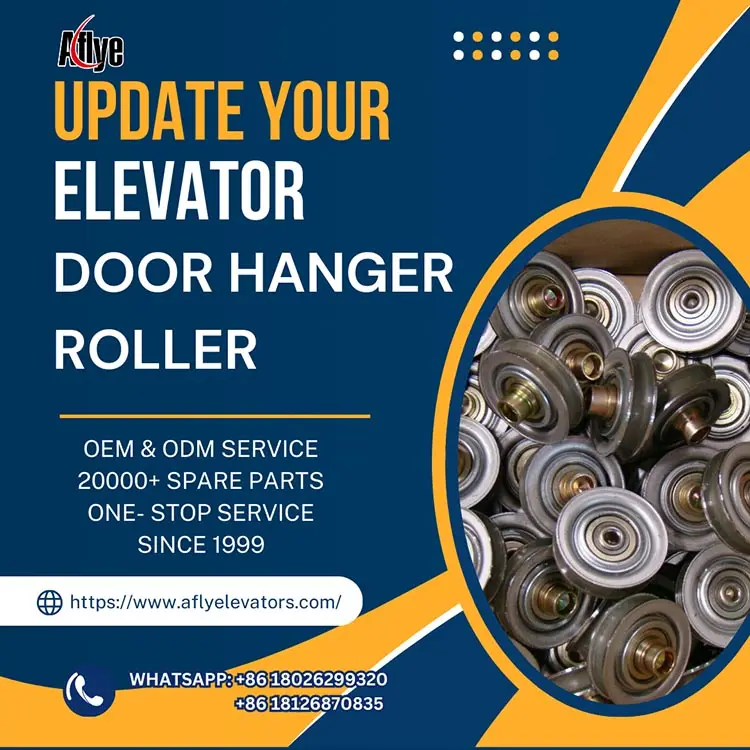
1. The Role of the Door Hanger Roller Bearing
The door hanger roller bearing is the core supporting component that allows the door panel to slide along the upper track. Its main functions include:
Bearing the weight of the door panel
Ensuring smooth door opening and closing
Reducing friction in door system operation
Maintaining stable door panel positioning
Though small, it is one of the key elevator components that directly affects the service life of the door system.
2. Early Warning Signs of Door Hanger Roller Bearing Damage
1) Increased door noise and metal friction sounds
Under normal conditions, elevator doors should operate quietly and smoothly. When bearing lubrication fails or rolling elements begin to wear, you may notice:
“Grinding” or “squeaking” friction noises
Continuous noise during door movement
Noise that intensifies as door speed increases
These are typical early indicators of internal bearing wear.
2) Slower door opening or closing speed
As bearing damage increases rolling resistance, the door operator load rises, resulting in:
Sluggish door response
Extended door closing time
Heavier, strained door operator sound
Over time, this places additional stress on the door operator motor and other related elevator components.
3) Door panel vibration or unstable movement
When bearing clearance increases or rolling elements wear unevenly, door hanger rollers no longer run smoothly on the track, causing:
Side-to-side door panel wobble
Minor bouncing during door travel
Misalignment during door closing
If left unaddressed, these issues can lead to secondary wear of door rollers and tracks.
4) Accelerated wear of the door track
Bearing failure prevents the roller from maintaining proper load direction, leading to uneven contact between the roller and track, such as:
Localized deep wear on the track
Visible metal scratches on the track surface
More frequent replacement of track components
This is a classic case of a small component failure dragging down the entire system.
5) Increased frequency of door system faults
Bearing problems may also indirectly cause electrical false alarms, including:
Frequent “door not closed” signals
Repeated door opening and closing cycles
Door locks failing to engage smoothly during operation
While these issues often appear to be door operator or lock faults, the root cause may simply be an aging door hanger roller bearing.
3. When Is Immediate Replacement Necessary?
Immediate replacement of the door hanger roller bearing is recommended if any of the following are observed:
Noticeable resistance when manually moving the door panel
Obvious looseness or wobble when the roller rotates
Rust, corrosion, or dried lubricant on the bearing
Abnormal wear already present on the door track
Continued operation will only expand the damage range and increase overall elevator spare parts replacement costs.
4. How to Extend the Service Life of Door Hanger Roller Bearings
The following measures can help extend bearing life during routine maintenance:
Regularly clean dust and debris from door tracks
Check bearing lubrication condition
Prevent external impact or force on door panels
Investigate abnormal noise as soon as it appears
Equally important is the selection of high-quality door hanger roller bearings, as low-grade bearings are prone to early wear, eccentric rotation, and premature failure.
5. Choosing a Reliable Elevator Door System Parts Supplier
Door hanger roller bearings are high-frequency wear components with strict requirements for material quality, precision, and durability.
As a professional elevator & escalator spare parts supplier, A-FLY offers multiple models of door hanger rollers and bearing components featuring wear resistance, low noise, and stable operation—widely compatible with various elevator door operator systems.
High-quality components not only reduce failure rates but also significantly lower long-term maintenance pressure on service teams.
Conclusion
Abnormal elevator door operation rarely happens suddenly—it is usually the result of small issues accumulating over time.
Recognizing early warning signs of door hanger roller bearing wear and replacing worn components promptly with high-quality elevator spare parts is essential to maintaining stable door system performance.
Choosing a professional and reliable supplier like A-FLY makes maintenance easier and elevator operation safer in the long run.