
The Impact of Friction Wheel Slippage on Escalator Operation
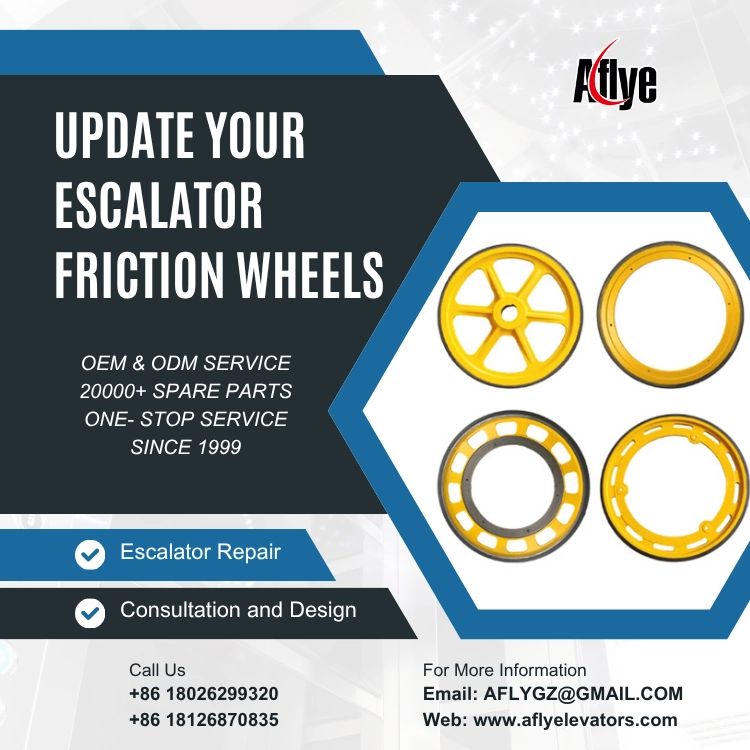
In an escalator transmission system, the escalator friction wheel plays an important role in transmitting power and maintaining smooth operation. Once the friction wheel begins to slip, it can affect normal escalator performance and may lead to abnormal noise, vibration, accelerated wear, and even shutdown failures.
For maintenance companies, identifying the cause of slippage and replacing the correct elevator & escalator spare parts in time is an important step in reducing failure rates.
1. Unstable Operation and Reduced Passenger Comfort
When the friction wheel slips, power transmission becomes inconsistent. During startup, acceleration, or continuous operation, the escalator may experience:
Slight jerking
Vibration
Uneven speed
Passengers can clearly feel that the escalator is not running smoothly, especially in high-traffic locations where the issue becomes more noticeable.
2. Reduced Transmission Efficiency and Increased Energy Consumption
When the friction wheel cannot transmit power steadily, the drive system must output a higher load to maintain operation. This leads to:
Lower transmission efficiency
Increased energy consumption
Over time, this not only affects escalator performance but also increases overall maintenance costs.
3. Increased Noise and Accelerated Wear of Related Components
Friction wheel slippage is often accompanied by:
Friction noise
Sharp squeaking sounds
Periodic abnormal sounds
More importantly, slipping causes abnormal friction on the wheel surface, transmission components, and other escalator spare parts.
Over time, this may result in:
Uneven wear
Surface hardening
Localized damage
which shortens the service life of the components.
4. Increased Mechanical Load and Expanded Failure Risks
Friction wheel slippage is usually not an isolated issue. It may also place additional stress on:
Bearings
Chains
Guide components
Drive systems
If left unresolved for a long time, what starts as a simple friction wheel problem may eventually lead to multiple elevator spare parts and escalator spare parts failing simultaneously, increasing the risk of shutdowns.
5. Severe Cases May Cause Escalator Shutdowns
If slippage continues to worsen, the escalator may experience:
Protective shutdowns
Synchronization loss
System alarms
For high-frequency usage locations such as shopping malls, airports, and subway stations, this not only affects equipment operation but also impacts passenger flow and daily operations.
Maintenance Recommendations
During routine maintenance, technicians should carefully inspect escalator friction wheels for:
Surface wear
Hardening
Cracks
Uneven wear
Signs of slipping
At the same time, installation alignment, matching precision, and the condition of surrounding transmission components should also be checked.
Once abnormalities are found, the matching escalator spare parts should be replaced promptly to prevent further failures.
Conclusion
Understanding the impact of friction wheel slippage on escalator operation helps maintenance teams identify potential problems earlier, reducing downtime and repair costs.
As a professional elevator & escalator parts supplier, A-FLY provides various escalator friction wheels and related elevator & escalator spare parts to help customers achieve more stable and efficient maintenance management.