
Stainless Steel vs Plastic Elevator Buttons: Durability Comparison
In elevator control systems, elevator push buttons are among the most frequently used components by passengers. Whether it is the COP buttons inside the car or the LOP hall call buttons, their high usage frequency means that material quality and durability directly impact long-term operational stability and maintenance costs.
In practical elevator projects, the most common button materials are stainless steel and plastic. These two types differ significantly in appearance, service life, and application scenarios. As a professional supplier serving the global market, A-FLY has found through extensive maintenance experience that selecting the right material based on the operating environment is crucial for extending equipment lifespan.
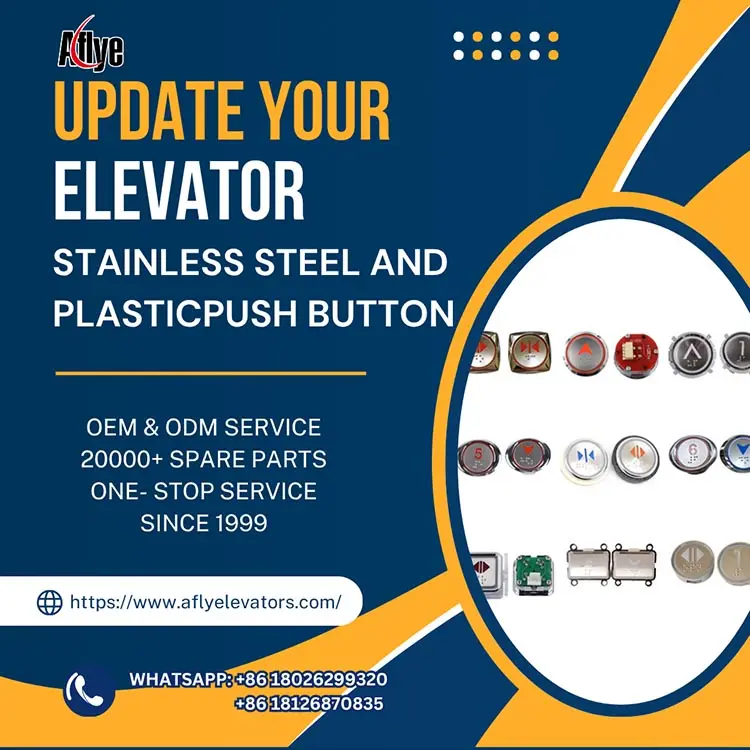
1. Durability Features of Stainless Steel Elevator Buttons
Stainless steel elevator buttons typically feature metal panels or structures, offering excellent mechanical strength and wear resistance. They are widely used in commercial buildings, public transportation systems, and high-traffic environments.
Key advantages include:
High wear resistance: The metal surface resists deformation and abrasion even under frequent use
Strong impact resistance: Suitable for public areas with higher external force exposure
Good corrosion resistance: Performs reliably in humid or temperature-variable environments
As a result, stainless steel buttons generally have a longer service life in high-frequency usage scenarios.
2. Characteristics of Plastic Elevator Buttons
Plastic elevator buttons are commonly used in residential elevators or low-traffic environments. Compared to stainless steel, they are lighter and more cost-effective.
Main advantages include:
Flexible design: Easier to customize in terms of color and shape, suitable for decorative applications
Lower cost: Helps reduce overall equipment expenses in standard residential projects
However, plastic buttons are less durable and may experience wear or aging over time.
3. Key Differences in Durability
In real-world applications, the durability gap between stainless steel and plastic buttons becomes clear.
Stainless steel buttons can withstand intensive use and maintain performance in environments such as shopping malls, hospitals, and metro stations.
Plastic buttons, under high-frequency use, may develop:
Surface wear
Faded symbols or markings
Structural looseness
Therefore, stainless steel buttons are generally more reliable in demanding environments.
4. Application-Based Selection Recommendations
Choosing the right button material depends on the usage scenario:
High-traffic environments (shopping malls, office buildings, hospitals, public transport):
Stainless steel buttons are recommended due to superior durability
Low-traffic environments (residential elevators):
Plastic buttons can meet basic needs while offering cost advantages
Proper material selection can effectively reduce maintenance frequency.
5. Importance of Button Quality in Elevator Operation
Although small in size, elevator buttons play a critical role in user experience and system interaction. Factors such as contact quality, structural design, and material durability all affect performance.
Frequent button failures can:
Disrupt passenger experience
Increase maintenance costs
Therefore, choosing reliable components is essential during maintenance and upgrades.
6. A-FLY Provides Comprehensive Elevator Button Solutions
As a professional elevator and escalator parts supplier, A-FLY offers a wide range of products, including:
Stainless steel elevator buttons
Plastic elevator buttons
COP panel buttons
LOP hall call buttons
These products are compatible with various elevator models and application environments, helping customers improve system stability while reducing maintenance costs.
Conclusion
Both stainless steel and plastic elevator buttons have their advantages, but in terms of durability, stainless steel is generally better suited for high-frequency use.
By selecting the appropriate material based on real application scenarios and working with a reliable supplier like A-FLY, elevator operators can significantly enhance long-term system stability and user experience.