
Abnormal Elevator Door Noise and Jerky Operation? Worn Door Hanger Rollers May Be the Main Cause
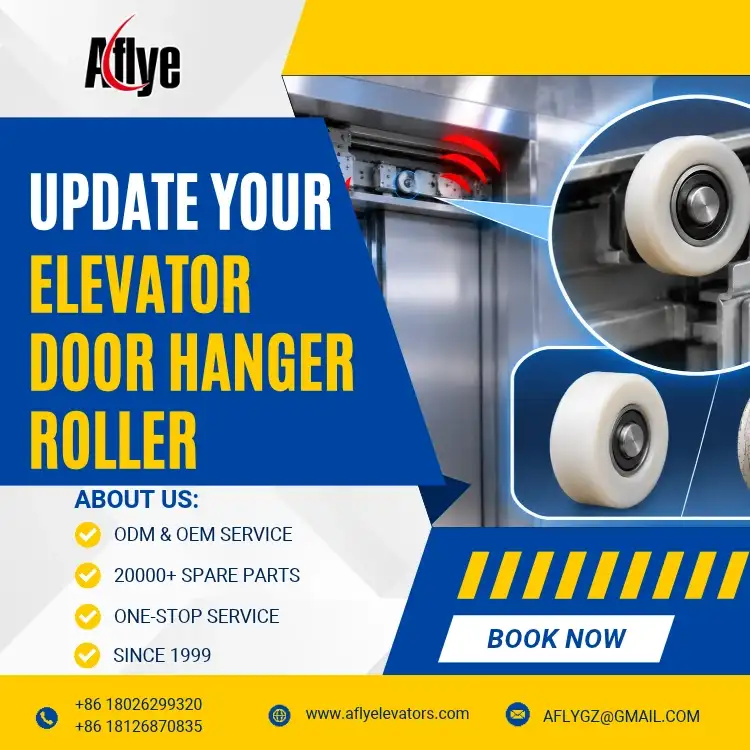
During elevator operation, problems such as increased noise when opening or closing doors, door panel vibration, jerky movement, or incomplete closing are often related to the condition of elevator door hanger rollers. As important components that support the weight of the door panels and move along the guide rails, door hanger rollers are subject to wear and increased internal clearance over time, affecting the stability of the entire elevator door system.
1. Why Do Elevator Door Hanger Rollers Wear Out?
1. Long-Term Load from Door Panels
Elevator doors open and close many times every day. Door hanger rollers continuously bear the weight of the door panels and repeated operational impacts. Over time, both the roller surface and internal bearings gradually wear out.
2. Increased Bearing Clearance
Insufficient lubrication or prolonged use can cause the bearings inside elevator door rollers to develop excessive clearance and rotate less smoothly, resulting in noticeable abnormal noise during door operation.
3. Improper Contact Between Guide Rails and Door Rollers
Dust accumulation, deformation, or incorrect installation of the door guide rails can increase the rolling resistance of door hanger rollers and accelerate roller surface wear.
4. Aging of Door Hanger Roller Materials
After long-term use, some roller surfaces may become hardened, cracked, or unevenly worn, causing vibration and noise during elevator door movement.
2. What Problems Can Worn Door Hanger Rollers Cause?
When door hanger rollers become worn, the elevator door system may experience the following problems:
Abnormal rolling noise during door opening and closing
Unstable door operating speed
Jerky movement when closing
Side-to-side door panel movement
Increased door operator load
Improper engagement of the door lock mechanism
If these problems are left untreated, they may also accelerate wear on the door operator, motor, belt, and other elevator door components.
3. How to Troubleshoot Elevator Door Hanger Roller Problems?
During maintenance and inspection, pay particular attention to the following:
Whether the elevator door roller surfaces are worn
Whether the bearings rotate smoothly
Whether the roller clearance is within the required range
Whether the door guide rails are clean and straight
Whether the door hanger rollers are compatible with the guide rails
If the rollers are only slightly contaminated, cleaning and maintenance may be sufficient. However, if noticeable uneven wear, bearing jamming, or roller surface damage is found, timely replacement is recommended.
When replacing door hanger rollers, do not overlook other related components. Door sliders, door vanes, door lock contacts, and other elevator door system parts should also be inspected.
4. What Should Be Considered When Purchasing Elevator Door Spare Parts?
When purchasing elevator door hanger rollers, confirm the following specifications:
Elevator brand and door system model
Roller diameter and width
Bearing model
Installation dimensions
Guide rail structure
Door panel weight requirements
Especially for old elevator modernization projects, it is recommended to provide photos of the original rollers, actual dimensions, and installation positions to avoid operational problems caused by incompatible specifications.
5. A-FLY Elevator Door Spare Parts Supply
A-FLY supplies elevator door hanger rollers, elevator door rollers, door sliders, door vanes, door lock contacts, door operator belts, and other elevator door components for elevator repair, maintenance, and modernization projects.
We also provide elevator push buttons, display boards, control systems, safety components, and various escalator spare parts.
Model identification, dimensional matching, OEM/ODM customization, and bulk purchasing services are available to meet the one-stop sourcing needs of elevator contractors, maintenance companies, and distributors.
Conclusion
Abnormal elevator door noise and jerky opening or closing are not necessarily caused by the door operator alone. Worn door hanger rollers are also a common cause.
Regularly inspecting door rollers, guide rails, and related elevator door components can help reduce door system failures and improve elevator operating comfort and reliability.