
Escalator Steps Running Unsteadily? An Abnormal Step Chain Tensioning Device May Be the Main Cause!
During escalator operation, problems such as step vibration, periodic impacts, abnormal noise, or unstable movement are often associated with worn step rollers or guide rails. However, the escalator step chain tensioning device is also a critical component affecting the stability of the entire step system.
As an important mechanism for maintaining and adjusting escalator step chain tension, any malfunction of the tensioning device can directly affect the overall operating condition of the escalator step system.
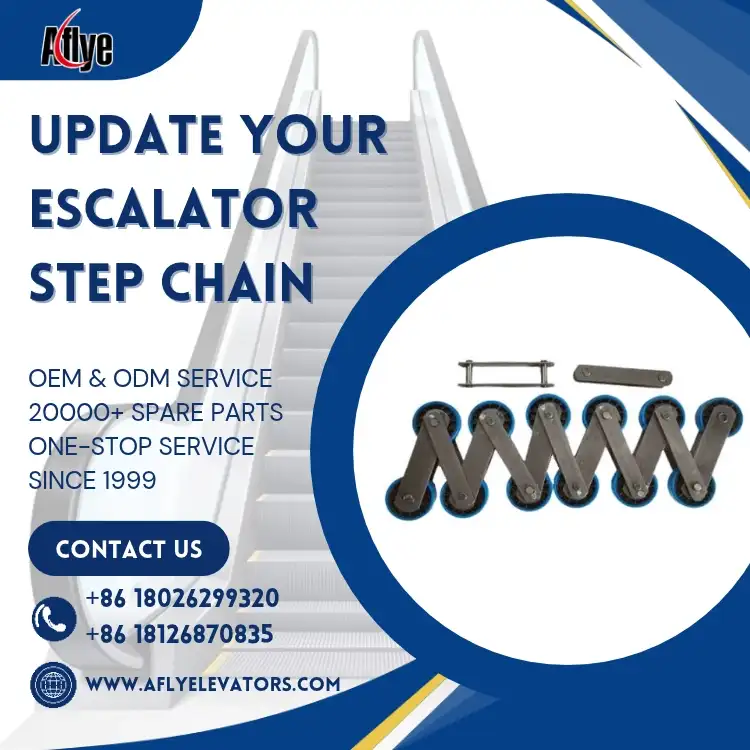
1. Why Does the Step Chain Tensioning Device Affect Escalator Stability?
1. Insufficient Chain Tension
After prolonged operation, escalator step chains may gradually elongate due to wear on pins and bushings. If the chain tension is insufficient, the chain may swing or produce impacts during operation, causing periodic step vibration.
2. Tensioning Device Jamming
After long-term use, tensioning slides, springs, rollers, and adjustment mechanisms may experience wear, corrosion, or insufficient lubrication. This can prevent the tensioning device from automatically adjusting to changes in chain length.
3. Uneven Tension on Both Sides
If the left and right tensioning mechanisms are not adjusted synchronously, the step chains may experience uneven loading. This can affect the step running alignment and increase abnormal wear on guide rails and rollers.
4. Tension Spring Fatigue
After prolonged compression and operation, tension springs may lose elasticity. As a result, the chain cannot maintain stable preload, increasing operational impacts and vibration.
2. What Problems Can an Abnormal Tensioning Device Cause?
When escalator step chain tension becomes abnormal, common symptoms include:
Noticeable impacts during escalator startup or stopping
Vertical bouncing or vibration of escalator steps
Abnormal noise from the step chain area
Improper contact between steps and guide rails
Accelerated wear of escalator step rollers
Continued operation may also cause fatigue damage to chains, sprockets, and step connecting components.
3. How Should These Problems Be Addressed During Escalator Modernization?
During escalator modernization, replacing only the step chain is not sufficient. The entire tensioning system should also be inspected.
Maintenance personnel should pay particular attention to:
Step chain elongation
Smooth movement of the tensioning device
Condition of the tension springs
Wear on rollers and guide rails
Sprocket engagement condition
Step running alignment
If the tensioning device is jammed, deformed, or unable to maintain stable chain tension, the relevant components should be replaced promptly.
4. What Should Be Considered When Purchasing Escalator Step Chain Tensioning Devices?
When purchasing escalator spare parts, confirm the following specifications:
Escalator brand and model
Step chain specifications
Tensioning mechanism design
Installation dimensions
Spring specifications
For older escalator projects, it is recommended to provide photos of the original components, dimensions, and descriptions of the operating problems. A professional escalator spare parts supplier can then help identify compatible replacements and avoid installation or adjustment problems caused by model incompatibility.
5. A-FLY Escalator Spare Parts Supply
A-FLY supplies escalator step chain tensioning devices, escalator step chains, step rollers, step chain sprockets, comb plates, escalator steps, and other frequently replaced escalator spare parts.
As a professional elevator and escalator parts supplier, A-FLY supports model identification, dimensional matching, sample confirmation, and OEM/ODM customization.
We also provide a wide range of mechanical, electrical, and safety components for escalator maintenance, repair, and modernization projects.
Conclusion
An abnormal escalator step chain tensioning device is one of the important causes of unstable step operation.
Regularly inspecting chain tension, tensioning mechanism condition, and related drive components can help reduce operational impacts, abnormal wear, and potential safety risks while improving long-term escalator reliability.