
Elevator Door Vane Problems: Why Does the Door Stumble or Fail to Move the Landing Door? Key Causes to Check!
During elevator operation, problems such as slow opening, the door vane failing to engage the landing door, jerky door movement, or abnormal noises are often related to the condition of the elevator door vane. As an important component connecting the car door and landing door, the door vane must engage and release the landing door correctly during opening and closing. Any wear or improper adjustment can affect the performance of the entire elevator door system.
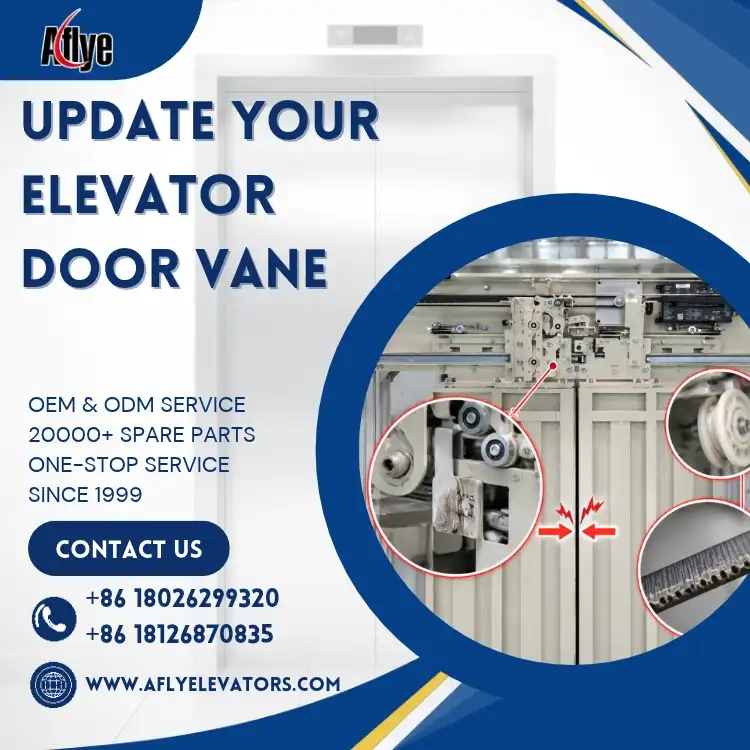
1. Why Does the Elevator Door Vane Cause Jerky Door Opening?
1. Worn Door Vane Rollers
Elevator door vanes typically work together with the landing door lock rollers. After prolonged operation, roller surface wear and increased bearing clearance can affect smooth contact, creating additional resistance when the door vane engages the landing door.
2. Incorrect Door Vane Clearance Adjustment
If the clearance between the door vane and landing door lock rollers is incorrect, the engagement may be either too tight or insufficient.
Insufficient clearance can cause excessive friction and jamming, while excessive clearance may prevent the door vane from effectively moving the landing door.
3. Wear Inside the Door Vane Mechanism
Internal shafts, springs, and sliding components may become loose, corroded, or less flexible after long-term operation, preventing the door vane from opening and retracting smoothly.
4. Abnormal Door Operator Parameters
Incorrect door speed curves, opening force, or deceleration settings may increase the operating load on the door vane and accelerate wear on related components.
2. What Problems Can an Elevator Door Vane Malfunction Cause?
Common symptoms of elevator door vane failure include:
The landing door cannot open completely.
The door pauses or jerks during closing.
Abnormal noises occur when the door vane contacts the door lock rollers.
The elevator repeatedly opens and closes its doors.
Door lock signals become unstable or fail to register correctly.
Continued operation under these conditions may accelerate wear on the door operator, elevator door locks, and other elevator door components.
3. How to Troubleshoot Elevator Door Vane Problems?
During maintenance, the following components should be inspected:
Door vane roller wear
Smoothness of door vane movement
Clearance between the door vane and landing door lock rollers
Condition of door vane springs and shafts
Door operator operating parameters
If the problem is caused by incorrect adjustment, recalibration should be performed according to the equipment requirements. If the door vane mechanism is severely worn, the rollers are damaged, or stable operation cannot be maintained, elevator door vane replacement is recommended.
4. What Should Be Considered When Purchasing an Elevator Door Vane?
Before purchasing an elevator door vane, confirm the following specifications:
Elevator brand and door operator model
Door vane structure type
Installation dimensions
Roller specifications
Connection and installation method
Compatibility with the original landing door system
Especially when purchasing elevator modernization parts, do not select replacement components based on appearance alone. Compatibility with the door operator and landing door structure must also be considered.
5. A-FLY Elevator Door System Spare Parts Supply
A-FLY supplies elevator door vanes, elevator door locks, door hanger rollers, door sliders, door operator belts, door operator controllers, and other elevator door system components for elevator repair, maintenance, and modernization projects.
We also provide elevator push buttons, display boards, control systems, safety components, and various escalator spare parts.
Model identification, dimensional matching, OEM/ODM customization, and bulk purchasing services are available to meet the project requirements of elevator contractors and maintenance companies.
Conclusion
An elevator door vane failing to move the landing door properly does not necessarily mean the door vane itself is damaged. Worn rollers, incorrect clearances, aging internal mechanisms, and abnormal door operator parameters can all cause door operation problems.
A comprehensive inspection of the door vane and its compatibility with the entire elevator door system is essential for reducing recurring failures and maintaining smooth door operation.