
Elevator Buttons Becoming Harder to Press? Internal Mechanical Wear May Be Causing the Problem
Elevator buttons are among the most frequently used elevator components. After long-term use, some elevators may experience buttons that become increasingly difficult to press, slow to rebound, or fail to respond when pressed. While many people attribute these problems simply to button aging, the internal mechanical structure, contact condition, and installation environment can also affect button performance.
1. Why Are Elevator Buttons Becoming Harder to Press?
1. Dust Accumulation Inside the Button
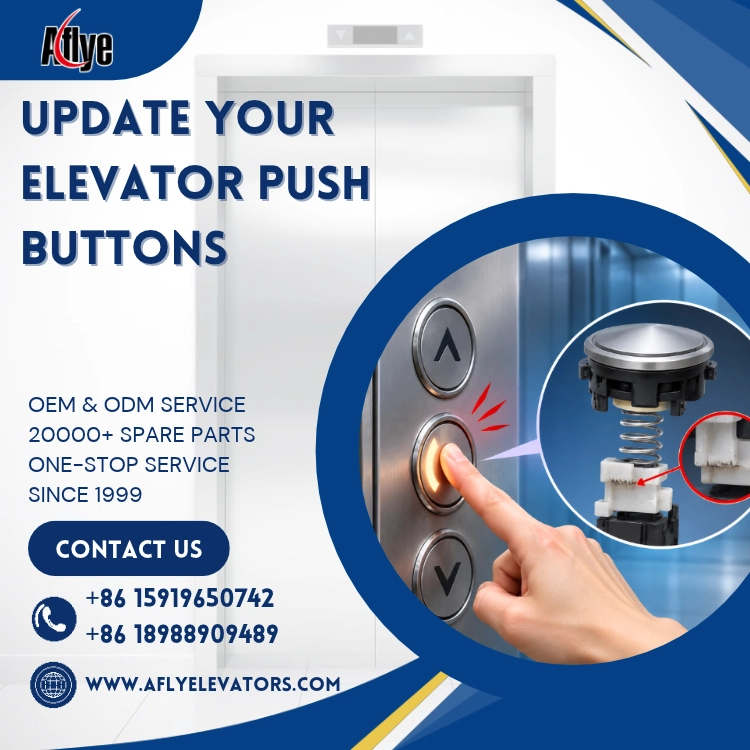
Elevator buttons are constantly exposed to public environments. Dust and oil can enter the gaps inside the button, increasing friction between the button cap and guide structure and causing elevator button jamming.
2. Return Spring Fatigue
The internal spring undergoes repeated compression during long-term use. Over time, its elasticity may decrease, resulting in insufficient rebound force and changes in button pressing resistance.
3. Wear of the Button Guide Structure
Frequent operation can cause wear to mechanical components such as button caps and guide sleeves. This may affect the button's movement path, resulting in increased pressing resistance or one-sided jamming.
4. Aging of Elevator Button Contacts
Elevator button contacts are responsible for transmitting floor selection signals. When the contacts become oxidized, worn, or lose contact pressure, problems such as no response after pressing or the need for repeated pressing may occur.
2. What Problems Can Elevator Button Malfunctions Cause?
Elevator button problems not only affect passenger experience but may also lead to unstable control signals.
Common symptoms include:
Noticeably increased button pressing resistance
Slower button rebound
LED lights illuminate, but the floor selection is not registered
Repeated pressing is required to trigger a signal
Frequent failure of buttons on certain floors
If these problems are ignored for a long time, maintenance costs for button boards and control systems may also increase.
3. How to Troubleshoot Elevator Button Problems?
During elevator button maintenance, the following components should be inspected:
Whether the button cap is deformed
Whether the internal spring has lost elasticity
Whether the contacts are oxidized
Whether the wiring terminals are loose
Whether the button is correctly installed
For minor dust accumulation, cleaning and maintenance may solve the problem. However, if the internal mechanical structure or electrical contacts show significant wear or aging, elevator button replacement is recommended to avoid repeated repairs.
4. What Should Be Considered When Purchasing Elevator Buttons?
When purchasing elevator push buttons, confirm the following specifications:
Button outer diameter, panel cutout size, and installation dimensions
Operating voltage, such as 12V, 24V, or 110V
LED lighting colors: common options include red, white, blue, orange, and green
Braille and language requirements: Braille, Arabic characters, or Spanish characters
Connector type: straight-pin or right-angle connectors, and the number of pins
Especially for old elevator modernization projects, do not select replacement buttons based on appearance alone. Compatibility with the control system and wiring interfaces must also be considered.
5. A-FLY Elevator Buttons and Spare Parts Supply
A-FLY supplies a wide range of elevator push buttons, Braille buttons, illuminated buttons, touchless buttons, button boards, and compatible COP/HOP products.
We support OEM/ODM customization of button dimensions, operating voltage, connectors, characters, and LED lighting colors.
We also supply elevator display boards, door system components, control systems, safety components, and other elevator and escalator spare parts to meet the needs of elevator repair, maintenance, modernization, and bulk purchasing projects.
Conclusion
Elevator buttons becoming harder to press is not necessarily just a surface aging problem. Internal dust accumulation, return spring fatigue, mechanical wear, and contact deterioration can all cause button jamming and unstable signals.
Timely inspection and replacement with properly matched elevator button components can help improve passenger experience and elevator operating reliability.