
What Safety Risks Are Caused by Aging Elevator Door Operator Header Assemblies?
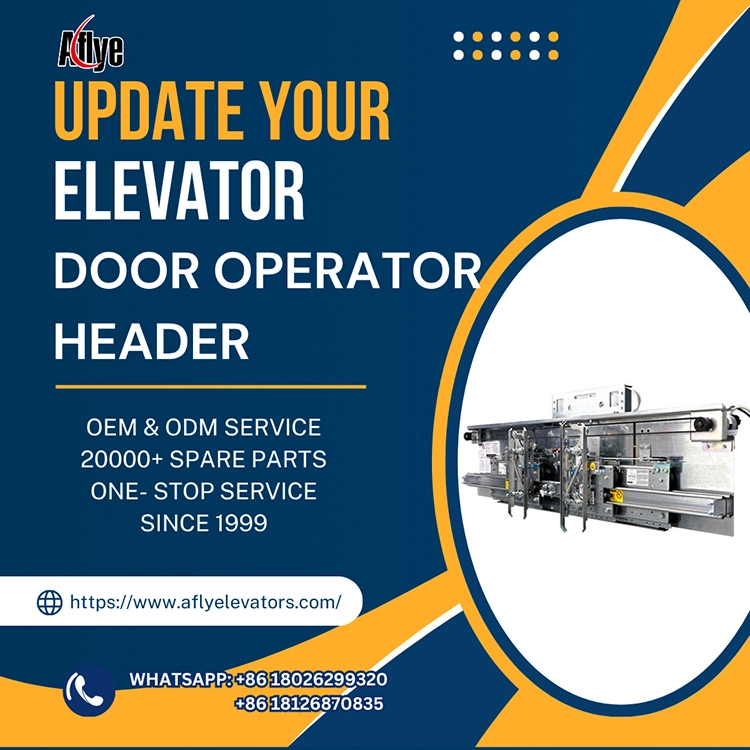
In elevator door systems, the door operator header assembly is one of the core structures responsible for controlling door opening and closing. It typically integrates key components such as the motor, transmission mechanism, door hanger rollers, belts, and control devices.
Once the header assembly ages or its performance declines, it not only affects door operation efficiency but may also introduce various safety risks.
In real maintenance practice, door system failures account for a large proportion of elevator faults, and aging header assemblies are a major cause. As a professional elevator and escalator parts supplier, A-FLY has found that many door system issues are closely related to aging header components and associated parts.
1. Abnormal Door Operation Affecting Passenger Safety
The most direct symptom of aging is unstable door movement, such as:
Slow or uneven door opening
Doors failing to close completely or reopening repeatedly
Jerky or obstructed door movement
These issues not only affect ride comfort but may also increase the risk of passengers being caught or injured when entering or exiting the elevator—especially in high-traffic environments.
2. Failure of Door Lock Coordination
The header assembly works closely with the elevator door lock system. If transmission components wear or shift, the lock mechanism may not function properly.For example:
Doors are not fully closed but the system falsely detects closure
Door lock contacts fail to close reliably
This may lead to unintended operation or frequent shutdowns, posing serious safety risks.
3. Door Misalignment or Derailment Risk
Components such as door hanger rollers, guide rails, and sliding structures may wear over time, causing misalignment of door movement.Common symptoms include:
Noticeable door wobbling
Irregular movement paths
Friction between the door and sill or frame
In extreme cases, there may even be a risk of door derailment, which severely affects safe operation. Regular inspection and replacement of these components are essential.
4. Increased Load on Motor and Transmission System
As components age, resistance within the motor and transmission system (such as belts and gears) increases, leading to higher operational load.This may result in:
Excessive motor temperature rise
Drive system damage
Control system alarms and shutdowns
Such conditions reduce efficiency and increase maintenance costs.
5. Increased Noise and Vibration
Aging components reduce mechanical precision, often leading to abnormal noise and vibration, such as:
Friction noise during door movement
Impact sounds when doors operate
Noticeable vibration during start or stop
These are early warning signs of component wear and should be addressed promptly.
6. Unstable Electrical Control Signals
Some header assemblies integrate control modules or signal transmission devices. Aging electrical components may cause unstable signal transmission, leading to:
Delayed response to door commands
Incorrect door status feedback
False system alarms
These issues not only affect operation but also complicate troubleshooting.
7. How to Prevent Risks from Aging Header Assemblies
To reduce door system failures, maintenance personnel should regularly inspect:
Wear condition of door hanger rollers and guide rails
Status of belts and transmission components
Motor operation performance
Coordination between door lock and door vane
At the same time, replacement cycles for key elevator components should be planned based on usage frequency to prevent chain failures.
8. Importance of High-Quality Components
The door operator header assembly involves multiple critical components, and its quality directly affects overall elevator stability.
Choosing a reliable supplier is essential. As a professional supplier, A-FLY provides a wide range of door system components, including:
Transmission belts
Complete header assemblies
These products are compatible with various elevator brands and help customers efficiently complete maintenance and upgrades while improving safety.
Conclusion
Although aging door operator header assemblies are common, the safety risks they bring should not be underestimated.
Through regular inspection, timely replacement of worn components, and cooperation with a reliable supplier like A-FLY, maintenance teams can effectively reduce failure rates and ensure long-term stable operation of elevator door systems.
For maintenance teams, proactive prevention is far more important than reactive repair—this is the key to ensuring elevator safety.