
What Safety Risks Can Elevator Governor Tension Pulley Wear Cause?
In an elevator safety protection system, the elevator governor plays an important role in monitoring the operating speed of the elevator car, while the elevator governor tension pulley maintains the proper tension of the governor rope to ensure that the governor can accurately transmit the required action signal.
After long-term operation, the governor tension pulley may experience wear, bearing damage, or abnormal rotation. These problems can affect the reliable operation of the elevator governor and safety gear system, creating potential safety risks.
So, what problems can elevator governor tension pulley wear cause, and how can you determine whether it needs to be replaced?
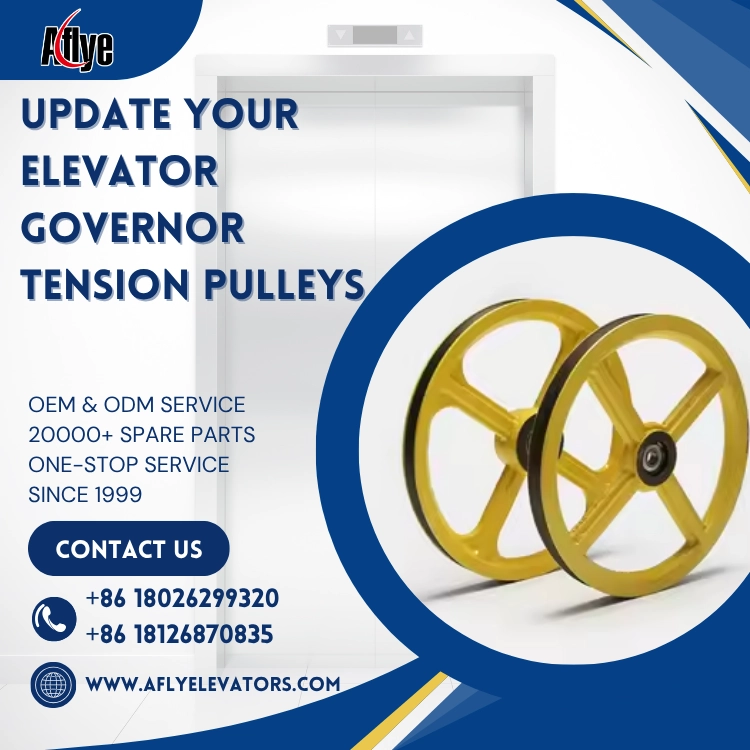
1. Common Causes of Elevator Governor Tension Pulley Wear
1. Bearing Wear from Long-Term Operation
The elevator governor tension pulley typically uses an internal bearing structure. After long-term rotation, insufficient lubrication, ball wear, or increased bearing clearance may increase the rotational resistance of the tension pulley.
When the tension pulley cannot rotate smoothly, it may affect the running condition of the governor rope and potentially reduce the accuracy of the governor system.
2. Wear of the Tension Pulley Groove
The elevator governor tension pulley remains in contact with the governor rope during operation. If the rope groove becomes worn, deformed, or rough, friction between the pulley and rope may increase, resulting in abnormal rope wear.
In severe cases, unstable governor rope movement may affect the reliable operation of the elevator safety protection system.
3. Improper Installation or Adjustment
If the tension device is incorrectly positioned or the tension force is not adjusted according to the required specifications, the pulley may be subjected to uneven loads, accelerating wear of the pulley and bearing.
Therefore, the operating condition of the elevator governor system should be regularly inspected during elevator maintenance.
2. What Safety Risks Can Governor Tension Pulley Wear Cause?
1. Reduced Reliability of Governor Operation
The elevator governor relies on changes in governor rope movement to monitor the operating condition of the elevator car. If tension pulley wear causes the rope to become loose or creates abnormal running resistance, it may affect the governor's ability to accurately detect an overspeed condition.
2. Delayed Safety Gear Activation
The elevator safety gear system is triggered by the governor when the required conditions are detected. Severe problems with the governor tension pulley may affect the triggering process and reduce the protection capability of the elevator during abnormal operating conditions.
3. Abnormal Noise and Vibration
A worn tension pulley bearing may produce sticking, abnormal noise, or periodic vibration. Besides affecting ride comfort, these symptoms can also indicate aging or deterioration of related safety components.
3. Solutions for Elevator Governor Tension Pulley Problems
When an elevator governor tension pulley shows abnormal conditions, the following inspections should be carried out:
First, check whether the tension pulley rotates smoothly and whether there is any sticking or abnormal noise.
Second, inspect the pulley groove for wear and check whether the governor rope shows uneven wear, looseness, or other abnormalities.
At the same time, check the tension condition of the governor rope to ensure that the governor system can operate reliably.
If the tension pulley bearing is damaged, the pulley groove is severely worn, or the required rope tension cannot be maintained, the elevator governor tension pulley should be replaced promptly to avoid affecting elevator safety.
4. Elevator Governor Tension Pulley Purchasing Tips
When purchasing elevator safety components, price should not be the only consideration. Product compatibility and reliability are equally important.
When selecting an elevator governor tension pulley, confirm:
Compatibility with the original governor model;
Pulley diameter, mounting dimensions, and shaft diameter;
Bearing quality and rotational performance;
Compliance with the requirements of the elevator safety system.
For older elevator modernization projects, it is recommended to inspect the elevator governor, safety gear, tension device, and other related components at the same time. This helps prevent compatibility issues caused by replacing only one component.
5. A-FLY Elevator & Escalator Parts Supply Capability
A-FLY specializes in supplying elevator and escalator spare parts worldwide, including elevator governors, elevator governor tension pulleys, safety gears, buffers, tension devices, and other elevator safety components.
For elevator repair, modernization, and maintenance projects, A-FLY supports model matching, dimension confirmation, and OEM/ODM customization, providing reliable elevator and escalator spare parts solutions.
A-FLY also supplies elevator door system components, elevator control system parts, elevator operating components, and escalator wear parts, helping customers simplify procurement and improve maintenance efficiency.
Conclusion
Although the elevator governor tension pulley is a relatively small component, it is directly related to the reliable operation of the elevator governor and safety gear system. Regular inspection of tension pulley wear and timely replacement are important measures for maintaining elevator safety.
Choosing reliable, accurately matched elevator safety components can help reduce failure risks and improve elevator maintenance efficiency.