
What Safety Risks Can Be Caused by Elevator Buffer Performance Degradation?
Elevator operation safety depends not only on the control system and drive system but also on the safety protection devices installed in the pit area. Among them, the elevator buffer is an important elevator safety component designed to absorb impact energy when the elevator car or counterweight experiences abnormal downward movement, reducing potential damage to passengers and equipment.
If the performance of the elevator buffer decreases after long-term operation, its cushioning effect may become insufficient, increasing elevator safety risks. Therefore, during elevator maintenance, the condition of the buffer should be carefully inspected to identify and resolve potential problems in time.
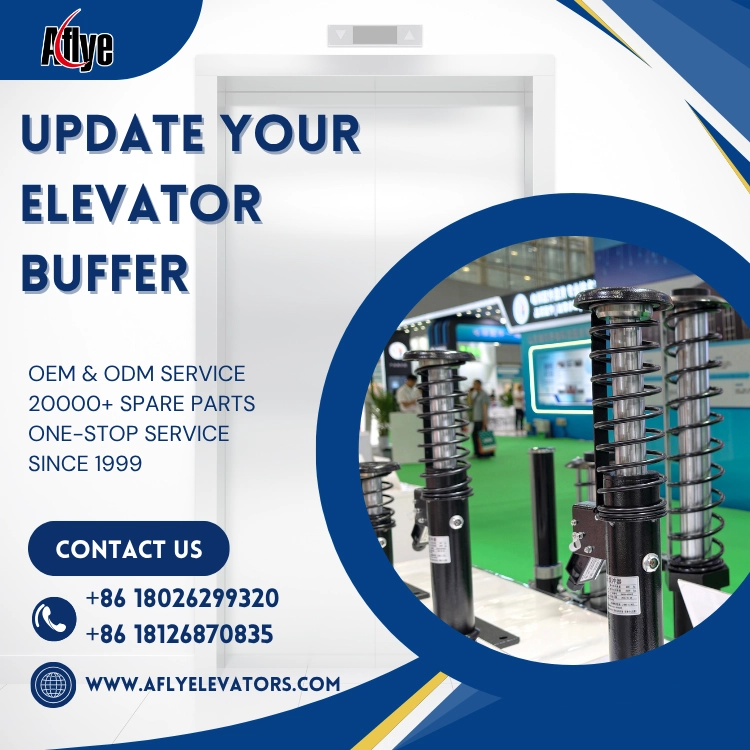
1. What Is the Function of an Elevator Buffer?
The elevator buffer is usually installed in the elevator pit and is an important part of the elevator safety protection system.
When abnormal conditions such as over-travel occur, the hydraulic elevator buffer absorbs the kinetic energy of the elevator car or counterweight through hydraulic damping, making the descending process smoother and reducing sudden impact forces.
As a common elevator pit component, the buffer must withstand repeated impacts over long periods, so its performance may gradually decrease with extended use.
2. Common Causes of Elevator Buffer Performance Degradation
1. Hydraulic Oil Leakage or Insufficient Oil Level
The hydraulic elevator buffer relies on internal hydraulic oil to generate cushioning resistance. If sealing components age or the piston rod becomes worn, hydraulic oil leakage may occur.
Common symptoms include:
Abnormal buffer stroke;
Reduced cushioning force;
Slower reset speed.
2. Aging of Internal Buffer Components
During long-term operation, internal components such as springs, sealing rings, and piston assemblies may experience wear, reducing the overall performance of the buffer.
This aging process becomes faster in elevators with high usage frequency.
3. Lack of Regular Elevator Maintenance
Some elevators operate for long periods without sufficient inspection of the pit area, causing buffer conditions such as appearance, oil level, and operation status to be overlooked.
If the following issues are found:
Buffer corrosion;
Abnormal piston rod wear;
Oil stains on the surface;
the buffer should be inspected and repaired immediately.
4. Incorrect Installation Parameters
When replacing an elevator buffer, if the selection is not based on elevator speed, rated load, and installation dimensions, the cushioning performance may fail to meet safety requirements.
3. What Safety Risks Can Result from Reduced Elevator Buffer Performance?
1. Reduced Protection During Abnormal Downward Movement
When buffer performance decreases, it may not effectively absorb impact energy. In extreme situations, the elevator car or counterweight may experience excessive impact forces.
2. Increased Risk of Equipment Damage
Insufficient cushioning can transfer greater impact forces to the bottom of the elevator car, guiding system, and other mechanical components, accelerating wear of related elevator parts.
3. Impact on Elevator Safety Inspection
The elevator buffer is an important safety inspection item. Abnormal buffer distance, reset condition, or operating performance may affect equipment acceptance testing and normal operation.
4. Increased Maintenance Costs
Buffer problems not only reduce the service life of the buffer itself but may also cause damage to other elevator pit components, increasing future repair costs.
4. Solutions for Elevator Buffer Failures
For problems related to reduced elevator buffer performance, maintenance technicians should perform a systematic inspection:
First, check the external condition of the buffer and confirm whether there is oil leakage, corrosion, or mechanical damage;
Next, test the buffer operation, including compression stroke, reset speed, and cushioning performance;
If internal performance degradation is detected, replace it with a qualified hydraulic elevator buffer in time.
For elevator modernization projects, the buffer model should also be reconfirmed according to the original equipment parameters to avoid safety issues caused by incorrect specifications.
5. Elevator Buffer Purchasing Recommendations
When purchasing an elevator buffer, confirm the following key parameters:
Rated elevator speed;
Rated load capacity;
Buffer model and installation dimensions;
Maximum compression stroke;
Product safety requirements.
For elevator modernization and maintenance projects, it is recommended to choose an elevator parts supplier that can provide model confirmation and technical support, avoiding installation problems caused by incorrect dimensions or parameters.
6. A-FLY Elevator & Escalator Parts Supply Capability
A-FLY specializes in global elevator and escalator parts supply, providing one-stop solutions including:
Elevator safety components;
Elevator pit components;
Overspeed governors;
Safety gears;
Tensioning devices;
And other elevator & escalator spare parts.
For elevator maintenance, modernization projects, and engineering procurement needs, A-FLY supports product selection, dimension confirmation, and OEM/ODM customization services, helping customers quickly match reliable elevator parts solutions.
Conclusion
Although the elevator buffer is installed in the pit area, it is a critical protection component that ensures elevator safety during abnormal operating conditions.
Through regular elevator maintenance, timely inspection of buffer performance, and cooperation with a reliable elevator and escalator parts supplier, safety risks can be effectively reduced while improving long-term elevator stability and operational reliability.