
What Operating Risks Can Be Caused by Escalator Step Deformation?
Escalator steps are critical load-bearing components that carry passengers during escalator operation. They are continuously subjected to passenger weight, operating impacts, and repeated cyclic loads. If an escalator step becomes deformed, it can not only reduce ride comfort but also cause abnormal step operation and increase potential safety risks.
Therefore, during routine escalator maintenance, the structural condition of the steps should be carefully inspected so that deformation can be identified and addressed in time.
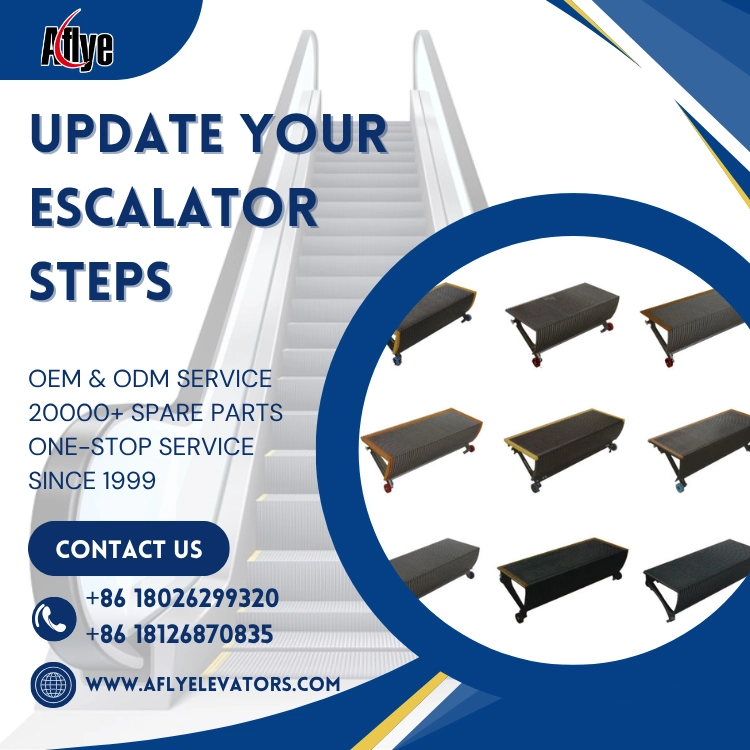
1. Common Causes of Escalator Step Deformation
1. Fatigue Deformation Caused by Long-Term Heavy-Duty Operation
Escalators often operate continuously for long periods, especially in high-traffic locations such as shopping malls, airports, and metro stations. Under prolonged and repeated loads, escalator steps may develop:
Fatigue in the step frame;
Slight bending of metal structures;
Deformation of the step surface;
Loosening of connection points.
2. Step Damage Caused by External Impact
During operation, escalator steps may be damaged by foreign objects or improper handling during transportation and installation.
Typical problems include:
Deformed step edges;
Dents in the step tread;
Abnormal gaps between steps.
3. Uneven Loads Caused by Step Roller or Chain Problems
Escalator steps operate in a continuous cycle with the support of step rollers, step chains, and other components. If the rollers are worn, bearings are damaged, or the step chain operates abnormally, the load on the steps may become uneven.
Over time, certain steps may be subjected to excessive or uneven forces, eventually causing deformation.
2. What Operating Risks Can Escalator Step Deformation Cause?
1. Unstable Step Operation
When an escalator step becomes deformed, its dimensions and alignment may change, reducing the accuracy of its engagement with the guide rails and step chain.This may cause:
Step shaking;
Jerky movement;
Localized bouncing;
Reduced ride comfort.
2. Increased Escalator Operating Noise
A deformed step can change the normal contact between the step, guide rails, and roller system, resulting in abnormal friction or impact.
Common symptoms include:
Metallic impact sounds;
Periodic abnormal noise;
Increased overall operating noise.
3. Safety Problems Around the Comb Plate Area
When an escalator step reaches the entrance or exit area, it must maintain precise alignment with the escalator comb plate.
Severe step deformation may cause:
Abnormal gaps between the step and comb plate;
Increased risk of foreign objects becoming trapped;
Obstruction of normal step movement.
4. Accelerated Wear of Other Escalator Parts
A deformed step can change the load distribution throughout the escalator transmission system and accelerate wear on other components, including:
Escalator step chains;
Drive sprockets;
Guide rails.
3. Solutions for Escalator Step Deformation
Once escalator step deformation is detected, corrective action should be taken according to the severity of the damage.
For minor deformation, related components may be adjusted and the operating condition carefully inspected.
However, if the step shows obvious bending, cracks, or structural damage, escalator step replacement is recommended.
When replacing a step, it is important to confirm not only its dimensions but also:
Step model;
Step chain connection method;
Roller dimensions;
Compatibility with the comb plate.
Proper matching helps prevent installation difficulties and abnormal operation caused by incorrect specifications.
4. Escalator Step Purchasing Tips
When purchasing escalator steps, choose a supplier with professional manufacturing and matching capabilities. Important specifications to confirm include:
Step dimensions and specifications;
Material requirements;
Surface treatment;
Compatibility with the original escalator.
For escalator modernization projects, purchasing decisions should not be based solely on the price of an individual step. Step service life, safety performance, compatibility, and long-term maintenance costs should also be considered.
5. A-FLY Elevator & Escalator Parts Supply Capability
A-FLY specializes in the global supply of elevator and escalator spare parts, providing products such as escalator steps, escalator step chains, escalator rollers, escalator handrails, escalator comb plates, escalator safety components, and other replacement parts.
For escalator maintenance, replacement, and modernization projects, A-FLY provides model confirmation, dimension matching, and OEM/ODM customization services, helping customers quickly source compatible escalator parts and improve project delivery efficiency.
Conclusion
Escalator step deformation is a common problem that can easily be overlooked. If left unresolved, it may affect escalator operating stability and create potential safety risks.
Through regular escalator maintenance, timely inspection and replacement of damaged steps, and cooperation with a reliable escalator parts supplier, maintenance teams can reduce the risk of failures and help ensure safe and stable escalator operation over the long term.