
What Problems Can Occur When Elevator Door Sliders Wear Out?
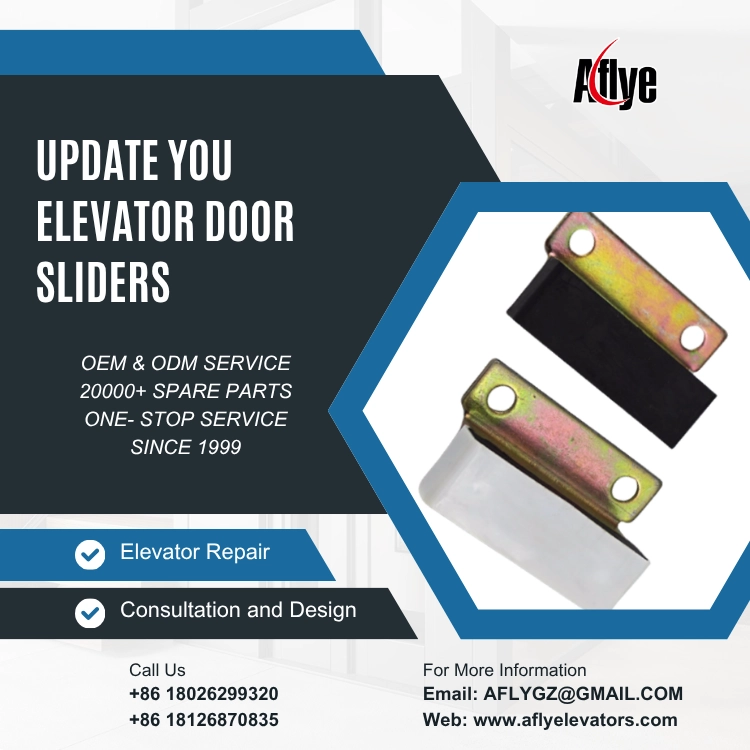
In an elevator door system, the elevator door slider is a critical component that ensures the door panels move smoothly and stably along the guide rail. Although small in size, its condition directly affects door operation and overall system stability. Once the slider becomes worn or aged, a series of door system malfunctions may occur.
As a professional elevator & escalator parts supplier, A-FLY has found through extensive maintenance experience that many door system issues are closely related to this fundamental elevator component.
1. Door Opening and Closing Become Jerky or Unsmooth
When the door slider wears out, friction increases during door movement, resulting in:
Jerky door operation
Increased resistance during movement
Slower opening and closing speeds
These symptoms are often most noticeable at the beginning and end of the door opening or closing cycle.
2. Increased Door System Noise
Worn sliders or excessive clearance can cause poor alignment between the door panel and guide rail. As a result, the door system may generate:
Friction noises
Scraping sounds
Vibration-related noise
These abnormal sounds not only affect passenger comfort but may also indicate issues with other related elevator & escalator spare parts.
3. Door Panel Misalignment and Unstable Operation
Severely worn door sliders can reduce the guiding accuracy of the door panels, causing:
Slight door wobbling
Door panel misalignment
Uneven door gaps
In addition to affecting the appearance of the door system, these issues may also interfere with the proper operation of door vanes, door locks, and other components.
4. Increased Door Operator Load
A deteriorated door slider increases the resistance encountered by the door operator when driving the door panels. This can result in:
Higher motor load
Reduced operating efficiency
Overheating of the door operator
Control system abnormalities
Fault codes and potential elevator shutdowns
5. Accelerated Wear of Other Elevator & Escalator Parts
Door slider wear is not an isolated issue. It can also affect related components such as:
Door tracks
Abnormal friction and uneven force distribution can accelerate the wear of these elevator & escalator spare parts, leading to higher maintenance costs.
Common Causes of Door Slider Wear
Elevator door slider wear is commonly caused by:
High-frequency operation
Insufficient lubrication
Dust and debris accumulation
Improper installation or alignment
These issues are particularly common in high-traffic environments such as shopping malls, office buildings, and commercial complexes.
Additionally, using low-quality elevator spare parts may significantly shorten service life.
Maintenance Recommendations
During routine maintenance, technicians should:
Regularly inspect door slider wear conditions
Check whether door movement remains smooth
Listen for abnormal noises
Monitor for door panel misalignment
Keep guide rails clean and free from debris
Ensure adequate lubrication
When sliders show signs of aging or damage, they should be replaced promptly with compatible elevator & escalator spare parts to prevent further system issues.
Conclusion
Understanding the symptoms caused by elevator door slider wear helps maintenance personnel identify potential problems early and take corrective action before major failures occur.
Through proper maintenance and timely replacement of critical elevator components, elevator reliability and operational stability can be significantly improved.
As a professional elevator & escalator parts supplier, A-FLY provides a wide range of door system components and related spare parts solutions, helping customers achieve more efficient, reliable, and cost-effective elevator maintenance management.