
What Door System Failures Can Be Caused by Worn Elevator Door Shoes?
In the elevator door system, the elevator door shoe is an important component that ensures smooth movement of the door panels along the door track. It is also commonly known as an elevator door slider or door shoe insert. Installed at the bottom of the elevator door panel, it works together with the sill guide rail to maintain the correct movement path of both car doors and landing doors.
Because the elevator door shoe continuously bears the weight of the door panel, impact forces during opening and closing, and frequent friction, it can gradually suffer from wear, cracking, or increased clearance over time. If not maintained in time, it may affect passenger comfort and cause various elevator door system failures.
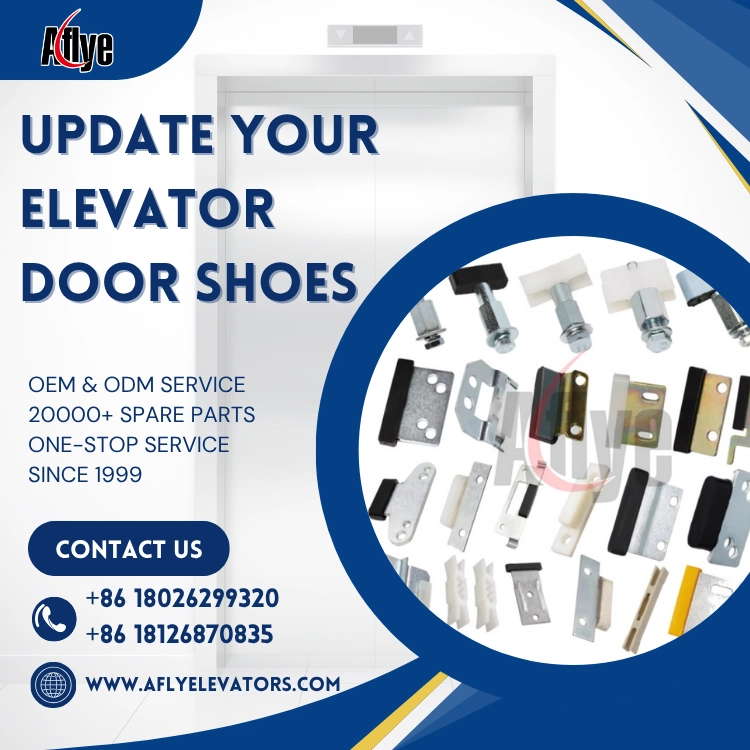
1. Worn Elevator Door Shoes Cause Unstable Door Movement
Under normal conditions, the elevator door shoe should maintain proper contact with the door sill, allowing the door panel to move smoothly along a fixed path.
When the door shoe becomes worn, the following problems may occur:
Increased clearance between the door panel and sill;
Side-to-side door movement;
Unstable opening and closing speed;
Door not closing completely.
As the door movement path changes, the elevator door operator needs to provide more driving force, which increases the load on the door system over long-term operation.
Solution:Inspect the wear condition and installation clearance of the elevator door shoe. If the wear is severe, replace the worn door shoe or door shoe insert in time.
2. Worn Door Shoes Can Cause Abnormal Elevator Door Noise
During elevator maintenance, many technicians find that friction sounds, scraping noises, or impact noises during door operation are often related to the condition of the door shoes.
Common causes include:
Worn door shoe surface;
Hardened slider material;
Foreign objects inside the door sill;
Abnormal contact between the door shoe and guide rail.
When the door shoe cannot slide smoothly, obvious abnormal door noises may occur during opening and closing operations.
3. Severe Wear May Cause Door System Jamming
If elevator door shoes are not replaced for a long period, continuous wear will affect the fitting accuracy between the door panel and the sill.
Possible failures include:
Slow door opening speed;
Door jamming during closing;
Door operator repeatedly correcting position;
Door lock unable to close properly.
In some cases, the control system may identify abnormal door operation and prevent the elevator from running normally.
4. Damaged Door Shoes Accelerate Wear of Other Components
The elevator door system is an integrated mechanism. A damaged door shoe can affect other related components, including:
Increasing the load on elevator door hanger rollers;
Accelerating door track wear;
Affecting door vane and landing door lock engagement;
Increasing stress on door operator belts.
Therefore, when replacing elevator door shoes, technicians should also inspect:
Door hanger rollers;
Door tracks;
Door locks;
Door operator system.
5. How to Determine Whether Elevator Door Shoes Need Replacement?
During routine elevator maintenance, technicians should check:
Whether the door shoe has obvious wear;
Whether cracks or missing parts exist;
Whether the door panel moves smoothly;
Whether abnormal sounds occur during opening and closing;
Whether the door sill is seriously worn;
Whether door clearance meets requirements.
For high-frequency elevators, such as those installed in:
Shopping malls;
Hotels;
Hospitals;
a regular replacement schedule should be established based on operating frequency.
6. Elevator Door Shoe Purchasing Recommendations
When purchasing elevator door shoes or elevator door shoe inserts, the following specifications should be confirmed:
Door shoe dimensions;
Mounting hole position;
Material type;
Wear resistance;
Door system model;
Compatible elevator brand.
Different elevator door systems may use different door shoe structures. It is recommended to provide original part photos, dimensions, or samples for accurate matching to avoid installation problems caused by incorrect specifications.
A-FLY Elevator & Escalator Parts Supply Capability
As a professional elevator and escalator parts supplier, A-FLY provides global maintenance companies, engineering contractors, and parts distributors with:
And a full range of elevator and escalator spare parts.
A-FLY supports OEM/ODM customization, sample confirmation, drawing matching, and fast delivery. Based on different elevator door systems, A-FLY provides professional matching solutions to help customers reduce procurement risks and improve elevator maintenance efficiency.
Conclusion
Although the elevator door shoe is a small wear component, it plays an important role in ensuring stable operation of the elevator door system.
Wear of door shoes can cause abnormal door noise, opening and closing problems, and may further affect door locks, safety circuits, and overall elevator operation.
Through regular inspection, timely replacement of worn components, and cooperation with a reliable elevator parts supplier, elevator safety, passenger comfort, and long-term operational stability can be effectively improved.