
What Problems Can Loose or Worn Escalator Tension Chains Cause?
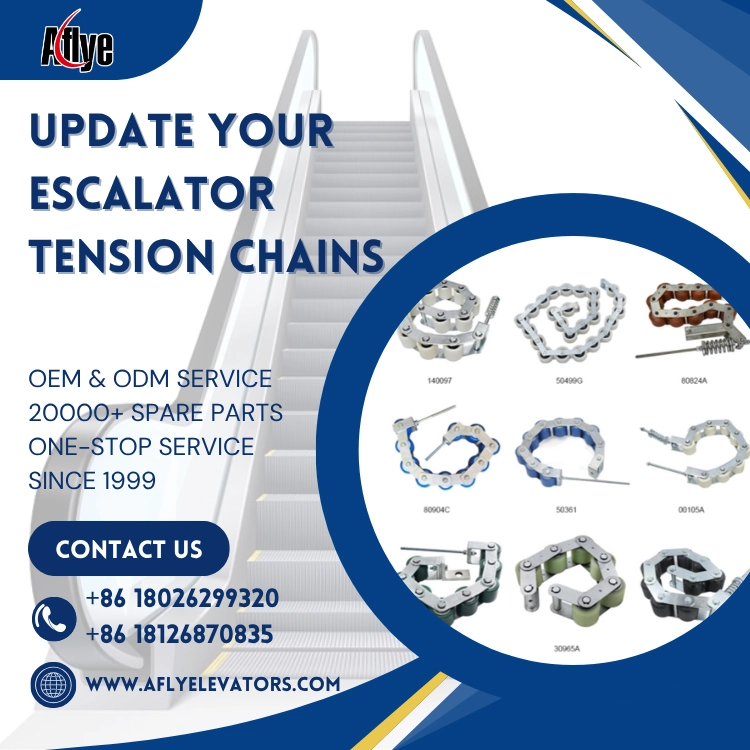
In the escalator drive system, the escalator tension chain is an important component of the escalator tensioning device. It mainly transfers the movement of the tensioning mechanism to ensure that the step chain maintains stable tension. When the tension chain becomes loose, elongated, or worn, the entire escalator chain drive system can be affected, resulting in reduced operating stability and increased risk of equipment failure. Therefore, the tension chain is also a key component that requires regular inspection during escalator maintenance.
1. Insufficient Step Chain Tension
The escalator tension chain is subjected to continuous alternating loads during operation. Over time, the pins, bushings, and chain links gradually wear, increasing the chain pitch and eventually causing chain looseness. When the tensioning device cannot maintain proper preload, the following problems may occur:
Increased step chain movement and vibration;
Poor step synchronization;
Stronger impact during startup and braking;
Reduced transmission efficiency.
If the escalator continues running under these conditions, abnormal wear of the sprocket may also occur.
Solution:Regularly check the tension chain length and the travel of the tensioning device. If chain elongation exceeds the allowable limit, the tension chain should be replaced in time.
2. Increased Operating Noise and Vibration
After the tension chain wears, the engagement accuracy between the chain links and sprocket decreases, which can cause metal impact sounds and periodic abnormal noise during operation.
Common symptoms include:
Continuous knocking noise from the pit area;
Strong impact during startup;
Increased vibration at high speed;
Gradually increasing sprocket engagement noise.
If abnormal noise continues, maintenance personnel should inspect the step chain, main drive chain, sprocket, and tension wheel together instead of replacing only one component.
3. Malfunction of the Tensioning Device
The escalator tensioning device is usually equipped with a safety switch to monitor whether the chain tension is within the normal range. When the tension chain becomes seriously loose, the tensioning mechanism may reach its limit position and trigger the safety switch, resulting in:
Escalator alarm shutdown;
Safety circuit activation;
Failure to restart;
Control system fault indication.
This type of failure is especially common in escalators with long service periods.
4. Uneven Chain Wear and Reduced Service Life
When the tension chain becomes loose, the load distribution inside the chain system becomes uneven, which can lead to:
Uneven sprocket wear;
Increased tension wheel wear;
Accelerated step chain wear;
Higher bearing loads.
If ignored for a long time, it will not only increase maintenance costs but may also reduce the service life of the entire escalator drive system.
5. Escalator Tension Chain Purchasing Recommendations
When purchasing an escalator tension chain, the following parameters should be confirmed:
Chain pitch;
Chain plate specifications;
Pin dimensions;
Tensile strength;
Material and heat treatment process;
Compatible escalator brand and model.
It is recommended to confirm specifications based on the original model, drawings, or samples to ensure proper matching with the tensioning device and escalator chain system, avoiding reduced tension performance caused by incorrect dimensions.
A-FLY Elevator & Escalator Parts Supply Capability
As a professional elevator and escalator parts supplier, A-FLY has been providing global maintenance companies, engineering contractors, and spare parts distributors with:
Escalator tension chains;
Escalator chains;
Main drive chains;
Sprockets;
And a full range of elevator and escalator spare parts.
A-FLY supports OEM/ODM customization, sample confirmation, drawing matching, and fast delivery. Based on different brands and models, A-FLY can provide professional matching solutions for escalator maintenance, modernization projects, and spare parts procurement.
Conclusion
Although the escalator tension chain is a relatively small component, it plays an important role in maintaining the stability of the escalator tensioning system and transmission system. When problems such as chain looseness, abnormal noise, increased vibration, or safety shutdown occur, the tension chain and related escalator components should be inspected as a priority.
Through proper preventive maintenance and timely replacement of worn parts, equipment failure rates can be effectively reduced, ensuring long-term safe and smooth escalator operation.