
Why Can Elevator Door Hanger Roller Bearing Failure Cause Door System Problems?
During elevator operation, the elevator door hanger roller is one of the key moving components in the door system. It mainly supports the weight of the elevator car door or landing door and enables smooth door opening and closing through rolling movement.
Because elevator doors operate frequently every day, the internal bearings of the elevator door roller are constantly exposed to load and friction, making them prone to wear, insufficient lubrication, and sticking problems.
When the bearing of the elevator door hanger roller fails, it not only causes obvious elevator door noise but may also affect the stability of the entire elevator door system, resulting in abnormal door operation or even elevator downtime.
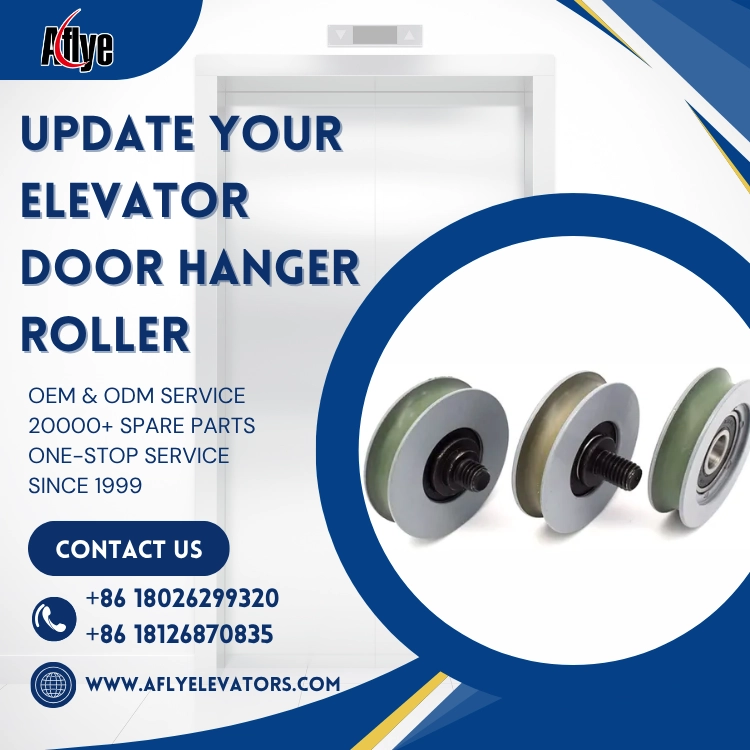
1. Damaged Elevator Door Hanger Roller Bearings Increase Door Movement Resistance
Under normal conditions, the elevator door roller uses bearings to maintain low-resistance rotation, allowing the door panels to move smoothly along the door track.
When the bearing becomes damaged, common symptoms include:
Door hanger roller rotation becomes difficult;
Door movement speed decreases;
Door opening and closing becomes stuck;
Door operator load increases.
Since elevator door systems require precise control of opening/closing distance and speed, abnormal door hanger rollers can affect door operator performance and prevent the doors from completing normal movements.
Solution:Check the rotation condition of the elevator door hanger roller and confirm whether the bearing has problems such as sticking, abnormal noise, or excessive clearance. If the bearing is seriously damaged, replace the complete elevator door roller assembly in time.
2. Bearing Wear Is a Major Cause of Elevator Door Noise
Elevator door abnormal noise is one of the common problems found during maintenance, and aging elevator door hanger roller bearings are one of the main causes.
After long-term operation, bearings may experience:
Ball wear;
Increased clearance between inner and outer rings;
Dried lubrication grease;
Increased metal friction.
These problems can cause:
Rolling friction sounds;
Metal impact sounds;
Periodic abnormal noises.
If the problem continues, it will not only affect passenger comfort but also accelerate wear of the door guide rail, elevator door shoes, and other door operator components.
3. Incorrect Elevator Door Roller Dimensions Affect Door System Accuracy
Besides bearing quality issues, incorrect elevator door roller dimensions are also an important reason for door system failures.
If the replaced elevator door hanger roller has:
An incorrect diameter;
Different bearing specifications;
Installation dimension errors;
it may cause:
Unstable door movement;
Changes in door clearance;
Door locks failing to close accurately;
Door operator frequently adjusting operating parameters.
Therefore, when purchasing elevator door hanger rollers, it is necessary to confirm the original component dimensions, installation structure, and application environment.
4. Common Causes of Elevator Door Hanger Roller Bearing Failure
The main causes of elevator door roller bearing damage include:
1. Long-Term High-Frequency Operation
Elevators in places such as:
Shopping malls;
Hotels;
Airports;
operate frequently. The large number of daily door opening and closing cycles accelerates bearing fatigue.
2. Lack of Regular Maintenance
Without regular inspection and lubrication, internal bearing resistance increases, causing a higher operating load for the elevator door roller.
3. Door Track Contamination or Deformation
Dust, foreign objects, or worn door tracks can increase the running resistance of the door hanger roller, causing additional impact on the bearing.
4. Poor Quality Parts or Incorrect Model Selection
Low-quality bearings or mismatched elevator door hanger rollers can significantly shorten service life and increase future maintenance costs.
- How to Determine Whether an Elevator Door Hanger Roller Needs Replacement?
During elevator maintenance, technicians should check:
Whether the elevator door roller rotates smoothly;
Whether abnormal noise exists;
Whether the door panel shakes during operation;
Whether the door hanger roller surface is worn;
Whether the bearing has excessive looseness.
For elevators with long service periods, preventive replacement based on operating frequency is recommended to avoid door system failures affecting normal operation.
6. Elevator Door Hanger Roller Purchasing Recommendations
When purchasing elevator door hanger rollers, elevator door rollers, and related components, avoid focusing only on price while ignoring compatibility.
It is recommended to confirm:
Product dimensions;
Sample or photo verification;
Bearing configuration details;
Service life testing;
OEM/ODM customization capability.
Choosing a professional elevator and escalator parts supplier can improve component matching efficiency and reduce installation risks.
A-FLY Elevator & Escalator Parts Supply Capability
A-FLY focuses on global elevator and escalator parts supply, providing elevator maintenance companies, engineering contractors, and spare parts buyers with elevator door system components, including:
Elevator door shoes;
And other elevator door system parts.
With strong OEM/ODM customization capabilities, product dimension confirmation services, and extensive experience in elevator parts supply, A-FLY provides customized component solutions for different elevator projects, helping customers improve maintenance efficiency and reduce equipment downtime.
Conclusion
Although the elevator door hanger roller bearing is a relatively small component in the door system, its operating condition directly affects elevator door opening and closing stability.
Bearing failure not only causes elevator door noise but may also lead to door sticking, abnormal operation, and other system problems.
Regular elevator maintenance, timely inspection and replacement of aging elevator door rollers, and cooperation with a reliable elevator and escalator parts supplier are essential measures to ensure safe and stable elevator operation.