
Why Does Abnormal Elevator Guide Rail Lubricator Oil Supply Accelerate Guide Shoe Wear?
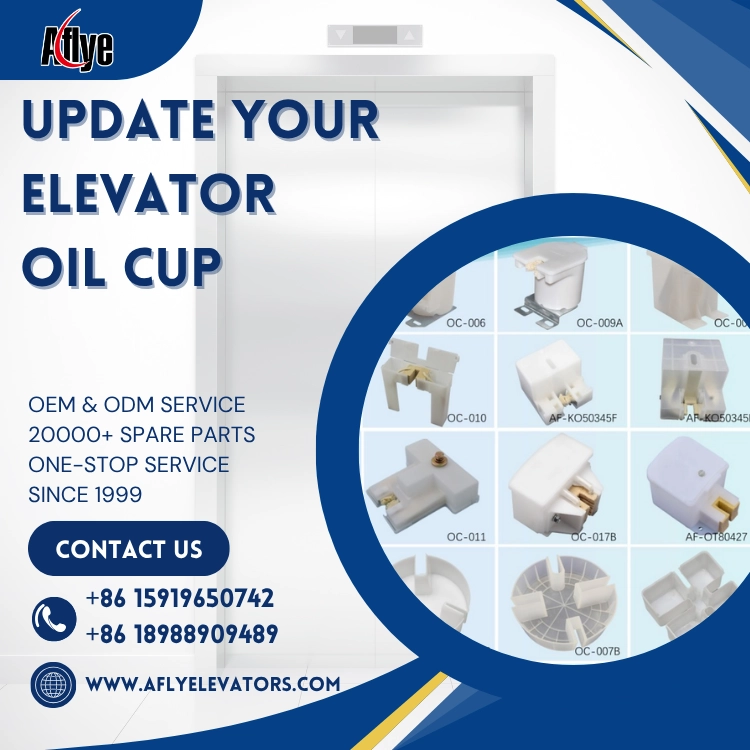
In an elevator guiding system, the elevator oil cup or guide rail lubricator continuously supplies an appropriate amount of lubricating oil to the guide rail surface, helping reduce friction between the guide shoes and guide rails.
If the oil supply is insufficient, interrupted, or uneven, normal lubrication can be disrupted. This may accelerate elevator guide shoe wear and cause abnormal operating noise, increased running resistance, or elevator car vibration.
1. Why Does an Elevator Oil Cup Have Abnormal Oil Supply?
1. Insufficient Oil or Blocked Oil Passage
If the elevator oil cup is not refilled regularly, the lubricant level may become too low. Dust or contamination may also block the oil wick or oil outlet, preventing sufficient lubricant from reaching the guide rail surface.
2. Aging Oil Wick
Some elevator guide rail lubricators use felt or an oil wick to transfer lubricant to the guide rail.
After long-term use, the wick may harden, become contaminated, or clogged, reducing the oil supply rate and affecting lubrication performance.
3. Incorrect Installation Position
If the oil cup or lubricator is not correctly positioned against the guide rail, lubricating oil may fail to cover the working surface evenly.
This can create areas of insufficient lubrication and result in localized dry friction.
2. Why Does Insufficient Lubrication Accelerate Guide Shoe Wear?
Proper elevator guide rail lubrication creates a lubricating layer between the guide rail and guide shoe liner, helping reduce sliding friction during elevator operation.
When lubrication is insufficient, direct friction between the guide shoe and guide rail increases, resulting in higher running resistance and surface temperature.
This may cause:
Accelerated guide shoe liner wear;
Increased guide shoe running resistance;
Unstable elevator car movement;
Friction noise or abnormal elevator operating noise;
Abnormal wear marks on the guide rail surface.
If insufficient lubrication continues for a long time, it may also shorten the service life of the guide shoes, guide rails, and related elevator components.
3. How Should Lubrication Problems Be Handled During Elevator Maintenance?
During elevator maintenance, technicians should inspect:
Oil level in the oil cup;
Lubricant flow and supply condition;
Cleanliness and condition of the oil wick;
Installation position of the lubricator.
If the problem is simply insufficient lubricant, the correct type of lubricating oil should be added according to the equipment requirements.
If the oil wick is clogged or aged, it should be cleaned or replaced. If the guide shoe is already significantly worn, the guide shoe liner and guide rail clearance should also be inspected, and worn guide shoe components should be replaced when necessary.
Over-lubrication should also be avoided, as excessive oil may attract dust and contamination, affecting guide rail cleanliness and lubrication performance.
4. Elevator Oil Cup Purchasing Tips
When purchasing an elevator oil cup or guide rail lubricator, the following specifications should be confirmed:
Mounting dimensions;
Fixing method;
Oil wick structure;
Lubricant capacity;
Compatibility with the original guide shoe system.
Oil cup and lubricator structures may vary between different elevator models and guiding systems.
Before purchasing, it is recommended to provide photos of the original part, measured dimensions, or model information to improve matching accuracy and reduce the risk of purchasing incompatible parts.
5. A-FLY Elevator & Escalator Parts Supply Capability
A-FLY supplies a wide range of elevator and escalator spare parts, including:
Elevator guide rail lubricators;
Elevator roller guide shoes;
Other elevator and escalator spare parts.
These products are suitable for elevator maintenance, repair, and modernization projects.
For different elevator models and project requirements, A-FLY supports model confirmation, sample matching, dimensional customization, and OEM/ODM services, providing customers with one-stop elevator and escalator spare parts purchasing solutions.
Conclusion
Abnormal oil supply from an elevator oil cup or guide rail lubricator can directly affect guide rail lubrication and is one of the common causes of accelerated guide shoe wear and abnormal elevator operating noise.
Regular inspection of the lubricator, oil wick, guide shoes, and guide rail condition, together with proper guide rail lubrication, can effectively reduce friction and wear while improving elevator operating stability.