
Frequent Intermittent Safety Circuit Faults in Old Elevators? Check These 6 Components During Modernization
After many years of operation, older elevators may experience problems such as occasional shutdowns, failure to start after the doors close, or temporary recovery after a system reset.
Many of these old elevator faults are related to unstable electrical contact within the elevator safety circuit. During old elevator modernization, replacing only one switch may not solve the problem. The entire safety circuit should be systematically inspected to identify the actual fault source.
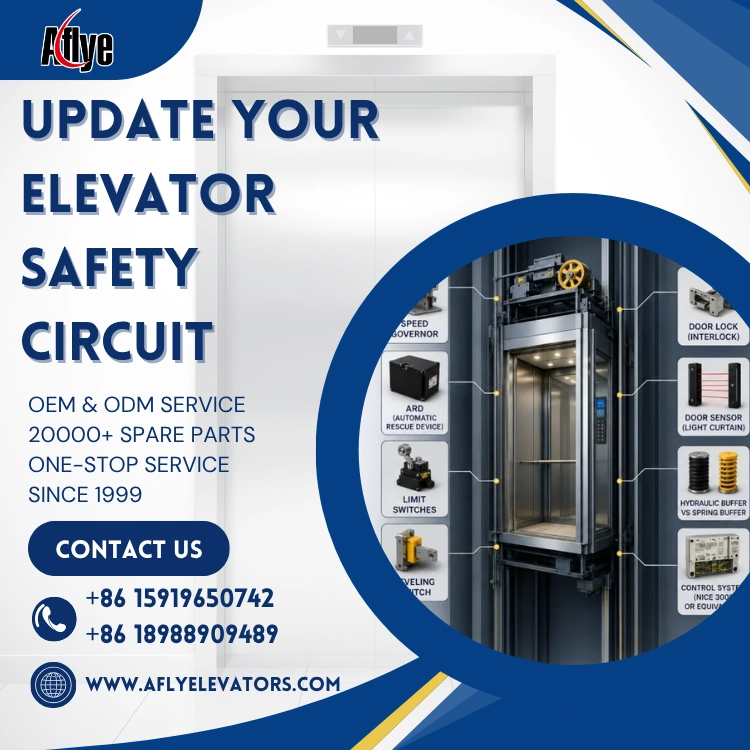
1. Why Do Elevator Safety Circuits Develop Intermittent Faults?
1. Aging Elevator Door Lock Contacts
After years of frequent operation, elevator door lock contacts may become oxidized, electrically eroded, or lose contact pressure.
As a result, even when the landing door is fully closed, the safety circuit signal may occasionally fail to remain stable.
2. Poor Contact in Elevator Safety Switches
Limit switches, emergency stop switches, inspection switches, and other elevator safety switches may develop worn internal contacts after extended use.
This can cause momentary circuit interruptions and intermittent elevator faults.
3. Aging Elevator Relay Contacts
In older control cabinets, elevator relays operate repeatedly over many years. Their contacts may become oxidized or electrically eroded.
Vibration and temperature changes can also cause fluctuations in contact resistance, resulting in unstable safety circuit signals.
4. Aging Wiring Terminals and Cable Harnesses
Loose terminals, oxidized wire connections, or deteriorated cable insulation may cause the safety circuit signal to switch intermittently between connected and disconnected states.
These wiring problems can be difficult to identify because the elevator may temporarily return to normal after a reset.
2. Which 6 Components Should Be Checked During Elevator Modernization?
During elevator modernization, it is recommended to focus on these six areas:
Elevator door locks and door lock contacts;
Safety switches, including limit, emergency stop, and inspection switches;
Safety circuit relays and contactors;
Control cabinet terminals and connectors;
Car-top and pit safety circuit wiring harnesses;
Safety input interfaces on the elevator main control board.
If the original elevator control system is very old and multiple fault points are present, upgrading the control cabinet and safety circuit modules as part of the modernization project may be more appropriate than repeatedly repairing individual components.
3. How to Solve Intermittent Elevator Safety Circuit Faults
During elevator maintenance or modernization, technicians should use circuit measurements and sectional troubleshooting to identify the exact fault location.
If the problem is caused by slightly loose wiring, the terminals can be properly secured.
However, if door lock contacts, safety switches, relays, or contactors show electrical erosion, oxidation, or unstable operation, timely replacement is recommended.
After modernization or repair, each safety protection signal should be tested individually, including:
Door lock signals;
Emergency stop switches;
Limit switches;
Inspection switches;
Other safety circuit devices.
This helps confirm that the elevator safety circuit can reliably open and close under the required operating conditions.
4. Elevator Modernization Parts Purchasing Tips
When purchasing elevator modernization parts, the following information should be carefully confirmed:
Original control system model;
Operating voltage;
Contact configuration;
Mounting dimensions;
Wiring method;
Connector and interface definitions.
For discontinued components used in older elevators, replacement parts should not be selected based only on appearance.
Instead, compatible replacements should be matched according to their electrical specifications, contact configuration, interface requirements, and safety circuit logic.
5. A-FLY Elevator & Escalator Parts Supply Capability
A-FLY supplies a wide range of elevator safety and control components, including:
Elevator control boards;
Elevator inspection switches;
Other elevator safety and control parts.
These products are suitable for old elevator modernization, elevator maintenance, repair, and system upgrade projects.
A-FLY also supports model confirmation, parameter matching, sample confirmation, and OEM/ODM services. In addition, we supply various elevator and escalator spare parts, including escalator rollers, handrails, step chains, and other commonly replaced components.
Conclusion
Intermittent safety circuit faults in older elevators are often related to aging contacts, worn safety switches, loose connections, or deteriorated wiring.
Systematically inspecting door lock contacts, safety switches, relays, wiring, and control interfaces can help identify the root cause more effectively than repeatedly resetting the elevator, improving the operating stability and reliability of older elevator systems.