
What Noise and Safety Issues Can Worn Elevator Guide Shoes Cause?
In an elevator system, elevator guide shoes are responsible for guiding the elevator car and counterweight smoothly along the guide rails, making them essential for stable and safe operation. Whether using sliding guide shoes or roller guide shoes, these components can become worn, aged, loose, or deformed after prolonged use. Once the guide shoes begin to deteriorate, they may cause excessive operating noise, car vibration, guide rail wear, and even compromise passenger safety.
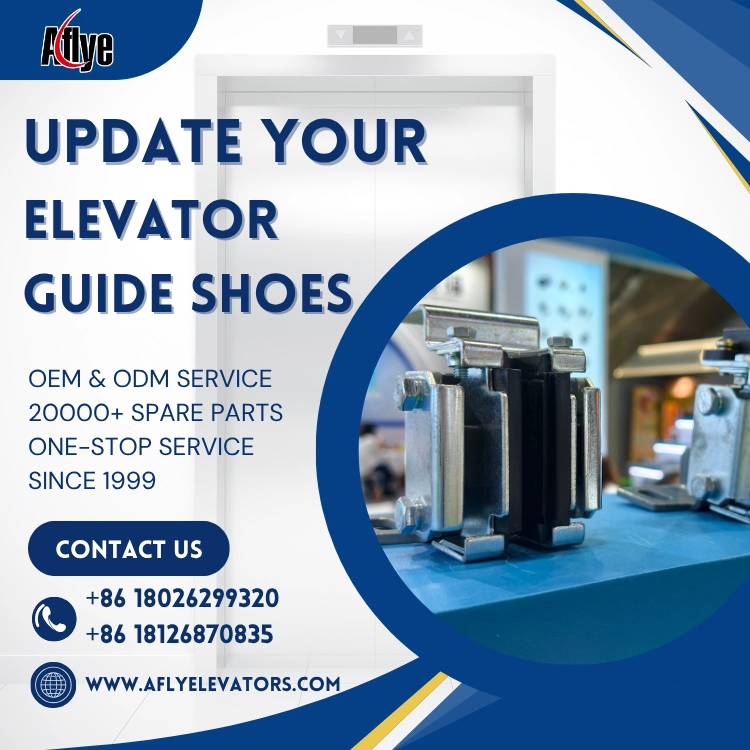
1. Increased Elevator Operating Noise
When elevator guide shoes become worn, the contact between the guide shoes and the guide rails changes. Worn guide inserts, seized guide shoe bearings, or hardened roller surfaces may cause friction noise, rolling sounds, or periodic abnormal noises during elevator operation.
Solution:
Maintenance technicians should inspect the thickness of the guide shoe inserts, ensure the guide shoe rollers rotate smoothly, check for bearing noise, and examine the guide rail surface for abnormal wear marks. If excessive wear is found, replace the appropriate guide shoes or guide shoe rollers promptly.
2. Elevator Car Vibration or Swaying
If the clearance between the guide shoes and the guide rails becomes excessive, the guide shoes are misaligned, or the guide shoe rollers wear unevenly, the elevator car may vibrate, shake, or sway during operation.
Passengers often notice reduced ride comfort, especially during startup, deceleration, or high-speed travel.
Inspection recommendations:
Check whether the clearance between the guide shoes and guide rails meets specifications.
Ensure the guide shoes are securely fastened.
Inspect the guide shoe rollers for uneven wear.
If adjusting the clearance does not resolve the issue, replacing the worn elevator guide shoe components is recommended.
3. Abnormal Guide Rail Wear
Damaged guide shoes can create uneven pressure between the elevator car and the guide rails, resulting in localized rail wear, scratches, or lubrication problems.
If left unresolved, this can:
Increase operating noise
Affect the elevator car's travel path
Reduce ride comfort
Shorten the service life of the guide rails
Recommended maintenance:
When replacing guide shoes, technicians should also inspect the guide rails for cleanliness, lubrication, and vertical alignment to prevent premature wear of the new guide shoes.
4. Increased Safety Risks and Maintenance Costs
Because elevator guide shoes operate continuously throughout the elevator's service life, excessive wear can increase running resistance, place additional load on the traction system, and even trigger fault alarms.
For high-rise and high-speed elevators, the condition of the guide shoes should receive particular attention, as they directly affect ride quality and operational safety.
5. Elevator Guide Shoe Purchasing Recommendations
When purchasing elevator guide shoes or guide shoe rollers, be sure to verify:
Compatible elevator brand
Installation dimensions
Guide rail specifications
Roller diameter
Material hardness
Mounting hole configuration
Application environment
High-quality guide shoes should provide:
Excellent wear resistance
Low operating noise
Smooth and stable performance
Easy installation
Long service life
As a professional elevator and escalator spare parts supplier, A-FLY supplies elevator guide shoes, guide shoe rollers, guide rails, traction sheaves, door system components, control system parts, and a comprehensive range of elevator and escalator spare parts for maintenance companies, engineering contractors, and spare parts distributors worldwide.
A-FLY offers:
Multi-model compatibility matching
Bulk supply
OEM/ODM customization
Fast worldwide delivery
We help customers improve maintenance efficiency while minimizing elevator downtime.
Conclusion
Worn elevator guide shoes not only generate excessive operating noise but can also cause elevator car vibration, accelerated guide rail wear, and potential safety hazards. Regular inspection of both elevator guide shoes and guide shoe rollers, along with timely replacement using reliable elevator and escalator spare parts, is essential for ensuring long-term elevator safety, smooth operation, and dependable performance.