
What Noise and Running Issues Are Caused by Escalator Step Roller Wear?
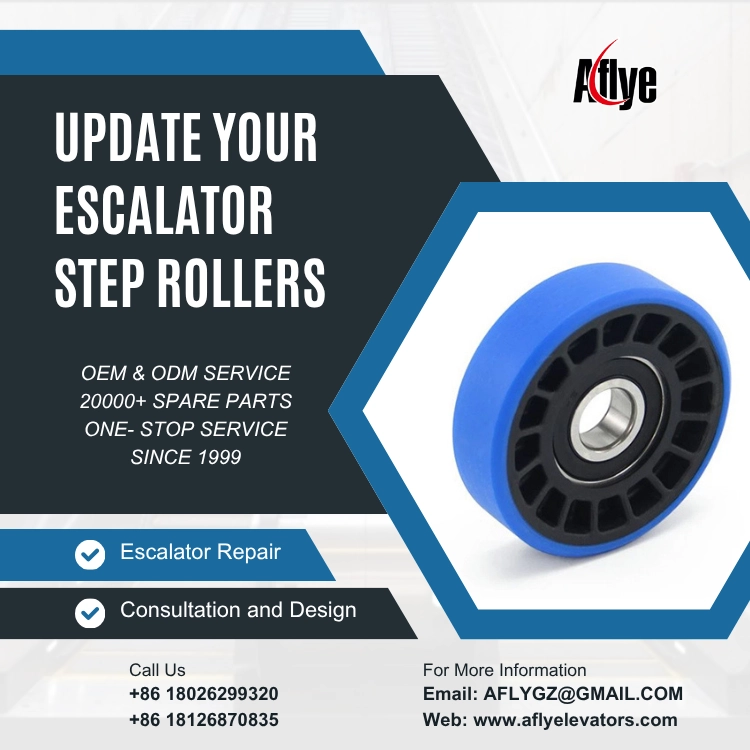
In an escalator running system, the escalator step roller is a key component that ensures smooth step movement. It continuously rolls along the guide rails while bearing passenger weight, step load, and constant friction.
If the escalator rollers become worn, cracked, seized due to bearing failure, or degraded due to material aging, it will directly affect operational stability and produce noticeable escalator noise.
For maintenance technicians, timely inspection of step roller conditions and replacement with proper elevator and escalator spare parts is essential to reduce failures and ensure passenger safety.
1. Significant Increase in Escalator Running Noise
When escalator step rollers are worn, the roller surface becomes uneven. This causes friction noise, impact noise, or periodic abnormal sounds when contacting the guide rail.
The noise is especially noticeable in the transition areas such as upward/downward bends.
Solution
Maintenance personnel should check whether the rollers are flattened, cracked, deformed, or if the bearings rotate smoothly. If the rollers are hardened or unevenly worn, they should be replaced promptly to prevent noise from worsening.
2. Step Vibration or Unstable Running
If the diameter of step rollers wears unevenly or the bearings become stuck, the steps may show slight bouncing, shaking, or jerky movement during operation.
Passengers may feel that the escalator is not running smoothly, affecting overall ride comfort.
Inspection Advice
Check whether all step rollers have consistent wear levels. Also inspect the guide rails for scratches, deformation, or foreign objects.
If only part of the rollers are replaced, ensure the specifications and materials are consistent to avoid imbalance during operation.
3. Accelerated Wear of Guide Rails and Steps
Damaged step rollers change the force distribution between steps and guide rails, which can lead to localized rail wear, step deviation, or increased running resistance.
If not addressed in time, it may also affect the lifespan of the step chain, guiding system, and drive system.
Maintenance Method
When replacing step rollers, it is recommended to inspect guide rails, step shafts, step chains, and tension devices at the same time to identify any related wear.
For high-frequency usage environments, a scheduled inspection and replacement plan should be established.
4. Increased Energy Consumption and Higher Failure Risk
Severely worn step rollers increase running resistance, resulting in higher drive system load.
This may cause difficult startup, increased motor current, or protective shutdowns.
If only the control system is adjusted without addressing mechanical parts, the problem is likely to recur.
5. Procurement Recommendations for Escalator Step Rollers
When purchasing escalator step rollers, the following parameters should be confirmed:
Roller diameter and width
Bearing specification
Installation hole size
Material hardness
Brand compatibility
Installation position
High-quality step rollers should feature wear resistance, low noise, stable load-bearing, and smooth rotation.
A-FLY Escalator Spare Parts Supply Capability
As a professional elevator and escalator spare parts supplier, A-FLY provides escalator step rollers, guide rollers, step chains, comb plates, handrails, guide rails, and a wide range of related components for maintenance companies, engineering contractors, and distributors worldwide.
A-FLY supports multi-model matching, bulk supply, OEM/ODM customization, and fast delivery—helping customers improve maintenance efficiency and reduce downtime.
Conclusion
Wear of escalator step rollers not only causes running noise but may also lead to step vibration, guide rail wear, increased running resistance, and higher shutdown risk.
Maintenance personnel should regularly inspect roller conditions and replace reliable elevator and escalator spare parts in time to ensure long-term safe and stable escalator operation.