
Introduction to Escalator Safety Switch System
During the operation of escalators, the safety switch system is a core component for equipment safety. Linked by multiple switch units, it detects anomalies and responds promptly to activate automatic protection or emergency stop functions. As a professional escalator component supplier, A-FLY has found during maintenance work that most escalator faults are closely related to the condition of the safety switch system. Therefore, it is essential to understand its composition and functions.
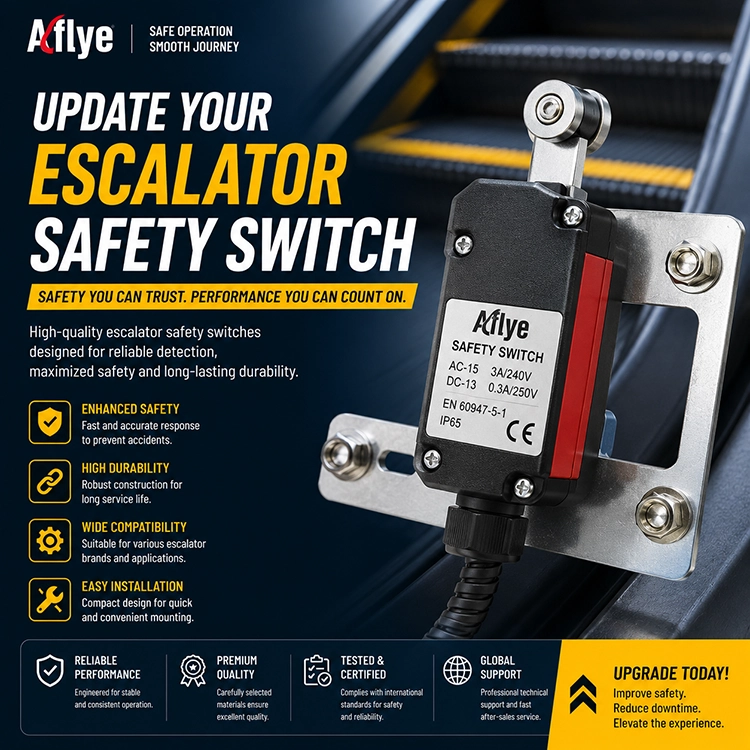
1. Basic Components of the Escalator Safety Switch System
The system generally consists of various switches, including emergency stop switches, limit switches, protection switches and safety contacts. All these switches are connected into a safety circuit. Once any switch is triggered due to an abnormality, the system will shut down the equipment immediately to prevent accidents from worsening.
2. Functions of the Emergency Stop Switch
Installed at escalator entrances and other visible positions, the emergency stop switch enables manual quick shutdown in emergencies. In case of unexpected incidents, staff or passengers can activate this switch to cut off operating signals instantly and ensure personal safety.
3. Functions of Limit Switches and Protection Switches
Limit switches monitor the operating range of the escalator to prevent over-travel. Other protection switches keep checking key parts such as chains, handrails and braking systems. If any of these escalator components malfunction, the safety switches will act right away to halt equipment operation.
4. Linkage Mechanism of the Safety Circuit
Escalator safety switches are connected in series to form a complete safety circuit. Any faulty or disconnected switch will break the entire circuit and trigger the stop protection. This design guarantees high system reliability, yet it also requires all switches to stay in good working order at all times.
5. Common Faults and Impacts
Poor contact, misinstallation, loose wiring or internal aging of safety switches may lead to false tripping or failure of protection. Typical symptoms include frequent shutdowns, startup failures and sudden stops during operation. Such issues not only reduce operational efficiency but also pose potential safety hazards.
Maintenance Recommendations
In routine maintenance, conduct regular inspections on the sensitivity, mounting position and wiring of all safety switches to rule out looseness, oxidation and abnormal wear. Carry out preventive replacement of key escalator components to maintain the long-term stable performance of the safety system.
Conclusion
The safety switch system is vital to the safe operation of escalators, and its stability determines the overall working condition of the equipment. Choosing high-quality escalator components and implementing proper daily maintenance are key to reducing failure rates and improving safety. As a professional supplier, A-FLY provides a full range of safety switches and supporting escalator component solutions, helping clients achieve safer and more efficient operation and management.