
How to Identify Wear of Escalator Step Chain Guide Rails
In the operating system of an escalator, the step chain guide rail is a critical component that is often overlooked. Its main function is to provide a stable running track for the step chain, ensuring that each step maintains a balanced posture during both upward and downward movement. Once the guide rail becomes worn or deformed, the entire escalator system may experience vibration, abnormal noise, or even potential safety risks. Therefore, in elevator and escalator maintenance as well as routine inspections, learning how to identify wear of the escalator step chain guide rail is extremely important.
As a professional elevator and escalator spare parts supplier serving the global market, A-FLY has found in many modernization and maintenance projects that many escalator operational issues are not caused by damaged chains or steps themselves, but by structural deviations resulting from long-term guide rail wear.
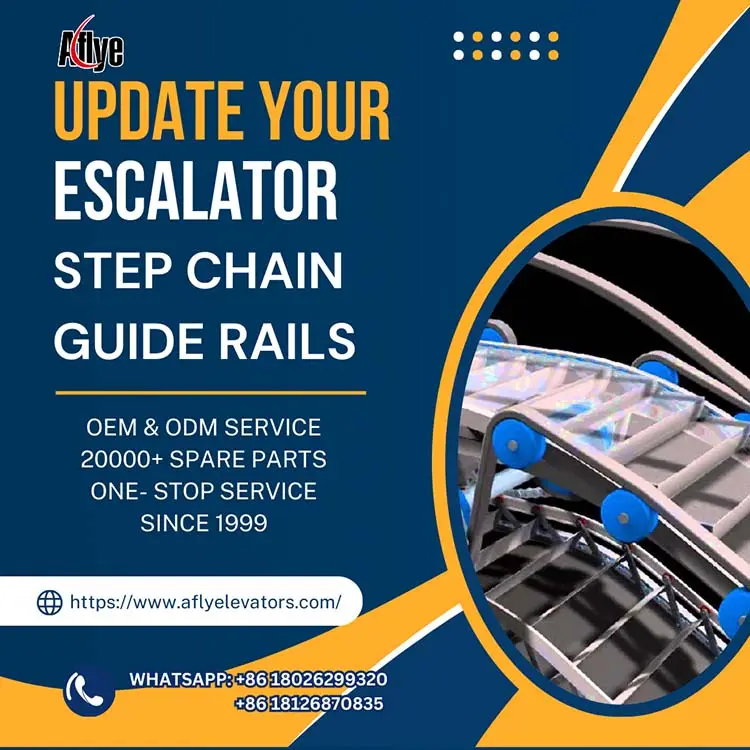
1. The Function of Escalator Step Chain Guide Rails
The escalator step chain guide rail is installed inside the escalator truss and serves as the key structural component guiding the movement of the step chain. Its primary functions include:
Maintaining the stable running direction of the step chain
Reducing friction during step chain movement
Ensuring the escalator steps remain level during operation
Minimizing vibration and noise throughout the escalator system
When the guide rail surface remains smooth and structurally stable, the step chain can run smoothly. However, when the guide rail becomes severely worn, the precision of the interaction between the chain and the rail will decrease.
2. Common Early Signs of Guide Rail Wear
In real maintenance situations, wear of escalator step chain guide rails usually does not immediately lead to major failures. Instead, subtle changes gradually appear, such as:
First, increased operating noise. When the guide rail surface becomes worn or rough, friction between the chain and the rail increases, and continuous rubbing sounds may occur at certain positions.
Second, slight step vibration. Wear of the guide rail may alter the running trajectory of the chain, causing some steps to shake slightly during operation.
Third, localized vibration. If a specific section of the guide rail is severely worn, the escalator may produce periodic vibration when passing that area.
These signs are often early warnings of guide rail wear.
3. Methods for Inspecting Guide Rail Wear On Site
During escalator maintenance, the following methods can help determine the condition of the guide rails:
First, visual inspection. After stopping the escalator, check the surface of the guide rail. If visible grooves, flattened areas, or shiny metal wear marks appear, it usually indicates long-term friction damage.
Second, observing the running path. Check whether the step chain shows signs of deviation or swinging, which may indicate structural changes in the guide rail.
Third, measuring clearance changes. Guide rail wear may increase the clearance between the chain and the rail. If this gap exceeds the design specification, related escalator components should be replaced.
Finally, sound diagnosis. Observing changes in operating sounds during low-speed running can help identify the specific location of guide rail wear.
4. Potential Risks Caused by Guide Rail Wear
If escalator step chain guide rail wear is not addressed over a long period, it may lead to several operational problems:
Accelerated wear of the step chain due to uneven load distribution
Unstable step movement, resulting in vibration or changes in step height
In severe cases, increased risk of chain derailment, which may trigger escalator safety protection systems
Therefore, guide rail wear should never be ignored during elevator and escalator maintenance.
5. Solutions After Guide Rail Wear Is Detected
When significant guide rail wear is discovered, different measures should be taken depending on the severity:
If the wear is minor, local repair or adjustment of chain tension may help improve the situation.
If the wear is severe, it is recommended to replace the corresponding guide rail components or related escalator spare parts to restore system accuracy.
At the same time, related components such as the step chain, drive sprockets, and tensioning devices should also be inspected to ensure the entire system operates reliably.
6. The Importance of Choosing High-Quality Escalator Spare Parts
In an escalator system, guide rails and chains operate under long-term heavy loads, so the quality of spare parts directly affects the equipment’s service life. High-quality guide rail materials usually provide better wear resistance and structural stability, significantly extending the lifespan of the escalator.
As a professional elevator and escalator spare parts supplier, A-FLY provides a wide range of escalator structural components and spare parts solutions suitable for different escalator models, helping maintenance teams improve equipment reliability while reducing long-term maintenance costs.
Conclusion
Wear of escalator step chain guide rails usually develops gradually, but its impact can increase over time. By regularly inspecting guide rail conditions, replacing critical escalator spare parts in time, and choosing reliable suppliers such as A-FLY, maintenance teams can effectively ensure the stability and safety of escalator operation.
In long-term escalator operation systems, every seemingly small structural component may ultimately determine the overall performance and safety of the entire escalator.