
How to Confirm Samples, Drawings, and Models When Purchasing Elevator & Escalator Spare Parts?
In elevator maintenance, escalator modernization, and engineering projects, spare parts purchasing often faces challenges such as unclear models, incomplete drawings, missing samples, or inaccurate dimensions. Many parts may look similar, but their actual structures, voltage requirements, interfaces, materials, and installation methods can be completely different.
Without sufficient confirmation before purchasing, problems such as installation failure, equipment faults, or delivery delays may occur.
For maintenance companies, engineering contractors, and distributors, understanding the correct methods for confirming samples, drawings, and elevator spare part models is essential for improving purchasing accuracy.
1. Why Are Elevator & Escalator Parts Easy to Purchase Incorrectly?
Elevators and escalators are complex systems. The same component may have different versions depending on the brand, model, and production year.
Common reasons for incorrect purchasing include:
Only providing unclear photos
Missing complete model numbers
Ignoring suffix codes
Not measuring installation dimensions
Not confirming voltage and interfaces
Differences between drawings and actual site conditions
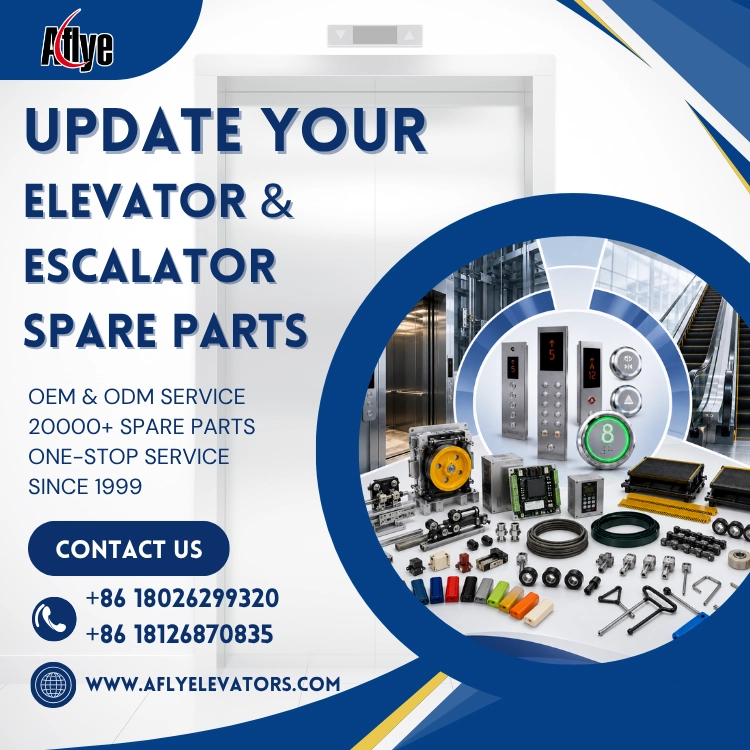
For example, elevator buttons, door hanger rollers, door locks, display boards, inverters, escalator step rollers, comb plates, and handrails may fail to install properly due to small differences in size or connection design.
2. Sample Confirmation: Suitable for Complex or Older Parts
When the original part label is missing, the model is unclear, or multiple similar versions exist in the market, providing a physical sample is the most reliable confirmation method.
Sample inspection should focus on:
Overall structure
Mounting holes
Material type
Interface design
Electrical parameters
Wear areas
Installation position
For mechanical parts such as door hanger rollers, guide rollers, escalator rollers, and sprockets, samples help suppliers accurately identify dimensions, materials, and manufacturing requirements.
3. Drawing Confirmation: Suitable for Custom and Bulk Orders
For OEM/ODM projects, non-standard parts, or large-volume orders, drawings are more important than simple photos.
Technical drawings should include:
Length, width, and height
Hole spacing and diameter
Thickness and tolerance
Material requirements
Surface treatment
Installation direction
Function description
For products such as escalator cover plates, elevator button panels, COP/HOP panels, comb plates, and customized mechanical parts, drawing confirmation is recommended before mass production to avoid installation errors.
4. Model Confirmation: Suitable for Standard Parts Matching
For standard elevator and escalator spare parts, model numbers are still the most efficient way to confirm products.
However, do not only check the main model. The following details should also be confirmed:
Version suffix
Production batch
Voltage specification
Software version
Interface type
Compatible control system
For electrical components such as elevator main boards, display boards, encoders, inverters, and safety switches, even a small model difference may directly affect communication and control functions.
5. Technical Confirmation Process Before Purchasing
It is recommended that purchasing teams follow this process:
Confirm the installation location of the part and provide original photos.
Record the complete model number if a nameplate is available.
Measure key dimensions if the model is unavailable.
Provide a physical sample for complex structures.
Provide drawings for customized products.
Finally confirm quantity, delivery time, and compatibility requirements.
This process can significantly reduce purchasing errors.
6. A-FLY Supply Capability
As a professional elevator and escalator spare parts supplier, A-FLY has long provided global maintenance companies, engineering contractors, and spare parts distributors with:
Door system parts
Control boards
Display boards
Escalator safety switches
Various elevator and escalator spare parts
A-FLY supports:
Sample confirmation
Drawing confirmation
Model matching
OEM/ODM customization
Bulk purchasing
Fast delivery
helping customers reduce model errors, improve purchasing efficiency, and minimize elevator downtime risks.
Conclusion
Purchasing elevator and escalator spare parts is not simply about “finding products from pictures.” It is a technical process that requires confirmation through samples, drawings, models, and site parameters.
The more complete the confirmation before purchasing, the smoother the installation process will be. Choosing a supplier with strong technical matching capabilities and industry experience can make maintenance, modernization, and wholesale purchasing more efficient and reliable.