
What Elevator Faults Can Be Caused by a Main Control Board Failure?
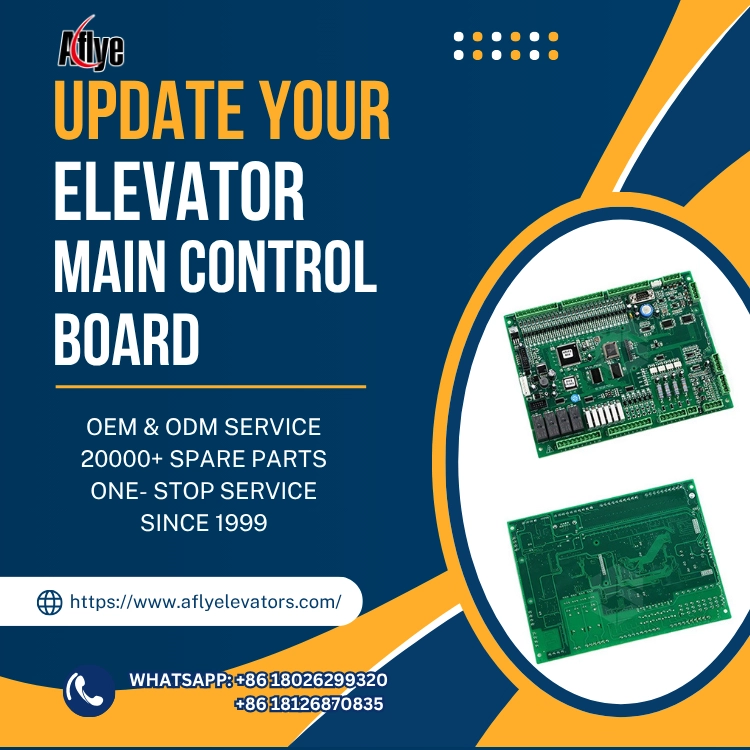
In an elevator control system, the main control board acts as the “brain” of the entire system. It is responsible for receiving signals, processing commands, and coordinating the operation of the door system, inverter, floor display, and safety circuits. Once the main control board is damaged, it can trigger multiple elevator faults—and in severe cases, cause a complete shutdown. For maintenance companies, recognizing these symptoms quickly helps ensure accurate replacement of the right elevator & escalator spare parts.
1. Elevator Fails to Start or Frequently Stops
When the main control board malfunctions, one of the most common issues is that the elevator cannot receive or send correct operating commands. This may result in:
Elevator not starting
Failure to respond to calls
Sudden stops during operation
Such faults directly affect normal usage and are among the most common causes of customer complaints.
2. Floor Commands Fail or No Response to Calls
If the control board’s signal processing is abnormal, the elevator may not respond when passengers press car buttons (COP) or hall call buttons (LOP). In some cases, commands may be received incorrectly or inconsistently.
Although this may appear to be a button issue, the root cause is often related to communication failure in the main control board.
3. Abnormal Door System Operation
The main control board is closely linked to door system control. When it fails, the following problems may occur:
Doors fail to open
Doors do not close properly
Repeated opening and closing
No door response upon arrival
Many door-related faults are not solely caused by the door operator but may also involve issues with the control board and related elevator components.
4. Abnormal Floor Display or Frequent Error Codes
When internal components of the control board age, circuits become unstable, or communication fails, the elevator may show:
Incorrect floor display
Disordered operation status
Frequent fault code alarms
These symptoms indicate that the control logic is compromised and cannot be resolved by simple resets.
5. Inaccurate Leveling and Unstable Operation
A faulty main control board can also affect deceleration, speed switching, and signal processing, leading to:
Inaccurate leveling
Vibration during operation
Rough start and stop
If left unresolved, these issues not only reduce ride comfort but also accelerate wear on other elevator and escalator components.
Maintenance Recommendations
When encountering the above issues, maintenance personnel should conduct a comprehensive inspection by combining:
Fault codes
Door system condition
Button signal response
Display system performance
If the main control board is confirmed to be faulty, it should be replaced promptly with a compatible model along with related elevator components to avoid repeated repairs and extended downtime.
As a professional elevator & escalator parts supplier, A-FLY provides a wide range of main control boards, display boards, buttons, and related components, helping maintenance teams improve efficiency and ensure stable elevator operation.
Conclusion
Understanding the faults caused by main control board failure helps maintenance teams quickly identify the root cause.
Choosing high-quality, well-matched elevator & escalator spare parts is essential for reducing failure rates and improving maintenance efficiency.