
Common Causes of Elevator Inverter Alarms
Elevator inverter alarms can affect normal elevator operation. This article explains the common causes of inverter alarms, including power supply issues, excessive load, poor heat dissipation, and incorrect parameter settings, along with practical troubleshooting methods. A-FLY provides stable and reliable elevator & escalator spare parts, including elevator inverter products.
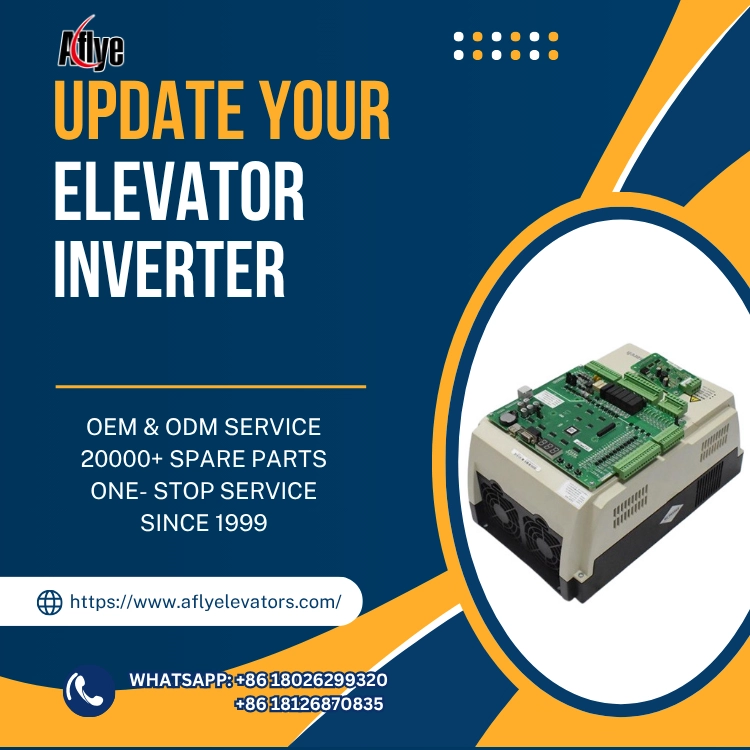
Why Does an Elevator Inverter Trigger Alarms?
In an elevator control system, the inverter is responsible for speed regulation, start/stop control, and ensuring smooth operation. When an inverter alarm occurs, the elevator may experience shutdowns, vibration, inaccurate leveling, or abnormal starting behavior.
For maintenance companies and procurement personnel, quickly identifying the cause of an alarm helps reduce downtime and improve service efficiency.
As a professional elevator & escalator parts supplier, A-FLY has found through global service experience that inverter alarms are typically related to power supply, load conditions, cooling performance, and parameter settings.
1. Abnormal Input Power Supply
Power supply issues are one of the most common causes of inverter alarms. If there is:
Overvoltage or undervoltage
Three-phase imbalance
the inverter will activate its protection mechanism and trigger an alarm.
This problem is especially common in older buildings or projects with unstable power supply. In such cases, the first step should be to check the input voltage, wiring terminals, and surrounding electrical environment, rather than assuming the inverter itself is faulty.
2. Excessive Motor Load or Mechanical Resistance
When the traction machine experiences increased resistance, brake malfunction, or severe mechanical wear, the inverter output current rises, triggering overcurrent or overload alarms.
In many cases, the fault appears as an inverter alarm, but the root cause lies in other related elevator components. Therefore, maintenance personnel should inspect both the electrical system and the mechanical system simultaneously.
3. Poor Heat Dissipation and Overheating
If there is excessive dust accumulation inside the control cabinet, cooling fan failure, or poor ventilation, the inverter temperature may rise rapidly, triggering an overheat alarm.
Long-term operation under high temperatures can accelerate electronic component aging and reduce system stability. Regular cleaning, checking fan operation, and improving ventilation conditions are essential to prevent such issues.
4. Incorrect Parameter Settings
After replacing an inverter or adjusting the control system, incorrect parameter settings—such as motor parameters, speed curves, or acceleration/deceleration time—can lead to frequent alarms or unstable operation.
This issue is particularly important when replacing different models of elevator components. After installation, parameters must be carefully checked and adjusted to ensure compatibility with the entire elevator system.
How to Troubleshoot Elevator Inverter Alarms
When handling inverter alarms, it is recommended to follow this sequence:
Check whether the input power supply is normal
Inspect the traction machine, brake, and mechanical components for abnormal load
Examine the cooling conditions and fan operation inside the control cabinet
Verify whether parameter settings are correct
A combined electrical and mechanical analysis is essential for efficient troubleshooting.
Conclusion
An elevator inverter alarm does not necessarily mean the inverter itself is faulty. In many cases, it is closely related to external conditions, mechanical load, or parameter mismatches.
By choosing high-quality elevator inverters and reliable elevator & escalator components, failure rates can be significantly reduced and maintenance efficiency improved.
As a professional supplier, A-FLY provides a wide range of elevator inverter models and related components, helping customers reduce downtime risks and enhance overall system stability.