
Causes and Solutions for Elevator PCB Control Board Overheating
.What faults can be caused by overheating of an elevator PCB control board? This article explains the common causes, inspection methods, and solutions for PCB overheating, helping maintenance companies and buyers choose suitable elevator & escalator spare parts. A-FLY provides a wide range of elevator components, including PCB control boards.
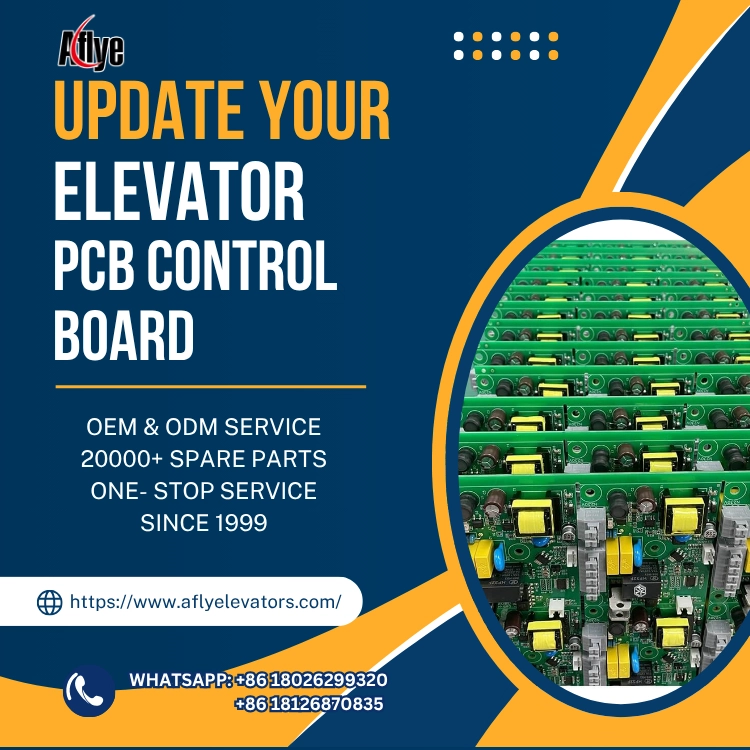
Why Does an Elevator PCB Control Board Overheat?
In an elevator control system, the PCB control board is responsible for signal processing, command transmission, and system coordination. It is a critical component for ensuring stable elevator operation. Once the control board overheats for a prolonged period, it may lead to unstable operation, abnormal fault codes, elevator shutdown, door system failure, or even complete control system damage.
As a professional elevator & escalator parts supplier, A-FLY has found through global service experience that PCB overheating is rarely caused by a single factor. Instead, it is usually the result of combined issues related to environment, load conditions, component aging, and supporting elevator parts.
Common Causes of PCB Control Board Overheating
1. Poor Heat Dissipation Conditions
One of the most common causes is inadequate cooling. If the control cabinet has poor ventilation, failed cooling fans, or excessive dust accumulation, heat cannot dissipate effectively. This leads to a continuous rise in PCB temperature, especially in high-temperature machine rooms or poorly maintained systems.
2. Aging Electronic Components
Component aging can significantly increase heat generation. For example:
Capacitor degradation
Abnormal resistor heating
Relay aging
Long-term high-load operation of modules
Loose solder joints, oxidized circuits, or burn marks on the board are also signs that overheating may recur.
3. Abnormal External Load
External system issues can increase the load on the PCB. Examples include:
Unstable power supply output
Cooling fan failure
Abnormal contactor operation
Short circuits or aging in connected elevator components
These conditions force the PCB to handle abnormal current and sustained load, leading to overheating.
4. Use of Low-Quality or Mismatched Parts
Using non-matching or unstable replacement parts is often overlooked. While such parts may work initially, they can increase system load over time and negatively affect overall control board stability.
Problems Caused by PCB Overheating
When overheating persists, common symptoms include:
Unstable elevator operation
Frequent fault codes
Delayed button response
Door system malfunctions
Display flickering
System resets or shutdowns
For maintenance teams, this increases troubleshooting time and affects service efficiency and customer satisfaction.
If not addressed, overheating may damage nearby components, shorten the lifespan of the PCB and other elevator parts, and increase replacement costs.
Solutions for PCB Control Board Overheating
1. Start with Basic Inspection
Check for dust buildup, poor sealing, or blocked airflow inside the control cabinet. Ensure cooling fans are operating properly. Improving ventilation and cleaning the environment is often the first step to reducing temperature.
2. Check Power Supply and Load Conditions
Inspect voltage stability, current load, and the condition of connected components. Look for loose wiring, swollen components, burnt surfaces, or cracked solder joints, and repair or replace them promptly.
3. Evaluate Aging Components
For long-running systems, check whether related elevator components have entered their aging cycle. In many cases, PCB overheating is a result of long-term abnormal operation of surrounding parts rather than the board itself.
Importance of Choosing Reliable PCB Control Boards and Components
In elevator maintenance and modernization projects, selecting high-quality, well-matched PCB control boards and elevator components can significantly reduce failure rates and repeated repairs.
As a professional supplier, A-FLY offers various models of elevator PCB boards, control boards, and related parts. These products help customers improve troubleshooting efficiency, spare part replacement, and overall project maintenance.
If your project experiences abnormal temperature rise, unstable system operation, or aging electronic boards, early inspection and proper component selection can effectively reduce downtime risks and maintenance costs.
Conclusion
The key to solving elevator PCB control board overheating lies in identifying issues related to heat dissipation, component aging, load conditions, and part compatibility.
For maintenance companies and buyers, proactive inspection and proper spare parts management are essential to ensure long-term stable elevator operation. Choosing reliable elevator components and working with a professional supplier like A-FLY is also a crucial step toward improving efficiency in a competitive maintenance market.