
Escalator Main Chain Tensioning Failures & Maintenance
In the escalator drive system, the main chain tensioning device plays a critical role. It not only maintains stable chain tension but also directly affects step operation smoothness and overall escalator safety. Once the tensioning device becomes abnormal, escalator performance can deteriorate rapidly and may even lead to safety risks.
As a professional supplier serving the global elevator and escalator spare parts market, A-FLY has found in numerous maintenance projects that failures of the main chain tensioning device are often one of the root causes of issues such as chain jumping, abnormal noise, and vibration.
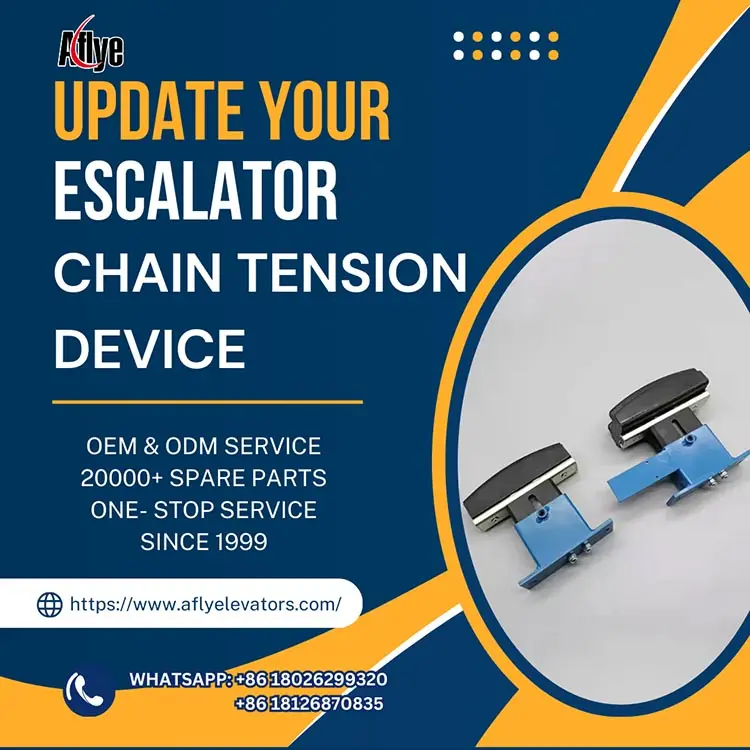
1. The Function of the Escalator Main Chain Tensioning Device
The escalator main chain connects the drive system with the step system and is the core component for power transmission. The tensioning device is responsible for:
Maintaining constant chain tension
Preventing the chain from becoming too loose or too tight
Compensating for natural chain elongation during operation
Ensuring synchronized movement of steps
If the tensioning device fails, the imbalance in chain tension can quickly affect the entire escalator system.
2. Common Symptoms of Tensioning Device Failure
When the tensioning device malfunctions, the escalator may exhibit:
Periodic abnormal noise during operation
Uneven step movement rhythm
Chain vibration or misalignment
Increased load on the drive system
In extreme cases, risk of chain jumping
These issues are often not caused by the chain itself but by reduced adjustment capability of the tensioning device.
3. Common Causes of Tensioning Device Failure
In real operating environments, tensioning devices may fail due to:
Fatigue or aging of springs or adjustment mechanisms
After long-term stress, elasticity decreases and stable tension can no longer be maintained.
Insufficient lubrication or jammed sliding components
Dust accumulation or poor lubrication can hinder the movement of tensioning parts.
Excessive chain elongation without adjustment
If the chain stretches naturally over time and the tensioning device is not adjusted accordingly, abnormal stress will occur.
In addition, improper calibration of the tensioning mechanism after replacing escalator components can also lead to hidden risks.
4. Potential Risks of Ignoring Tensioning Device Failures
If tensioning device problems are ignored for a long time, they may result in:
Accelerated wear of the main chain
Unstable step operation
Increased load on the drive system
Shortened lifespan of other escalator components
From a maintenance cost perspective, small issues with the tensioning device can eventually lead to major repairs.
5. Daily Maintenance Methods for the Tensioning Device
To extend the service life of the escalator main chain and related components, the following maintenance measures are recommended:
Regularly check the chain tension and ensure smooth operation of the tensioning device
Keep the tensioning mechanism clean and free from dust or debris
Apply lubrication regularly to ensure smooth movement of sliding parts
In addition, when significant chain elongation is detected, the tensioning device should be adjusted or the chain replaced in time to avoid excessive stretching that may compromise structural safety.
6. When Should Tensioning Device Components Be Replaced?
Replacement is recommended in the following situations:
The adjustment range of the tensioning device has reached its limit
Elastic components show clear signs of fatigue
Abnormal noise persists even after lubrication
The escalator has been in service for many years without systematic maintenance
Preventive replacement is usually more cost-effective than post-failure repair.
7. Reliable Escalator Drive System Components from A-FLY
As a professional elevator and escalator spare parts supplier, A-FLY provides a wide range of escalator main chains, tensioning devices, and related escalator components. These products have been verified in real projects for their structural strength, durability, and compatibility, helping customers improve overall escalator stability.
Conclusion
Although the escalator main chain tensioning device is hidden within the structure, it is a core component for maintaining safe and stable operation.
Through proper inspection, regular maintenance, timely replacement of key components, and cooperation with an experienced supplier like A-FLY, operators can effectively extend escalator service life and reduce long-term maintenance costs.
In escalator maintenance and modernization projects, a stable tensioning system is the foundation for safe and smooth operation.