
Old Escalator Handrail and Step Speeds Out of Sync? Check These 6 Components During Modernization
After years of operation, an older escalator may develop a difference between handrail speed and step speed, causing the handrail to run slower, slip intermittently, or vibrate during operation.
When escalator handrail speed becomes unsynchronized with the steps, the problem should not be attributed only to an aging handrail. The entire handrail drive system should also be carefully inspected.
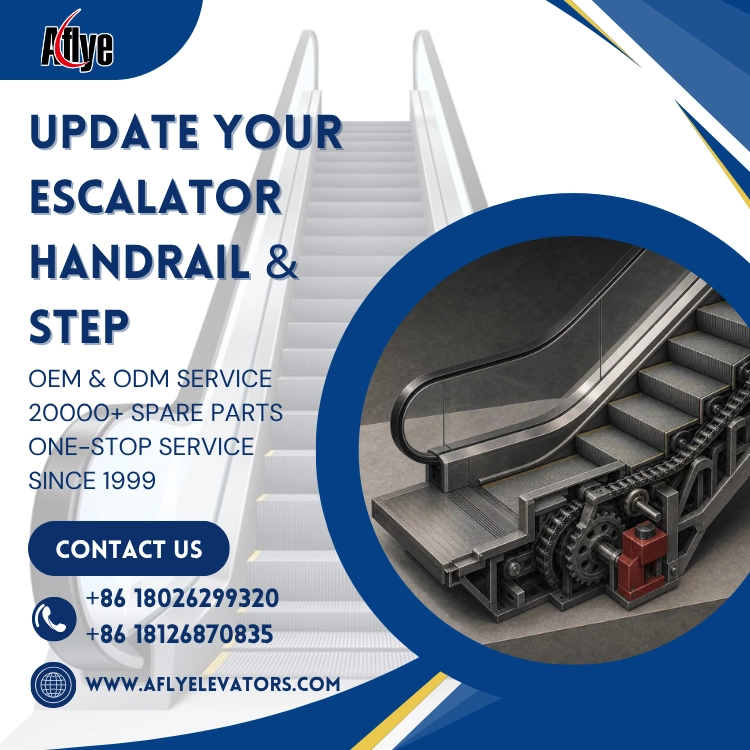
1. Why Does the Escalator Handrail Speed Become Unsynchronized?
Common causes include:
Wear or hardening of the inner surface of the escalator handrail, reducing friction performance;
Worn surfaces on the handrail drive wheel or friction wheel;
A loose handrail tensioning device, resulting in insufficient tension;
Worn bearings in guide rollers, support rollers, or pressure rollers, increasing running resistance;
Misalignment of the handrail running path, causing abnormal localized friction;
Wear of transmission components such as drive chains and sprockets.
2. Which 6 Components Should Be Checked During Escalator Modernization?
1. Escalator Handrail
Inspect the handrail for surface cracks, inner-layer wear, elongation, and hardening.
If the handrail is severely aged or damaged, escalator handrail replacement or modernization should be considered.
2. Drive Wheel and Friction Wheel
Wear or hardening of the handrail drive wheel or friction wheel can reduce friction between the wheel and handrail.
This may cause the handrail to slip when the operating load changes.
3. Handrail Tensioning Device
Insufficient tension can cause handrail slippage, while excessive tension can increase the operating load on the handrail, bearings, and rollers.
The tensioning system should therefore be inspected and adjusted correctly.
4. Guide Rollers and Support Rollers
Seized roller bearings or uneven roller surface wear can increase handrail running resistance, causing the handrail speed to decrease.
During modernization, the condition of the handrail guide rollers and support rollers should be checked carefully.
5. Pressure Roller Assembly
Insufficient pressure can reduce the effective contact force between the handrail and drive wheel.
This can also cause handrail slippage or a difference between the handrail speed and step speed.
6. Drive Chain and Sprockets
During old escalator modernization, technicians should also inspect the drive chain for elongation, the sprocket teeth for wear, and the transmission system for excessive clearance.
Wear in these components can affect power transmission and contribute to unstable handrail operation.
3. How to Solve Handrail Speed Problems During Escalator Modernization
The actual operating condition of the handrail and escalator steps should first be checked or measured.
Technicians should then inspect:
Friction wheels and drive wheels;
Guide rollers and support rollers;
Pressure roller assemblies;
Drive chains and sprockets;
Handrail running alignment.
Components with excessive wear, hardened surfaces, or seized bearings should be replaced promptly.
After replacement, the handrail tension and running path should be readjusted to ensure stable movement and proper contact with the drive components.
After completing the escalator modernization, a continuous running test should be performed to confirm that the handrail operates smoothly and consistently.
4. Escalator Modernization Parts Purchasing Tips
Before purchasing escalator modernization parts, it is important to confirm:
Escalator model;
Handrail cross-sectional dimensions;
Handrail circumference or required length;
Drive wheel dimensions;
Roller specifications;
Tensioning device structure.
For older escalators with unclear or discontinued models, it is recommended to provide photos of the original parts and actual measured dimensions to improve matching accuracy and avoid compatibility problems between old and new components.
5. A-FLY Elevator & Escalator Parts Supply Capability
A-FLY supplies a wide range of escalator handrail system and modernization parts, including:
Other escalator modernization and wear parts.
These products are suitable for escalator maintenance, repair, and modernization projects.
A-FLY supports model confirmation, dimensional matching, sample confirmation, and OEM/ODM services, providing engineering contractors and maintenance companies with one-stop elevator and escalator spare parts purchasing solutions.
Conclusion
Unsynchronized handrail and step speeds in older escalators are often caused by the combined aging and wear of the handrail, drive wheels, tensioning device, rollers, and other drive system components.
Systematically inspecting the entire escalator handrail drive system, rather than replacing the handrail alone, can help address repeated slippage, unstable handrail speed, and other operating problems more effectively.