
Why Does Escalator Drive Sprocket Wear Cause Abnormal Step Operation?
In an escalator drive system, the escalator drive sprocket is an important power transmission component. It transfers driving force to the escalator step chain, allowing the steps to circulate smoothly. As a key mechanical part of the escalator transmission system, the sprocket is continuously exposed to high loads and repeated meshing friction. Over time, wear is likely to occur.
When escalator sprocket wear happens, the meshing accuracy between the sprocket and step chain decreases, directly affecting step operation stability and causing problems such as vibration, abnormal noise, speed fluctuation, and even escalator shutdown. Therefore, the condition of the drive sprocket should be regularly checked during escalator maintenance.
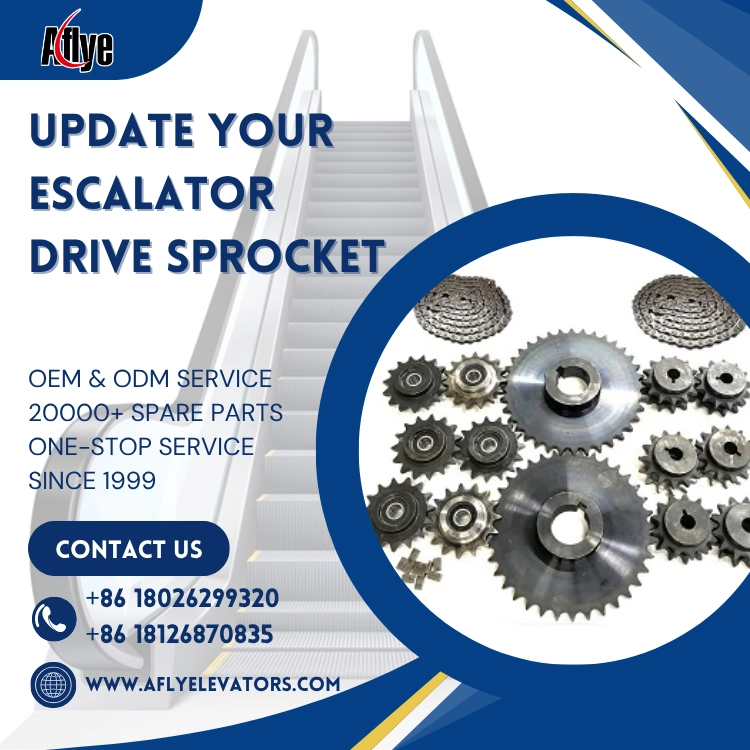
1. Sprocket Tooth Wear Causes Poor Meshing
The escalator drive sprocket transfers power through the engagement between its tooth profile and the rollers of the step chain. After long-term operation, the sprocket teeth may develop:
Tooth tip wear;
Enlarged tooth gaps;
Irregular tooth profiles;
Uneven local wear.
When the sprocket can no longer maintain accurate engagement, the step chain may experience impact during operation, resulting in:
Unstable step movement;
Jerking during startup;
Increased transmission noise;
Step speed fluctuation.
Solution:Inspect the wear condition of the sprocket teeth. If the wear exceeds the allowable limit, the escalator drive sprocket should be replaced promptly, and the step chain should be checked at the same time.
2. Sprocket Wear Causes Uneven Step Chain Loading
Under normal conditions, the drive sprocket should distribute the load evenly across the step chain. However, when the sprocket becomes worn, some chain links may experience excessive impact forces, causing:
Local step chain elongation;
Accelerated chain wear;
Changes in step running alignment;
Frequent operation of the tensioning device.
Long-term operation under these conditions can create a vicious cycle and accelerate aging of the entire escalator transmission system.
3. Increased Clearance Between Sprocket and Step Chain Causes Noise
As the sprocket wears, the clearance between the chain and tooth grooves increases, making impact more likely during operation.
Common symptoms include:
Periodic knocking sounds from the machine room area;
Noticeable noise during startup and stopping;
Increased noise under heavy loads.
If escalator operating noise continues to increase, maintenance technicians should focus on checking the drive sprocket, step chain, and related bearings, rather than only adjusting operating parameters.
4. Sprocket Wear Affects Step Synchronization
Escalator steps must maintain a stable circulating speed. If the drive sprocket output becomes unstable, it may cause:
Step speed fluctuation;
Changes in step spacing;
Reduced passenger comfort;
False activation of safety protection devices.
This issue is especially important in high-traffic environments such as shopping malls, airports, and subway stations, where sprocket failure may increase the risk of equipment downtime.
5. How to Inspect Escalator Drive Sprocket Problems
During escalator maintenance, technicians should focus on checking:
Sprocket tooth surface wear;
Engagement condition between sprocket and step chain;
Step chain pitch changes;
Chain tension;
Operating noise and vibration;
Drive bearing condition.
If the sprocket is seriously worn, replacing only one component is not recommended. The condition of the step chain and other transmission components should also be evaluated.
6. Escalator Drive Sprocket Purchasing Recommendations
When purchasing an escalator drive sprocket, the following parameters should be confirmed:
Number of teeth;
Sprocket diameter;
Tooth groove dimensions;
Material and heat treatment process;
Mounting hole dimensions;
Matching escalator step chain model;
Compatible escalator brand and model.
Since sprocket structures vary greatly between different escalator models, it is recommended to provide the original model number, drawings, or samples for accurate matching to avoid transmission problems after installation.
A-FLY Elevator & Escalator Parts Supply Capability
As a professional elevator and escalator parts supplier, A-FLY provides global maintenance companies, engineering contractors, and parts distributors with:
Main drive chains;
Tensioning devices;
And a full range of elevator and escalator spare parts.
A-FLY supports OEM/ODM customization, sample confirmation, drawing matching, and fast delivery. Based on different escalator models, A-FLY can provide professional transmission system solutions to help customers reduce procurement risks and improve maintenance efficiency.
Conclusion
Escalator drive sprocket wear not only affects the performance of the sprocket itself but also directly impacts the stable operation of the step chain and the entire transmission system.
When problems such as step vibration, abnormal noise, or speed fluctuations occur, the sprocket wear condition should be inspected promptly, and related escalator components should be evaluated together.
Through proper preventive maintenance and selecting a reliable escalator parts supplier, equipment safety can be improved, service life can be extended, and the risk of unexpected downtime can be effectively reduced.