
Escalator Drive Sprocket Maintenance Guide
In an escalator transmission system, the drive sprocket is an important component that connects the drive unit and the step chain, directly participating in power transmission.
Once the sprocket develops wear or abnormal meshing conditions, it can affect escalator running stability and may even cause abnormal noise, slipping, or reduced transmission efficiency.
As a professional elevator & escalator parts supplier, A-FLY recommends paying close attention to the condition of escalator drive sprockets during routine maintenance to ensure the stable operation of related elevator & escalator spare parts.
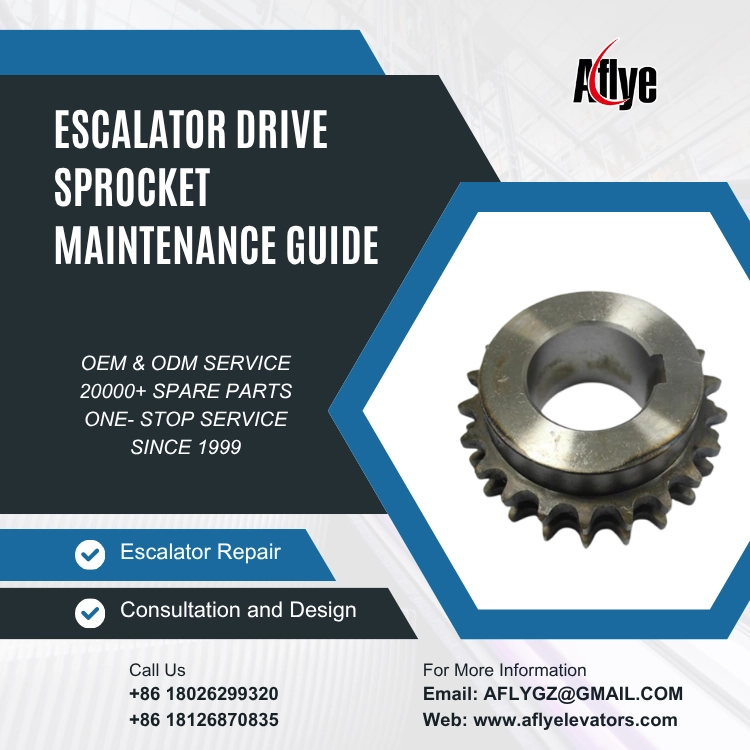
1. The Function of the Escalator Drive Sprocket
The escalator drive sprocket is mainly used to drive the step chain, allowing the escalator steps to circulate along a fixed operating path.
The meshing accuracy between the sprocket and the chain directly affects transmission efficiency and running smoothness.
Therefore, it is an essential escalator spare part that should never be overlooked in the escalator system.
2. Common Wear and Abnormal Symptoms
During long-term operation, the drive sprocket may develop:
Tooth surface wear
Worn or rounded tooth profiles
Uneven wear
Localized damage
Common on-site symptoms include:
Increased operating noise
Chain vibration or jumping
Unstable transmission
Slight slipping
If not handled in time, these issues may also lead to chain elongation, increased bearing load, and other related problems.
3. Main Causes of Sprocket Wear
Drive sprocket wear is usually related to:
High-frequency operation
Insufficient lubrication
Abnormal chain tension
Installation misalignment
For example, poor lubrication increases metal friction, while excessive or insufficient chain tension can negatively affect meshing performance.
In addition, dust and foreign objects entering the transmission area can accelerate wear on both the sprocket and chain.
4. Key Points for Daily Maintenance
During routine maintenance, technicians should regularly inspect:
Tooth surface condition
Wear level
Cracks or deformation
It is also important to confirm:
Proper chain tension
Adequate lubrication
Stable installation position
If abnormal noise or vibration occurs during operation, the escalator should be stopped and inspected immediately to prevent the issue from worsening.
5. When Should the Sprocket Be Replaced?
Replacement should be considered when:
Tooth profiles are severely worn
Slipping occurs
Meshing between the sprocket and chain becomes poor
Obvious operational abnormalities appear
At the same time, the condition of the chain and related elevator & escalator spare parts should also be inspected.
If necessary, they should be replaced together to ensure proper matching and stable operation of the entire transmission system.
Maintenance Recommendations
To extend the service life of escalator drive sprockets, it is recommended to:
Establish a regular inspection schedule
Keep the transmission area clean
Apply proper lubrication
Avoid long-term overload operation
Choosing stable and high-quality escalator spare parts is equally important for reducing failures and lowering maintenance costs.
Conclusion
Escalator drive sprocket maintenance is an important part of ensuring the stable operation of the escalator transmission system.
Through scientific maintenance and timely replacement of key elevator spare parts, failure rates can be effectively reduced while improving operating efficiency.As a professional elevator & escalator parts supplier, A-FLY provides a wide range of drive sprockets and related elevator & escalator spare parts to help customers achieve more efficient maintenance management and long-term stable operation.