
Why Does Escalator Main Drive Shaft Bearing Wear Cause Periodic Vibration and Noise?
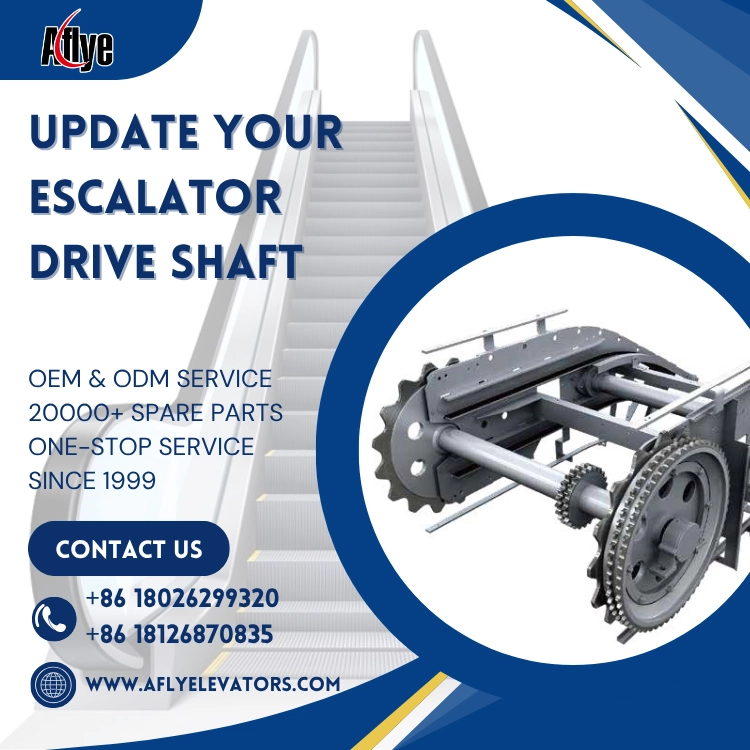
In an escalator drive system, the main drive shaft transfers power to the drive sprockets and related operating components, while the bearings support the shaft and allow it to rotate smoothly and steadily.
When the escalator main drive shaft bearings become worn, develop excessive clearance, or suffer damage to their rolling elements, they may produce periodic vibration and abnormal noise related to the rotational speed.
1. Why Do Escalator Main Drive Shaft Bearings Wear?
Common causes include:
Long-term heavy-load operation causing fatigue of the bearing raceways and rolling elements;
Insufficient, aged, or contaminated grease;
Misalignment of the escalator drive shaft;
Seal failure allowing dust or moisture to enter the bearing;
Incorrect drive chain tension placing additional loads on the bearing.
These conditions can gradually increase bearing wear and reduce the stability of the main drive shaft.
2. Why Does Bearing Wear Cause Periodic Vibration and Abnormal Noise?
When a bearing is in good condition, the forces acting on the drive shaft remain relatively stable during rotation.
If the bearing raceway develops pitting or spalling, or the internal bearing clearance becomes excessive, an impact may occur each time the damaged area passes through the loaded zone.
As the drive shaft continues to rotate, these impacts repeat at regular intervals, resulting in noticeable periodic escalator vibration and abnormal operating noise.
Common symptoms include:
Regular humming, knocking, or impact noise from the drive area;
Vibration that changes with escalator operating speed;
Slight radial movement of the drive shaft;
Abnormal temperature rise around the bearing housing;
Reduced operating stability of the drive chain and sprockets.
3. How Should This Problem Be Handled During Escalator Maintenance?
During escalator maintenance, technicians should inspect:
Bearing operating noise;
Bearing temperature;
Radial clearance;
Lubrication condition;
Drive shaft condition;
Bearing housing;
Drive sprockets;
Drive chain tension.
If the bearing has developed excessive looseness, pitting, sticking, or abnormal noise, it should be replaced promptly.
At the same time, the drive shaft and bearing housing should be inspected for wear or damage. This helps prevent a new bearing from being subjected to abnormal loads after replacement.
4. Escalator Bearing Purchasing Tips
When purchasing an escalator main drive shaft bearing, the following specifications should be carefully confirmed:
Bearing model;
Inner diameter;
Outer diameter;
Bearing width;
Precision grade;
Seal type;
Load requirements.
For older escalators or projects where the original model information is unclear, it is recommended to provide the original bearing number, escalator model, and measured dimensions.
Replacement bearings should not be selected based on appearance alone, as similar-looking bearings may have different dimensions, load ratings, or technical specifications.
5. A-FLY Elevator & Escalator Parts Supply Capability
A-FLY supplies a wide range of escalator and elevator spare parts, including:
Escalator bearings;
Other commonly replaced escalator parts.
These products are suitable for escalator repair, maintenance, and modernization projects.
For different project requirements, A-FLY supports model confirmation, dimensional matching, sample confirmation, and OEM/ODM services, providing engineering contractors, maintenance companies, and spare parts distributors with one-stop elevator and escalator spare parts purchasing solutions.
Conclusion
Periodic vibration and abnormal escalator operating noise caused by main drive shaft bearing wear are often important signs of excessive internal clearance or bearing raceway damage.
Timely inspection of the bearings, main drive shaft, sprockets, and chain drive system can help identify problems before they develop further and affect the overall reliability of the escalator drive system.