
What Safety Risks Can Be Caused by Damaged Escalator Comb Plates or Incorrect Gaps?
At the entrance and exit areas of an escalator, the escalator comb plate is an important safety component connecting the moving step area with the fixed landing plate. Through its comb teeth structure engaging with the escalator steps, it allows passengers to enter and exit smoothly while preventing shoes, foreign objects, and other items from entering the gap between the steps and landing area.
Because the escalator comb plate is constantly exposed to step impact, passenger loads, and environmental conditions, it may develop problems such as wear, broken teeth, deformation, or abnormal installation gaps over time. If these issues are not addressed promptly, they may affect escalator safety. Therefore, the comb plate is a key escalator safety component that requires regular inspection during escalator maintenance.
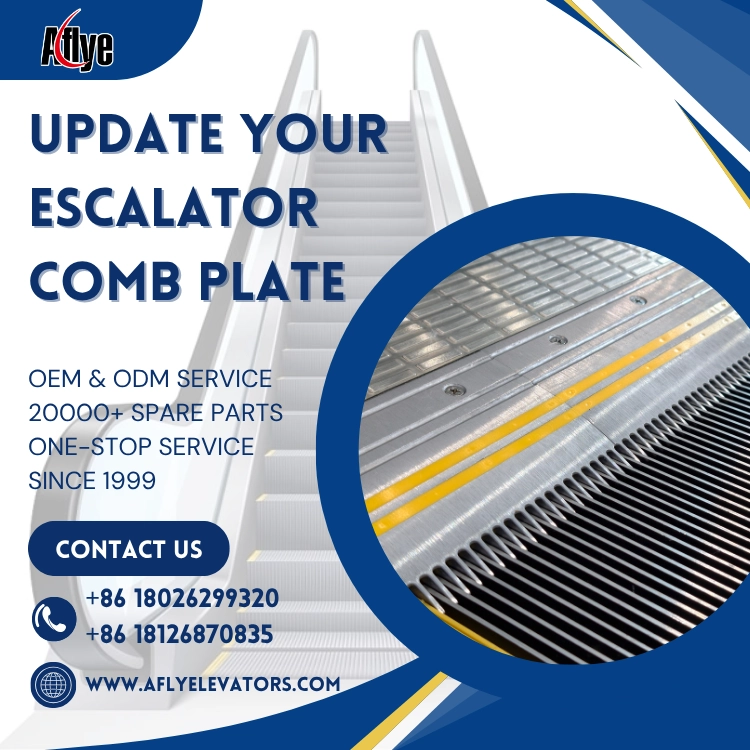
1. Comb Plate Wear Causes Abnormal Step Engagement
Under normal conditions, the comb teeth should accurately match the grooves of the escalator steps, allowing the steps to pass smoothly through the entrance area.
After long-term operation, the comb teeth may experience:
Tooth tip wear;
Blunt comb teeth;
Partial breakage;
Changes in tooth spacing.
When the comb teeth and steps do not engage properly, it may cause:
Step impact during operation;
Abnormal noise at the entrance area;
Collision between comb teeth and steps;
Unexpected escalator shutdown.
Solution:Check the wear condition of the comb plate and the engagement status with the steps. If the comb plate is seriously damaged, it should be replaced promptly.
2. Excessive Comb Gap Increases Entrapment Risk
The gap between the escalator comb plate and the steps must remain within the required range. If the gap increases due to installation deviation, long-term wear, or structural deformation, it may result in:
Shoes entering the step gaps;
Small objects being caught;
Increased step running resistance;
Activation of safety protection devices.
This issue is especially important in high-traffic locations such as:
Shopping malls;
Airports;
Subway stations.
These areas experience frequent step impacts and require regular inspection of the comb area.
3. Comb Plate Deformation Causes Step Jamming
During escalator operation, external impact at the entrance area or abnormal operation of the step chain and step rollers may change the force distribution around the comb plate.
Common symptoms include:
Comb plate lifting or warping;
Changes in installation angle;
Collision between comb teeth and steps;
Abnormal operating noise.
Maintenance technicians should check the fixing structure of the comb plate and also inspect the condition of:
Guide rails.
4. Broken or Missing Teeth Affect Safety Protection
The escalator comb plate is a wear component and may develop broken teeth after long-term use.
Missing or damaged comb teeth can affect smooth step movement and may cause:
Abnormal force on step edges;
Unstable passenger stepping;
Foreign objects entering the running area;
Further damage to the step system.
If missing comb teeth are found, the comb plate should be replaced promptly to prevent further failures.
5. How to Inspect Escalator Comb Plate Condition During Maintenance?
During routine escalator maintenance, technicians should check:
Whether all comb teeth are complete;
Whether tooth tips are worn;
Whether engagement with steps is smooth;
Whether fixing bolts are loose;
Whether comb gaps meet requirements;
Whether foreign objects exist in the entrance area.
At the same time, the condition of the following components should also be evaluated:
Drive system.
This is because some comb plate problems are actually caused by changes in the step running path.
6. Escalator Comb Plate Purchasing Recommendations
When purchasing an escalator comb plate, the following specifications should be confirmed:
Number of comb teeth;
Material type;
Installation dimensions;
Tooth pitch specifications;
Comb color and warning design;
Compatible escalator step model;
Escalator brand and model.
Different escalator models may have significantly different comb structures. It is recommended to provide original part photos, dimensions, or samples for accurate matching to avoid abnormal gaps after installation.
A-FLY Elevator & Escalator Parts Supply Capability
As a professional elevator and escalator parts supplier, A-FLY provides global maintenance companies, engineering contractors, and parts distributors with:
Escalator comb teeth;
Safety switches;
And a full range of elevator and escalator spare parts.
A-FLY supports OEM/ODM customization, sample confirmation, drawing matching, and fast delivery. Based on different escalator brands and models, A-FLY provides professional matching solutions to help customers reduce procurement risks and improve escalator maintenance efficiency.
Conclusion
Although the escalator comb plate is a relatively small component, it plays an important role in passenger safety protection.
Comb tooth wear, breakage, or abnormal gaps can affect normal escalator step operation and increase passenger safety risks.
Through regular inspection, timely replacement of damaged escalator safety components, and cooperation with a reliable elevator and escalator parts supplier, escalator safety, stability, and long-term operating reliability can be effectively improved.