
Why Does Elevator Traction Sheave Groove Wear Affect Operating Safety?
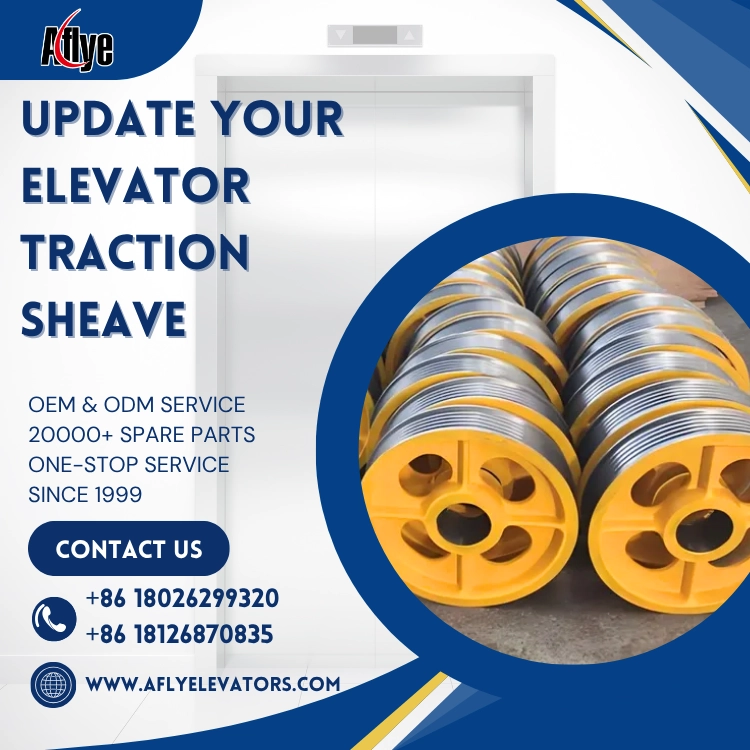
During elevator operation, the elevator traction sheave is a key component of the traction system responsible for transmitting driving force. The elevator car moves up and down through the friction between the traction sheave grooves and the elevator wire ropes.
After long-term operation, wear of the traction sheave grooves can reduce the effective friction between the ropes and the sheave, affecting elevator stability and potentially creating safety risks.
Therefore, regular inspection of the traction sheave is an important part of elevator maintenance and safe traction system operation.
1. Common Causes of Elevator Traction Sheave Groove Wear
1. Natural Wear from Long-Term Operation
Elevators start and stop frequently every day, causing the wire ropes to continuously pass through the traction sheave grooves and generate friction.
Over time, this may cause:
Changes in groove depth;
Changes in groove profile;
Smoother groove surfaces;
Reduced traction performance.
Wear can be more significant in high-rise buildings, shopping malls, hotels, and other high-frequency applications.
2. Poor Matching Between Traction Sheave and Wire Rope
If the wire rope diameter, material, or construction does not properly match the traction sheave groove, abnormal contact pressure may occur.
Common problems include:
Excessive localized rope loading;
Uneven groove wear;
Accelerated wire rope wear;
Shortened traction sheave service life.
3. Improper Installation or Adjustment
During installation of the elevator traction system, incorrect sheave alignment or uneven wire rope tension can cause some grooves to carry excessive loads for long periods, resulting in uneven wear.
2. What Safety Problems Can Traction Sheave Groove Wear Cause?
1. Reduced Traction and Increased Risk of Rope Slippage
When the traction sheave grooves become worn, the contact condition between the wire ropes and groove surfaces changes, reducing friction.This may cause:
Wire rope slipping during elevator startup;
Abnormal car speed;
Reduced leveling accuracy;
Elevator fault shutdowns.
Severe wear may affect the overall safety and reliability of the elevator traction system.
2. Accelerated Elevator Wire Rope Wear
Worn grooves can no longer maintain the correct contact profile with the wire ropes, causing abnormal pressure and friction.
Long-term operation may result in:
Reduced wire rope diameter;
Increased broken wires;
Shortened wire rope service life.
Therefore, traction sheave wear and wire rope wear often occur together.
3. Increased Vibration and Operating Noise
When traction sheave grooves wear unevenly, the running path and loading of the wire ropes may change.
Possible symptoms include:
Impact during starting and stopping;
Elevator car vibration;
Abnormal friction noise;
Reduced ride comfort.
3. How to Solve Elevator Traction Sheave Groove Wear?
When traction sheave wear is detected, the condition should be evaluated carefully.
Key inspection points include:
Traction sheave groove wear depth;
Changes in wire rope diameter;
Whether wire rope tension is balanced;
Overall operating condition of the traction system.
If the wear is minor, adjusting wire rope tension and improving maintenance practices may help reduce further wear.
If the grooves are significantly deformed or exceed the allowable wear limit, elevator traction sheave replacement is recommended to avoid affecting safe elevator operation.
4. Elevator Traction Sheave Purchasing Tips
When purchasing an elevator traction sheave, price should not be the only consideration. The following specifications should also be confirmed:
Traction sheave dimensions;
Number and profile of rope grooves;
Compatible wire rope diameter;
Material and machining accuracy;
Compatibility with the original traction machine.
For older elevator modernization projects, it is recommended to inspect the elevator wire ropes, bearings, guide sheaves, and other related elevator parts at the same time. Replacing only one component may allow the original problem to return.
5. A-FLY Elevator & Escalator Parts Supply Capability
A-FLY specializes in supplying elevator and escalator spare parts worldwide, including:
Deflector sheaves;
Elevator door system components;
Elevator safety components;
And other elevator and escalator spare parts.
For elevator repair, modernization, and traction system upgrade projects, A-FLY supports model confirmation, dimensional matching, and OEM/ODM customization, helping customers quickly find suitable elevator parts solutions.
Conclusion
Although elevator traction sheave groove wear is a common mechanical wear issue, ignoring it for a long time may reduce traction performance, accelerate wire rope damage, and affect elevator operating safety.
Regular elevator maintenance, timely inspection of traction sheave condition, and cooperation with a reliable elevator and escalator parts supplier can effectively improve elevator stability, safety, and service life.