
Why Do Elevator Push Buttons Become Harder to Press? Dust Buildup May Be Causing Mechanical Sticking
If an elevator push button becomes harder to press, returns slowly, or requires repeated pressing after a period of use, the problem is not necessarily electrical. In elevators with high usage frequency or dusty operating environments, dust buildup inside elevator push buttons can increase friction between moving components, eventually causing mechanical sticking.
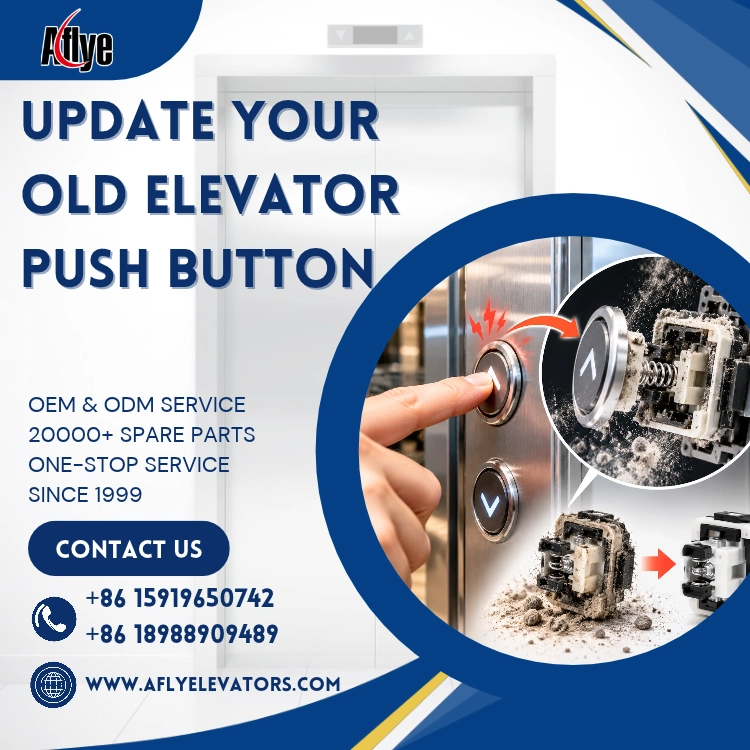
1. Why Does Dust Increase Button Resistance?
1. Dust enters the gaps between moving components
Small gaps typically exist between the button cap, outer ring, and guide structure. Over time, fine dust can accumulate on sliding surfaces, gradually increasing friction and making the button harder to press.
2. Dust combines with oil or dirt
If lubricant residue, cleaning agents, or moisture are also present inside the button, dust can form sticky deposits that cause elevator push buttons to stick.
3. Worn guide structures accumulate more dust
When the button cap or guide slot becomes worn, the clearance may become uneven. Dust entering these worn areas can further accelerate uneven wear, creating a cycle of dust accumulation, increased friction, and mechanical deterioration.
2. What Are the Common Signs of Dust-Related Button Problems?
Typical elevator push button mechanical faults include:
Increased pressing resistance;
Slower button return;
Sticking when pressed from one side;
Incomplete button reset;
Inconsistent pressing force;
Unstable contact operation in severe cases.
These problems are often more noticeable on buttons that are used particularly frequently, such as those serving busy floors.
3. How Can Dust-Related Elevator Button Problems Be Resolved?
During elevator button maintenance, inspect the button cap, guide structure, return spring, and moving clearances for dust, foreign objects, and visible wear.
For minor dust accumulation, clean the button according to the manufacturer's maintenance instructions. If the button cap or guide components are deformed or severely worn, cleaning alone may not resolve the problem, and elevator push button replacement should be considered.
During cleaning, avoid allowing liquids to enter the electrical contacts or circuit areas.
4. Why Should Dust Protection Be Considered When Purchasing Elevator Buttons?
When purchasing elevator push buttons, buyers should consider not only dimensions, operating voltage, and interface type, but also the button structure and dust-resistant design.
For environments with high dust levels or frequent use, such as shopping malls, parking garages, and freight elevators, consider products with better structural sealing, stable button guidance, and convenient maintenance access.
5. A-FLY Elevator & Escalator Parts Supply
A-FLY supplies elevator push buttons, button caps, button panels, Braille buttons, illuminated buttons, and related button replacement parts for elevator maintenance, repairs, and modernization projects.
We support OEM/ODM customization for dimensions, characters, operating voltage, lighting colors, interfaces, and panels. We also supply a wide range of elevator and escalator parts, including door systems, control systems, safety components, and escalator wear parts, providing one-stop sourcing solutions for contractors, maintenance companies, and distributors.
Conclusion
Increased elevator button pressing resistance does not necessarily indicate an electrical contact fault. Dust accumulation, dirt, and mechanical wear can also cause buttons to stick. Regularly inspecting the button mechanism and improving dust protection can help reduce mechanical failures and unnecessary replacement.