
Common Elevator Inverter Faults and Key Considerations for Replacement Procurement
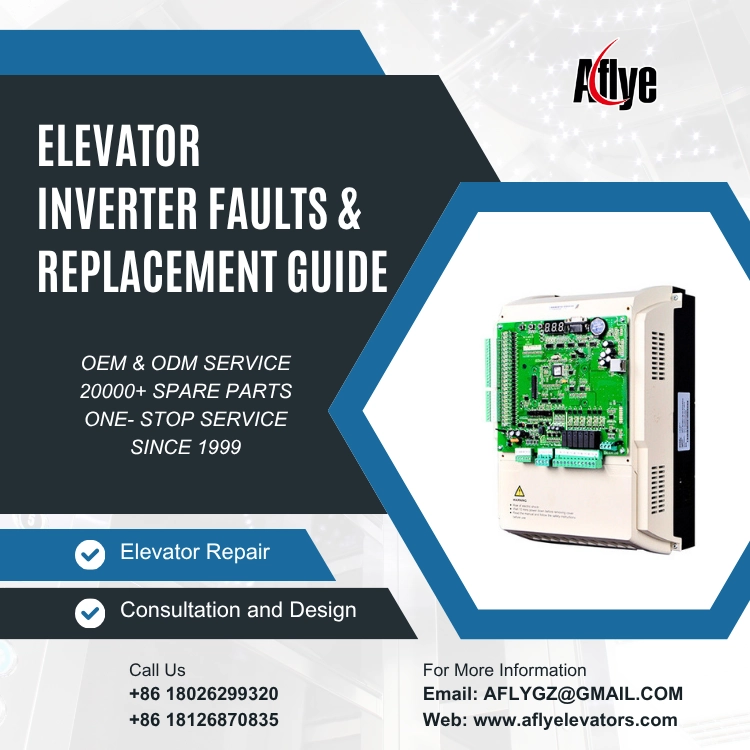
In an elevator operating system, the elevator inverter (VFD) is one of the core electrical control components. It is responsible for controlling the traction machine’s start-up, acceleration, deceleration, and stopping processes. Working together with the elevator control cabinet, main control board, encoder, and brake system, the inverter directly affects ride comfort, operational stability, and safety.
When an elevator inverter malfunctions, it can cause vibration, fault alarms, inaccurate leveling, or even complete elevator shutdown. Therefore, maintenance personnel must quickly identify the root cause and select the correct elevator electrical components for repair or replacement.
1. Excessive Vibration During Start-Up or Stopping
If the elevator experiences noticeable vibration during acceleration, deceleration, or stopping, the issue may be related to:
Abnormal inverter output
Improper parameter settings
Unstable encoder feedback
Abnormal traction machine load
In older elevators, aging inverter components can also reduce control accuracy over time.
Solution
Check:
Inverter operating parameters
Output voltage and current
Fault records and alarm history
At the same time, inspect the encoder, brake system, and traction machine. If inverter-related faults occur repeatedly, replacement with a compatible model should be considered.
2. Sudden Elevator Shutdown with Fault Alarms
If the elevator suddenly stops during operation and displays alarms such as:
Overcurrent
Overvoltage
Undervoltage
Overtemperature
Communication errors
the problem is often related to the elevator inverter, power supply, cooling system, or control cabinet wiring.
Troubleshooting Recommendations
Inspect:
Wiring terminals inside the elevator control cabinet
Input power voltage
Cooling fans
Braking resistors
Then analyze the fault code to determine whether the inverter has:
Damaged power modules
Drive circuit abnormalities
Communication failures
3. Inaccurate Leveling or Abnormal Speed Performance
When inverter output becomes unstable, the elevator may experience:
Speed fluctuations
Uneven deceleration
Increased leveling errors
These issues should not be addressed solely by adjusting leveling switches. The inverter, encoder, and elevator control system should also be inspected.
Corrective Action
Verify that inverter parameters match:
Motor power rating
Rated current
Encoder type
Control method
Incorrect settings or incompatible inverter models can significantly affect elevator performance.
4. Poor Cooling or Internal Component Aging
High temperatures, excessive dust, and inadequate ventilation inside the elevator control cabinet can accelerate the aging of:
Capacitors
Power modules
Cooling fans
Insufficient heat dissipation can result in overheating alarms and, in severe cases, component failure.
Maintenance Recommendations
Clean the control cabinet regularly
Check that cooling fans operate properly
Keep ventilation paths unobstructed
For older inverters with frequent faults, proactive replacement is recommended to avoid repeated elevator downtime.
5. Key Considerations When Purchasing a Replacement Elevator Inverter
When purchasing an elevator inverter, do not focus solely on appearance or power rating.
The following factors must be verified:
Brand and model number
Power capacity
Input and output voltage specifications
Control method
Communication protocol
Encoder interface type
Software version
Compatibility with the existing elevator control cabinet system
This is especially important for modernization projects and repairs of older elevators, where matching the original specifications is critical to avoid communication and commissioning issues.
A-FLY Elevator Electrical Parts Supply Capability
As a professional elevator and escalator spare parts supplier, A-FLY provides a comprehensive range of products for maintenance companies, engineering contractors, and spare parts distributors worldwide, including:
Elevator control cabinet components
Main control boards
Encoders
Braking resistors
Cooling fans
Various elevator electrical spare parts
A-FLY supports:
Multi-model compatibility matching
Technical selection assistance
Bulk purchasing
OEM/ODM customization
Fast delivery services
Our goal is to help customers reduce procurement errors and improve maintenance efficiency.
Conclusion
Elevator inverter failures can have a direct impact on elevator stability, ride quality, and operational reliability. Maintenance personnel should perform comprehensive troubleshooting by analyzing:
Fault codes
Operating conditions
Control cabinet wiring
Encoder feedback
Cooling and ventilation conditions
Choosing a reliable elevator and escalator spare parts supplier ensures more accurate inverter replacement, faster maintenance, and reduced elevator downtime, helping to keep elevators operating safely and efficiently.