
Why Does an Aging or Loose Elevator Door Operator Belt Cause Door Opening and Closing Problems?
During elevator operation, the elevator door operator belt is an important transmission component connecting the door motor to the door drive mechanism. It transfers power from the motor to the elevator car door, allowing the doors to open and close smoothly.
After long-term operation, the door operator belt is continuously exposed to tension, friction, and environmental conditions, which may cause aging, loosening, or wear. When the belt performance deteriorates, it can directly affect the elevator door operator system, resulting in abnormal opening and closing speeds, unstable door movement, and other operating problems.
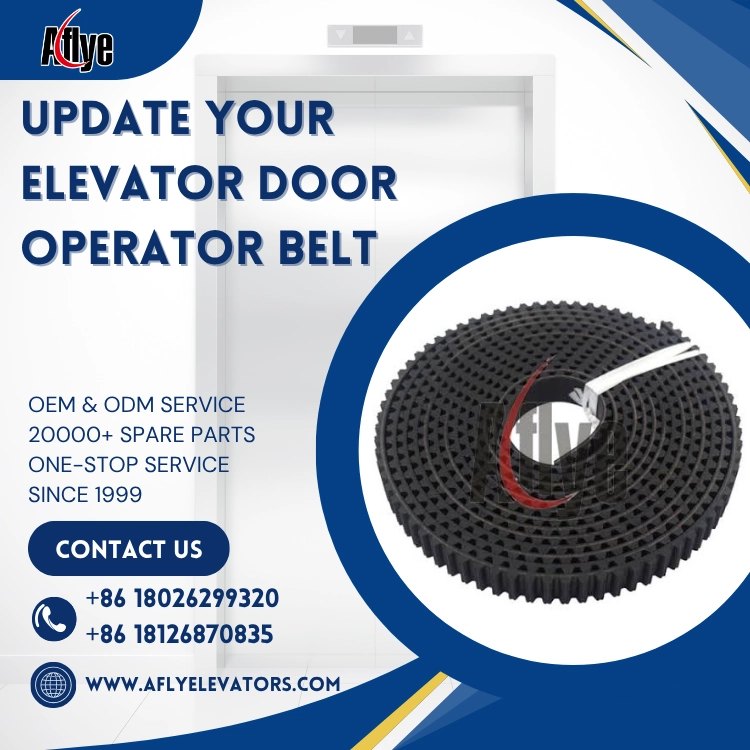
1. Common Causes of Elevator Door Operator Belt Aging or Loosening
1. Natural Wear from Long-Term Operation
Elevator doors open and close frequently every day, causing the door operator belt to withstand continuous tension and friction.
Over time, the belt may develop:
Surface cracks;
Belt hardening;
Worn belt teeth;
Reduced mechanical strength.
When the belt can no longer transmit power effectively, the operation of the elevator door system may be affected.
2. Insufficient Belt Tension
The elevator door operator belt must maintain proper tension. If the belt gradually stretches after long-term operation, it may cause:
Slippage between the belt and pulley;
Insufficient power transmission;
Reduced door operator speed.
3. Improper Installation or Adjustment
If the tension of a newly installed door operator belt is incorrectly adjusted, several problems may occur:
An excessively loose belt may slip;
An excessively tight belt may increase system load;
Door operator motor wear may accelerate.
Proper belt tension is therefore important for reliable door system operation.
4. Abnormal Load in the Door Operator System
If components such as elevator door sliders or door hanger rollers develop excessive resistance, the door operator belt must carry a higher load, accelerating belt wear and aging.
2. What Problems Can Elevator Door Operator Belt Failure Cause?
1. Abnormal Elevator Door Opening and Closing Speed
When the belt becomes loose or worn, the door operator may be unable to transmit power consistently.
This can result in:
Slower door opening;
Uneven door closing speed;
Door movement stopping or hesitating during operation.
2. Repeated Door Opening and Closing
If the belt slips or power transmission becomes unstable, the door operator control system may detect abnormal door movement.
Possible symptoms include:
Door unable to close completely;
Door automatically reopening;
Protective shutdown caused by a door system fault.
3. Increased Door Operator Noise
An aging belt may no longer engage correctly with the pulley, causing:
Friction noise;
Abnormal vibration;
Increased operating noise.
Long-term operation under these conditions may also shorten the service life of other elevator door system components.
3. How to Solve Elevator Door Operator Belt Problems
When abnormal elevator door operation occurs, the following items should be checked first:
Whether the belt surface has cracks;
Whether belt tension is correct;
Whether the belt pulleys are worn;
Whether the door operator motor is operating normally.
If the belt is only slightly loose, adjusting the tensioning mechanism may restore normal operation.
However, if the belt shows obvious aging, cracking, wear, or dimensional changes, timely elevator door operator belt replacement is recommended to prevent belt breakage or door system failure during operation.
At the same time, during elevator door system maintenance, related components such as door hanger rollers, door sliders, and door lock contacts should also be inspected to ensure coordinated and reliable operation of the complete door system.
4. Elevator Door Operator Belt Purchasing Tips
When purchasing an elevator door operator belt, the following specifications should be carefully confirmed:
Original belt model;
Belt length and width;
Tooth profile and pitch;
Material and wear resistance;
Compatibility with the door operator system.
Different elevator models and door operator systems may use different belt specifications. Therefore, replacement belts should not be selected based only on appearance.
For elevator modernization projects, choosing a belt with good wear resistance and stable transmission performance can help improve door system reliability and reduce future maintenance frequency.
5. A-FLY Elevator & Escalator Parts Supply Capability
A-FLY specializes in the global supply of elevator and escalator spare parts, providing one-stop solutions for elevator maintenance, modernization, and project procurement.
Our product range includes:
Elevator door system components;
Escalator wear parts and safety components.
For different elevator models and application requirements, A-FLY provides product selection, dimensional confirmation, and OEM/ODM customization services, helping customers quickly find compatible elevator spare parts for maintenance and modernization projects.
Conclusion
Although the elevator door operator belt is a relatively small transmission component, it plays a critical role in stable elevator door opening and closing. When abnormal door movement, increased operating noise, or unsmooth opening and closing occurs, the condition of the belt should be inspected promptly.
Through proper elevator door system maintenance, regular inspection of door operator belt wear, and cooperation with a reliable elevator and escalator spare parts supplier, operators can improve elevator reliability, safety, and service life.