
Why Does Elevator Door Operator Opening and Closing Speed Become Abnormal?
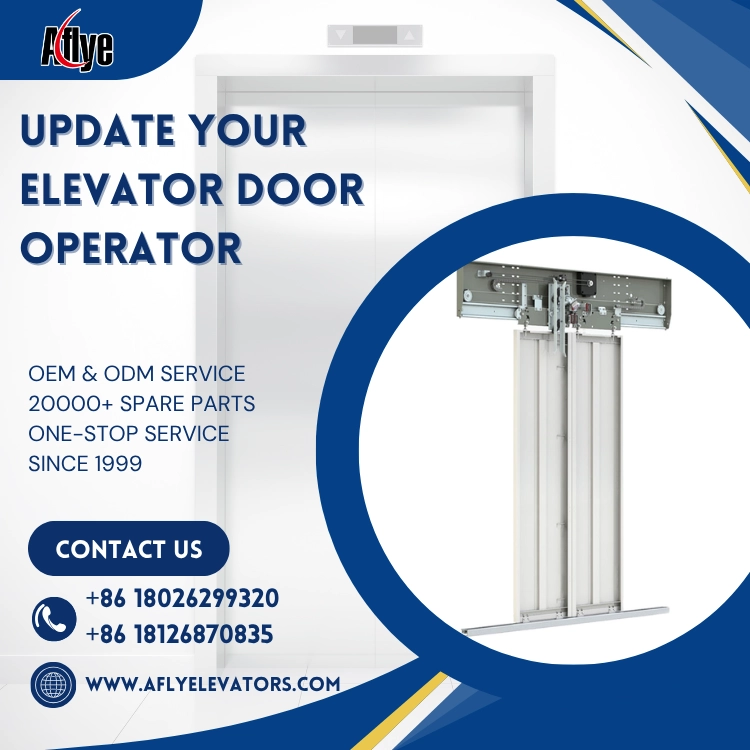
In modern elevators, the elevator door operator is responsible for driving the car door during opening, closing, and speed control. It is the core actuator of the elevator door system. Under normal conditions, the door operator should achieve smooth acceleration, deceleration, and accurate positioning according to the preset speed curve.
If the door opening and closing speed becomes too fast, too slow, unstable, or accompanied by vibration, it will not only affect passenger comfort but may also cause door lock alarms, repeated door opening and closing, or elevator shutdown failures.
Therefore, abnormal door speed is usually not caused by a single damaged component but by the combined effects of electrical control and mechanical systems.
1. Incorrect Door Operator Parameter Settings
Modern elevator door operators usually use variable frequency or servo control technology, and the opening/closing speed is determined by control parameters.
Speed abnormalities may occur due to:
Lost door operator parameters;
Incorrect acceleration/deceleration curve settings;
Failed self-learning process;
Incompatible control software versions.
Typical symptoms include:
Door opening suddenly becomes too fast;
Strong impact at the end of door closing;
Unstable door acceleration and stopping.
Solution:Recheck and adjust door operator parameters, perform door self-learning, and confirm that the control system software is compatible with the door drive unit.
2. Increased Resistance from Door Hanger Rollers and Guide Rails
Many so-called elevator door operator failures are actually caused by excessive mechanical resistance, such as:
Worn elevator door hanger rollers;
Dirty or contaminated door tracks;
Aging door shoes/sliding blocks;
Misaligned door panels.
When the door operator needs to overcome higher friction resistance, the following problems may occur:
Slower door opening;
Unsmooth door closing;
Door vibration during operation;
Increased door operator current.
During maintenance, technicians should inspect both the door operator and related elevator door system parts, rather than only adjusting parameters.
3. Belt or Transmission Mechanism Wear
The door operator drive belt may stretch, age, or slip after long-term operation.
Common symptoms include:
Unstable opening and closing speed;
Poor synchronization between door panels;
Abnormal noise during operation;
Inaccurate door positioning.
If the belt tension is insufficient, the door operator may repeatedly correct the door position, reducing overall operating efficiency.
4. Encoder or Sensor Feedback Failure
Some door operators use encoders or position sensors for closed-loop control. When feedback signals become abnormal, the controller cannot accurately determine door position, which may result in:
Unstable door speed;
Door not opening completely;
Repeated door closing attempts;
Door operator protection shutdown.
It is recommended to check the encoder connection, cables, and feedback signals to ensure stable operation.
5. Power Supply and Control Circuit Problems
Voltage fluctuations, aging contactors, loose wiring, or control board failures can also affect door operator stability.
During troubleshooting, technicians should check:
Door operator power supply voltage;
Control board output signals;
Contactor operating condition;
Door lock feedback signals;
Integrity of control commands.
Combining electrical and mechanical inspections can greatly improve troubleshooting efficiency.
Elevator Door Operator Purchasing Recommendations
When purchasing an elevator door operator and related parts, confirm the following:
Door operator model;
Drive type (variable frequency / servo);
Power specifications;
Control protocol;
Door operator power rating;
Door width and load parameters;
Compatible door system model.
For modernization projects, it is recommended to confirm the compatibility of related components, including door hanger rollers, door shoes, belts, and door locks, to prevent operation problems after installation.
A-FLY Elevator & Escalator Parts Supply Capability
As a professional elevator and escalator parts supplier, A-FLY provides global maintenance companies, engineering contractors, and spare parts distributors with:
Elevator door operator systems;
Door shoes/sliding blocks;
Door operator belts;
Control boards;
And complete elevator & escalator spare parts solutions.
A-FLY supports OEM/ODM customization, sample confirmation, drawing matching, and fast delivery, providing professional door system solutions for different brands and models. We help customers achieve efficient one-stop purchasing for elevator maintenance and modernization projects.
Conclusion
Abnormal elevator door opening and closing speed is usually caused by a combination of control parameters, door operator drive systems, mechanical resistance, and feedback signals.
Maintenance engineers should follow the troubleshooting principle of “check mechanical issues first, then electrical issues; check basic conditions before adjusting parameters.” By combining systematic maintenance with high-quality elevator and escalator parts, the elevator door system can be restored to smooth, safe, and reliable operation.