
Why Does Elevator Door Lock Roller Wear Cause Improper Door Lock Engagement?
In an elevator landing door system, the elevator door lock roller works with the door vane and related mechanisms to open and close the door lock. After long-term operation, roller wear, sticking, or dimensional changes can alter the movement path of the door lock mechanism, resulting in improper elevator door lock engagement. In severe cases, the elevator may be unable to operate normally.
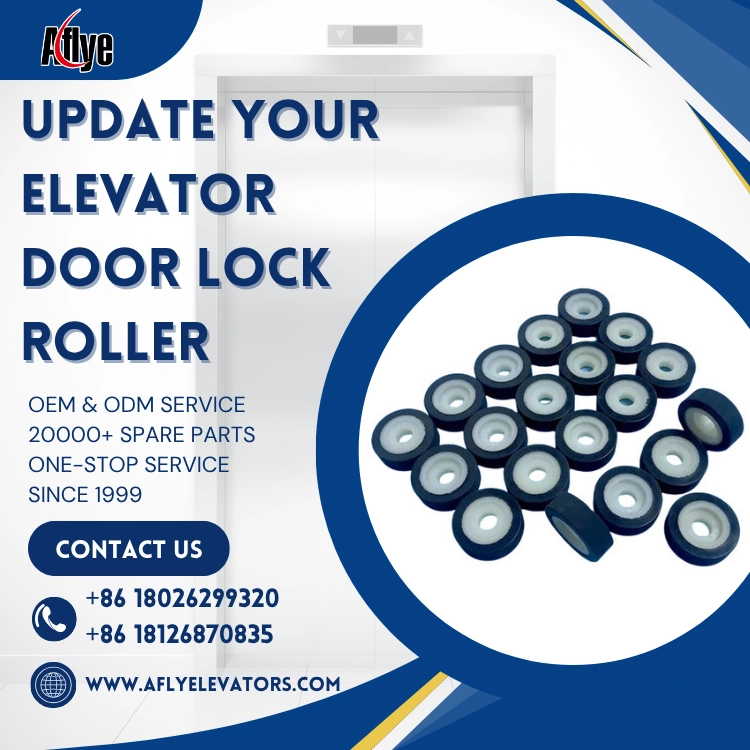
1. Why Do Elevator Door Lock Rollers Wear?
1. Long-Term Rolling Friction
Elevator doors open and close frequently, exposing the door lock rollers to continuous mechanical impact and friction.
After extended use, the rollers may develop:
Worn roller surfaces;
Roller deformation;
Increased bearing clearance;
Unsmooth rotation.
2. Abnormal Load on the Door Lock Mechanism
Landing door misalignment, changes in the door lock installation position, or abnormal door operator operation can place additional lateral forces on the rollers.
These abnormal loads can accelerate elevator door lock roller wear and affect the movement of the entire door lock mechanism.
3. Lack of Regular Maintenance
Dust and foreign particles may enter the roller or shaft area, increasing rotational resistance.
Over time, this can cause the roller to stick, rotate poorly, or develop abnormal wear.
2. Why Does Roller Wear Affect Door Lock Engagement?
Under normal conditions, the elevator door lock assembly requires precise mechanical alignment and engagement.
When the roller becomes worn, its outer diameter and movement path may change, preventing the door lock mechanism from reaching the correct locking position.
Common symptoms include:
Incomplete door lock engagement;
Elevator unable to run after the doors close;
Intermittent opening of the door lock safety contact;
Abnormal noise during door opening or closing;
Unsmooth or sticking door lock operation.
Therefore, when repeated elevator door lock faults occur, technicians should not only inspect the electrical contacts but also check the door lock rollers and related mechanical components.
3. How to Solve Elevator Door Lock Roller Problems
During elevator maintenance, technicians should inspect:
Roller surface condition;
Roller shaft;
Bearings;
Position and alignment of the door lock mechanism;
Landing door alignment and condition.
If the roller shows obvious wear, cracking, sticking, or poor rotation, timely elevator door lock roller replacement is recommended.
After replacement, the alignment and engagement position of the door lock assembly should be readjusted.
Once maintenance is completed, the door lock engagement and safety circuit status should be checked according to the equipment requirements to ensure reliable operation.
4. Elevator Door Parts Purchasing Tips
When purchasing elevator door parts, the following information should be confirmed:
Door lock model;
Roller dimensions;
Shaft diameter;
Installation method;
Compatible door lock structure.
Door lock rollers used in different elevator systems may look similar, but their dimensions and mounting methods are not necessarily interchangeable.
Before purchasing, it is recommended to provide the original part model, clear photos, or measured dimensions to improve matching accuracy and reduce the risk of ordering incompatible parts.
5. A-FLY Elevator & Escalator Parts Supply Capability
A-FLY supplies a wide range of elevator and escalator spare parts, including:
Elevator door lock assemblies;
Elevator door operator belts;
Other elevator door system parts.
A-FLY also supplies escalator steps, handrails, rollers, chains, and other commonly used elevator and escalator spare parts.
For elevator maintenance, repair, and modernization projects, A-FLY supports model confirmation, dimensional matching, sample confirmation, and OEM/ODM customization services, providing customers with one-stop elevator and escalator spare parts purchasing solutions.
Conclusion
Although the elevator door lock roller is a relatively small mechanical component, its condition can directly affect the locking performance of the entire landing door system.
Regular inspection of door lock rollers and door lock assemblies, together with timely replacement of worn elevator door parts, can help reduce improper door lock engagement, intermittent door lock faults, and unexpected elevator shutdowns.