
Why Does Elevator Deflector Sheave Bearing Wear Cause Abnormal Running Noise? Common Causes and Solutions
During elevator operation, passengers may sometimes hear humming, rubbing, or periodic abnormal noises while the car is moving. In addition to issues related to the traction machine and guide rails, elevator deflector sheave bearing wear is also an important cause of operating noise.
As a key component of the elevator traction system, the elevator deflector sheave changes the running direction of the wire ropes, supports the required roping arrangement, and helps maintain stable rope movement. When its bearings become worn, abnormal noise may occur, while elevator ride quality and component service life can also be affected.
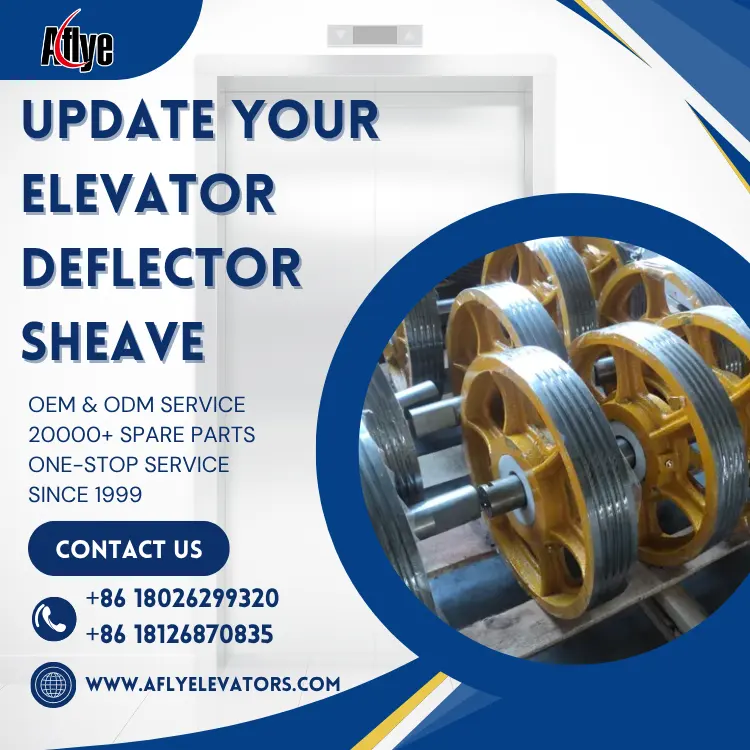
1. Why Does Elevator Deflector Sheave Bearing Wear Cause Abnormal Noise?
The elevator deflector sheave relies on internal bearings to support smooth, high-speed rotation. After long-term operation, the bearing balls, raceways, and cages gradually wear, increasing internal clearance.
During operation, excessive bearing clearance may cause:
Unstable sheave rotation;
Slight impact or vibration of the wire ropes;
Increased bearing rolling resistance;
Metal contact or friction noise.
These symptoms may become especially noticeable during elevator starting, acceleration, deceleration, and low-speed operation.
2. Common Causes of Elevator Deflector Sheave Bearing Failure
1. Bearing Fatigue Caused by Long-Term Operation
Elevators start and stop frequently every day, meaning deflector sheave bearings continuously withstand rotational loads. Over time, fatigue pitting may develop on the bearing raceways, eventually causing rotational noise and vibration.
2. Insufficient or Failed Lubrication
Insufficient bearing grease increases rolling friction, raises operating temperature, and accelerates bearing wear. Older elevators with inadequate maintenance are particularly susceptible to dry friction and lubrication failure.
3. Incorrect Deflector Sheave Installation
If the elevator deflector sheave or guide sheave is incorrectly positioned or misaligned, the wire ropes may be unevenly loaded. This creates additional radial loads on the bearing and accelerates wear.
4. Abnormal Wire Rope Condition
Worn elevator wire ropes, uneven rope tension, or abnormal rope grooves can also increase the operating load on the deflector sheave, resulting in excessive bearing vibration and noise.
3. What Problems Can Deflector Sheave Bearing Wear Cause?
In addition to abnormal operating noise, bearing failure may result in:
Reduced elevator ride comfort;
Increased elevator vibration;
Uneven wire rope wear;
Increased sheave rotational resistance;
Accelerated wear of other elevator sheave components.
In severe cases, bearing seizure may even affect the safe and normal operation of the elevator.
4. Solutions During Elevator Maintenance
During routine elevator maintenance, technicians should regularly inspect the operating condition of the deflector sheave, including:
Checking for abnormal operating noise;
Checking whether the sheave has excessive wobble;
Monitoring bearing temperature rise;
Inspecting the contact between the wire ropes and rope grooves.
If the bearing shows obvious abnormal noise, excessive clearance, or poor rotation, the deflector sheave assembly or bearing assembly should be replaced promptly.
After replacement, technicians should also confirm the sheave alignment, wire rope tension, and compatibility with other guiding components. This helps prevent premature damage to newly installed parts caused by incorrect installation.
5. Elevator Deflector Sheave Purchasing Recommendations
When purchasing an elevator deflector sheave, it is important to confirm the sheave diameter, number of rope grooves, and compatible wire rope diameter.
Buyers should also pay attention to:
Bearing brand and load capacity;
Sheave material and machining accuracy;
Wear resistance of the rope grooves;
Dynamic balance performance;
Compatibility with the original installation dimensions.
For elevator modernization projects, it is recommended to match the product according to on-site measurements, original part photos, samples, or the original model number to avoid installation problems caused by dimensional errors.
6. A-FLY Elevator & Escalator Parts Supply Capability
A-FLY specializes in supplying elevator and escalator spare parts to customers worldwide. Our product range includes:
Elevator traction system components;
Elevator sheave and roller components;
Elevator wire rope sheaves;
Elevator door system parts;
Escalator wear parts.
A-FLY supports sample matching, drawing-based customization, and OEM/ODM production, providing reliable elevator and escalator parts solutions for maintenance companies, engineering contractors, distributors, and elevator modernization projects.
ConclusionElevator deflector sheave bearing wear is an important cause of abnormal operating noise and vibration. Regularly checking bearing condition, optimizing preventive maintenance intervals, and selecting reliable elevator sheave components and spare parts can effectively reduce failure risks while improving elevator safety, stability, and ride comfort.