
Frequent COP/HOP Button and Display Failures in Older Elevators? Check Communication and Control Interfaces During Modernization
After years of operation, older elevators may experience frequent problems with the Car Operating Panel (COP) and Hall Operating Panel (HOP), including unresponsive buttons, display abnormalities, missing floor signals, and intermittent communication failures. Many modernization projects replace only the elevator buttons or display screens, yet the same faults continue to occur. The underlying problem may lie not in the terminal components, but in the communication wiring and control interfaces.
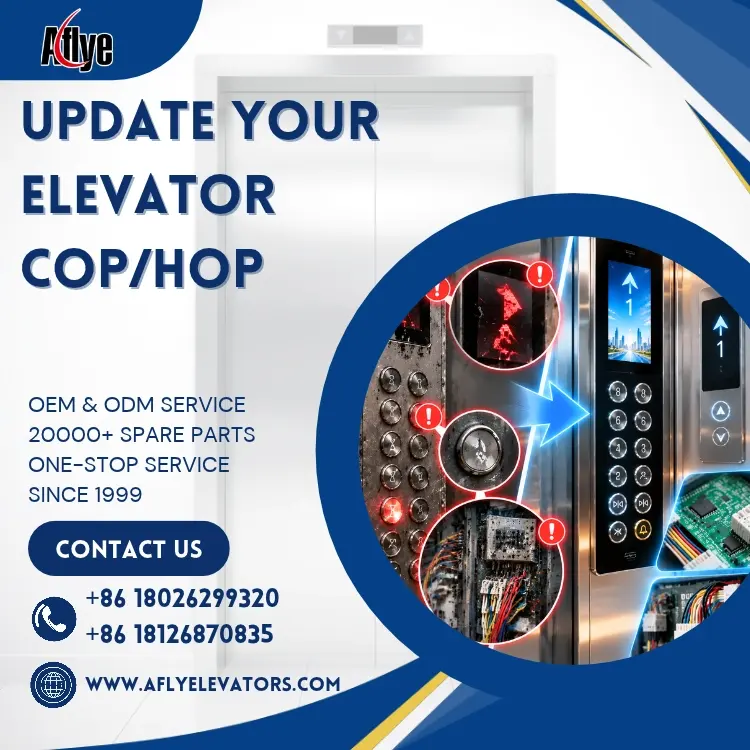
1. Why Do COP/HOP Systems Experience Frequent Failures?
1. Aging Communication Cables
After years of operation, communication cables may develop loose connections, damaged shielding, or conductor fatigue. These issues can interfere with control signals and cause intermittent communication loss.
2. Incompatible Communication Protocols
When upgrading an elevator COP or replacing an HOP, the new button boards and display boards may use communication protocols that differ from those of the original controller. Even if the physical connectors look identical, the components may not function correctly.
3. Mismatched Voltage and Interfaces
Different elevator buttons and display screens may have different operating voltages, signal types, and interface definitions. Direct replacement without compatibility checks may result in unresponsive buttons, abnormal LED illumination, or incorrect displays.
4. Aging Control Boards
If the main controller, car communication board, or hall call board has deteriorated, replacing only the buttons and display components in the elevator operating panels will usually not resolve the underlying problem.
2. Why Must Communication Interfaces Be Checked During Modernization?
During elevator modernization, the COP, HOP, display boards, button boards, and main controller are all part of the same communication system.
If the old and new components have different protocols, power requirements, or signal definitions, problems may occur, including button commands failing to reach the controller, incorrect floor displays, and lost hall call signals.
Therefore, the communication logic between the controller and peripheral devices must be verified before modernization, rather than replacing individual terminal components in isolation.
3. How Can These Problems Be Resolved During Modernization?
The following components and connections should be checked together:
Main controller and communication boards
COP/HOP button boards and display boards
Communication protocols and interface definitions
Operating voltage and power supply modules
Traveling cables and communication wiring
Connectors, terminals, and shielding and grounding conditions
For discontinued elevator systems, a complete COP/HOP communication solution can be rematched according to the actual project requirements.
4. Purchasing Recommendations for Elevator Modernization Parts
Before purchasing elevator modernization parts, provide the controller model, COP/HOP photos, number of floors, panel dimensions, button operating voltage, display type, interface photos, and communication board model.
For older elevator projects, do not select replacement components based on appearance alone. Communication protocols, electrical specifications, and mechanical dimensions should be verified first.
5. A-FLY Elevator & Escalator Parts Supply
A-FLY supplies COP car operating panels, HOP hall operating panels, elevator buttons, display screens, button boards, communication boards, and related elevator modernization parts for repairs, older elevator upgrades, and modernization projects.
We support OEM/ODM customization of panel dimensions, interfaces, operating voltage, characters, and panel designs. We also supply a wide range of elevator control system components, door system parts, traction system components, and escalator wear parts to support one-stop procurement.
Conclusion
Frequent COP/HOP failures in older elevators are not necessarily caused by damaged buttons or display screens alone. Checking control interfaces, communication protocols, power supplies, and wiring together can help prevent communication problems from recurring after new components are installed.