
Why Do Burned Elevator Contactor Contacts Cause Starting Problems?
In an elevator control system, the elevator contactor plays an important role in circuit switching and load control. As the number of operating cycles increases, the elevator contactor contacts may become burned, oxidized, or develop poor electrical contact. This can prevent current from flowing reliably and may lead to elevator startup failures, operating interruptions, and other electrical problems.
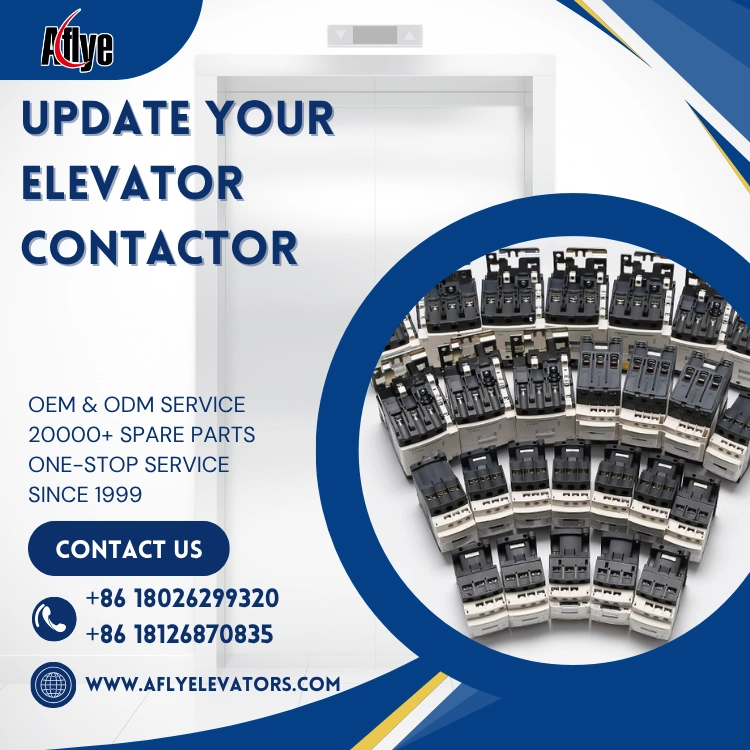
1. Why Do Elevator Contactor Contacts Burn?
1. Frequent Switching Over Long-Term Operation
Elevators start and stop many times every day, requiring contactors to switch frequently. Each switching operation may generate an electrical arc.
Over time, repeated arcing can cause:
Blackened contact surfaces;
Pitting or erosion;
Contact deformation;
Contact welding or sticking.
2. Abnormal Load Current
If the motor load is excessive, the supply voltage is abnormal, or there is a problem with the electrical circuit, stronger arcing may occur when the contactor opens the circuit.
This can accelerate contactor contact erosion and shorten the service life of the component.
3. Contactor Aging
Aging coils, sticking mechanical mechanisms, or insufficient contact pressure can result in unstable electrical contact.
Poor contact may increase localized resistance and temperature, accelerating damage to the contact surfaces.
4. Loose Electrical Connections
Loose wiring terminals can increase contact resistance and generate excessive heat. If the problem continues, it may damage the contactor and other elevator electrical components.
2. What Elevator Starting Problems Can Burned Contacts Cause?
When contact surfaces are severely burned or eroded, contact resistance increases and may cause:
The contactor engages, but the elevator does not start;
Intermittent elevator startup failures;
Abnormal contactor heating or noise;
Fault protection triggered by the control system;
Contact welding that prevents the circuit from disconnecting properly.
Therefore, when an elevator frequently fails to start, technicians should inspect not only the elevator main control board and inverter, but also the operating condition of the contactors inside the elevator control cabinet.
3. How to Solve Elevator Contactor Problems
During elevator maintenance, technicians should carefully inspect:
Contactor contact surfaces;
Coil condition;
Terminal connections;
Contactor switching and engagement operation.
Minor oxidation may be addressed through appropriate maintenance depending on the actual condition. However, if the contacts are severely burned, deformed, or welded together, the elevator contactor should be replaced promptly.
At the same time, the motor load, supply voltage, and control wiring should be inspected to identify the root cause and prevent premature damage to the replacement contactor.
4. What Should Be Confirmed When Purchasing an Elevator Contactor?
When purchasing elevator spare parts, the following contactor specifications should be confirmed:
Contactor model and specifications;
Rated operating voltage and current;
Coil voltage;
Number of main contacts;
Auxiliary contact configuration;
Mounting dimensions and wiring method.
A replacement contactor should not be selected based only on appearance. Otherwise, problems such as insufficient current capacity, incorrect specifications, or incompatible connections may occur.
5. A-FLY Elevator & Escalator Parts Supply Capability
A-FLY provides one-stop elevator and escalator spare parts supply solutions, including:
Elevator switches;
Other elevator electrical components.
For elevator maintenance, control cabinet upgrades, and modernization projects, A-FLY supports model confirmation, parameter matching, and OEM/ODM services, helping customers quickly source compatible elevator parts and improve purchasing efficiency.
Conclusion
Burned or eroded elevator contactor contacts may appear to be a localized electrical problem, but they can directly cause elevator startup failure or unstable operation.
Regular inspection of contact surfaces, coils, and wiring connections, together with timely replacement of aging electrical components, can help reduce elevator startup failures and maintain stable operation of the elevator control system.