
Why Do Elevator Buttons Develop Uneven Pressing and One-Sided Sticking?
After long-term, high-frequency use, an elevator push button may sometimes feel normal when pressed on one side but stiff on the other. In more severe cases, the button may fail to return smoothly after being pressed.
This type of uneven button movement and one-sided sticking is usually related to the button cap, internal guide structure, and mechanical wear. If left unresolved, it may eventually affect the normal operation of the button contacts.
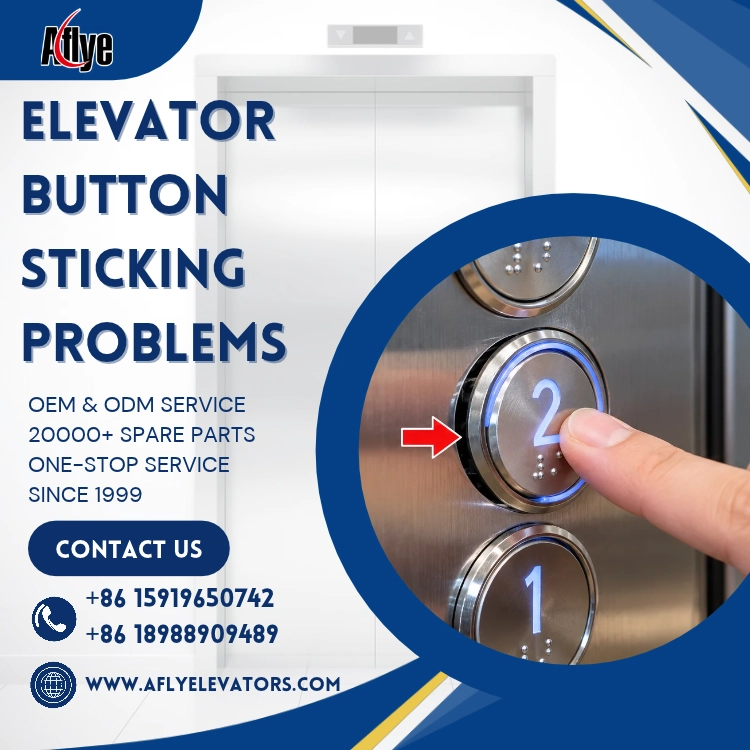
1. Why Does an Elevator Button Develop Uneven Pressing?
1. Uneven Force on the Button Cap
If passengers frequently press the edge of the button rather than the center, the elevator button cap and internal guide components may be repeatedly loaded on one side.
Over time, this can cause uneven mechanical wear and affect the button's movement.
2. Mechanical Wear of the Guide Structure
Elevator buttons typically contain guide posts, sliding grooves, springs, or other return mechanisms.
After repeated operation, mechanical wear inside the elevator button can increase the clearance between moving components. As a result, the button cap may tilt when pressed, causing uneven movement or sticking.
3. Incorrect Panel Installation
An incorrect panel cutout size, excessive mounting pressure, or panel deformation can compress the button housing.
This may reduce the required clearance between moving components and prevent the button from moving and returning smoothly.
4. Dust or Foreign Material Inside the Button
Fine dust, cleaning fluid residue, or other contaminants may enter the moving clearance around the button.
This can increase friction on one side and cause the elevator button to stick or return slowly.
2. What Problems Can One-Sided Button Sticking Cause?
When the button cap becomes tilted or unevenly loaded, the internal mechanism may no longer move along its intended path.
Common symptoms include:
One side of the button feels easier to press than the other;
Slow button return after pressing;
Temporary sticking in the pressed position;
Unstable opening or closing of the button contacts;
The LED remains illuminated while the button has not fully returned;
Premature button failure caused by long-term uneven wear.
Therefore, repeated button sticking should not be addressed simply by pressing the button multiple times.
3. How to Fix a Sticking Elevator Button
During elevator maintenance, technicians should inspect the:
Button cap movement;
Internal guide structure;
Return spring or mechanism;
Button contacts;
Panel cutout and mounting condition.
If the problem is caused only by dust or incorrect installation, the button can be cleaned or readjusted according to maintenance requirements.
However, if the button cap, guide components, or return mechanism are significantly worn, deformed, or damaged, elevator button replacement is recommended to prevent recurring faults.
4. Elevator Button Purchasing Tips
When purchasing elevator button parts, the following specifications should be carefully confirmed:
Button diameter;
Panel cutout dimensions;
Panel thickness;
Operating voltage;
Contact configuration;
Connector or interface type;
LED illumination color;
Mounting structure.
For older or discontinued button models, it is recommended to provide front and rear photos, connector details, and actual measured dimensions.
This can help prevent the replacement button from fitting too tightly or being incompatible with the existing panel and control system.
5. A-FLY Elevator & Escalator Parts Supply Capability
A-FLY supplies a wide range of elevator button and wear parts, including:
Elevator push buttons;
Elevator button caps;
Button contacts;
Braille elevator buttons;
Other commonly replaced elevator parts.
These products are suitable for elevator maintenance, repair, and old elevator button modernization projects.
A-FLY supports OEM/ODM customization for button dimensions, characters, illumination colors, operating voltages, interfaces, and panel designs.
We also supply a wide range of elevator door system parts, control system components, and escalator wear parts, providing engineering contractors and spare parts distributors with one-stop elevator and escalator parts purchasing solutions.
Conclusion
Uneven pressing and one-sided sticking in elevator buttons are often mechanical rather than purely electrical problems. They are closely related to uneven button cap wear, aging guide components, contamination, and incorrect installation.
Timely inspection of the button's mechanical movement and replacement of worn components can help reduce button sticking, slow return, and contact failure, improving the reliability of the elevator button system.