
Why Do Elevator Buttons Fail After Water Ingress or Moisture Exposure?
During long-term elevator operation, elevator buttons inside the car are frequently used control components that are exposed to dust, cleaning agents, water vapor, and environmental humidity. When elevator buttons become damp or water enters the internal structure, they may experience problems such as no response, LED backlight failure, and false activation, resulting in common elevator button failures.
Especially in environments such as hospitals, shopping malls, hotels, and public buildings, selecting waterproof elevator buttons with better protection performance is essential for improving elevator operating stability and reliability.
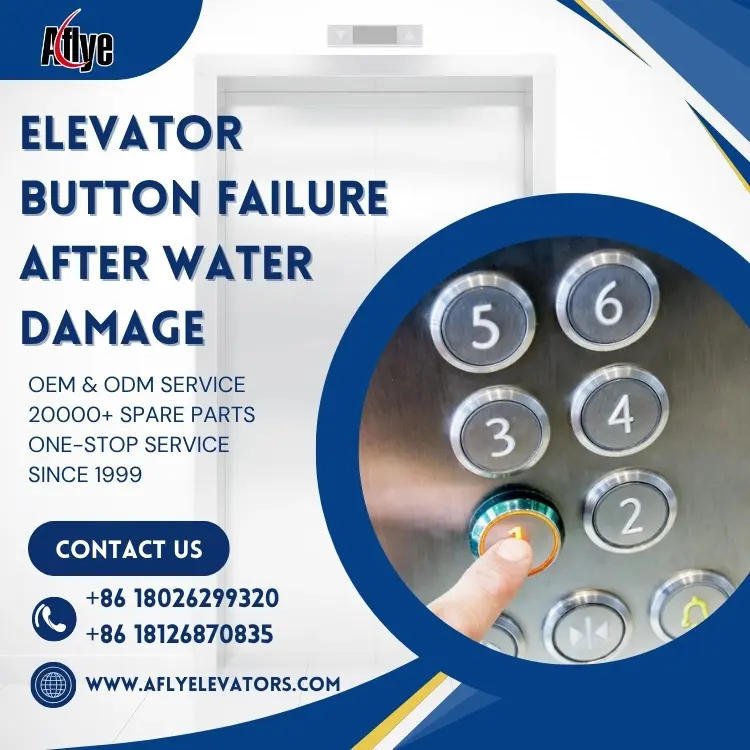
1. Common Causes of Elevator Button Water Ingress or Moisture Problems
1. Liquid Entering During Cleaning and Maintenance
During daily elevator cabin cleaning, if large amounts of water-based cleaning agents are directly applied around the button area, liquid may enter through gaps around the button.
Over time, this can cause:
Button contact oxidation;
Internal circuit corrosion;
Abnormal signal transmission.
2. Aging of Button Sealing Structure
After long-term use, the external panel, sealing rings, and protective structures of standard elevator buttons may deteriorate.
When sealing performance decreases, moisture in the air can gradually enter the button interior, causing the elevator button to become damp.
3. High-Humidity Installation Environments
Some elevators are installed in:
Underground parking areas;
Coastal regions;
High-humidity environments.
Continuous exposure to high humidity can accelerate aging of internal button components.
Common symptoms include:
Water vapor appearing on the button surface;
Abnormal button feedback;
LED backlight flickering.
4. Insufficient Protection Level of Button Design
Some standard elevator buttons are designed only for normal operating environments. If they are installed in special conditions without selecting waterproof products, their service life may be significantly reduced.
2. What Problems Can Moisture Cause in Elevator Buttons?
1. Button Signal Failure
After moisture enters the button, it may cause poor contact between internal components, preventing the button from sending valid signals to the elevator control system.
Typical symptoms include:
Button does not respond;
Floor selection cannot be registered;
Multiple presses are required.
2. LED Backlight Problems
Elevator buttons usually contain LED indicator lights. Moisture exposure may cause:
Reduced LED brightness;
LED flickering;
Complete backlight failure.
3. False Button Activation
If moisture creates abnormal electrical conduction between circuits, it may result in:
Automatic signal triggering;
Multiple floor registrations;
Abnormal control feedback.
4. Reduced Button Service Life
Long-term moisture exposure can corrode internal components, significantly reducing both the mechanical and electrical service life of elevator buttons and increasing future maintenance costs.
3. How to Solve Elevator Button Moisture Problems?
When abnormal elevator button operation is detected, technicians should first check:
Whether moisture exists inside the button;
Whether connectors are oxidized;
Whether wiring connections are normal;
Whether control signals are stable.
If the button is only slightly damp, drying treatment can be performed and the wiring condition should be inspected.
However, if problems such as contact corrosion, internal damage, or repeated failures occur, replacing the elevator button with a new one is recommended.
For projects in special environments, upgrading to waterproof elevator buttons can improve long-term reliability and reduce maintenance frequency.
4. Waterproof Elevator Button Purchasing Recommendations
When selecting waterproof elevator buttons, buyers should confirm the following specifications:
Required protection level;
Operating voltage (such as 12V or 24V);
Button size and panel opening size;
Interface type;
LED color requirements;
Installation method.
For applications such as:
Hospitals;
Shopping malls;
it is recommended to choose elevator waterproof buttons with reliable sealing designs to prevent frequent failures caused by environmental conditions.
Before purchasing, the original elevator button model should also be confirmed to ensure compatibility between the new button, control system, and elevator button interface.
5. A-FLY Elevator & Escalator Parts Supply Capability
A-FLY focuses on global elevator and escalator parts supply, providing one-stop solutions for elevator maintenance, modernization, and project procurement.
Main products include:
Waterproof elevator buttons;
Round buttons and rectangular buttons;
Braille buttons;
Button boards and COP panel assemblies;
Elevator door system components;
Escalator safety parts and wear components.
For different application environments, A-FLY supports elevator button model confirmation and OEM/ODM customization, including:
Dimensions;
Interfaces;
Voltage specifications;
LED backlight colors;
Special design requirements.
A-FLY helps customers complete elevator button upgrades with reliable products and professional technical support.
Conclusion
Although water ingress or moisture exposure in elevator buttons is a common minor issue, ignoring it for a long time can affect passenger experience and increase elevator maintenance costs.
By selecting suitable waterproof elevator buttons, performing regular inspections, and cooperating with a reliable elevator parts supplier, customers can effectively improve elevator operating stability and extend button service life.